The Numbers Behind the Quiet Revolution
Maarten Vinkhuyzen, a sharp observer of clean energy markets, has run the numbers and come to a striking conclusion: battery prices will drop another 70% in the next five years. For anyone tracking the energy transition, that's not just a forecast—it's a demolition permit for the status quo.
Already, that future is arriving ahead of schedule. Just ask the Porterville Unified School District in rural California, nestled between Sacramento and LA. PUSD just broke ground on a microgrid combining 763 kilowatts of solar panels with a 408 kilowatt-hour battery system—enough to charge 35 electric school buses while the sun shines. The district even secured a U.S. EPA Clean School Bus Program grant, with support from the nonprofit CALSTART. When a small rural school district can go all-in on clean energy, the technology has officially crossed the chasm into the mainstream.
From Film Sets to Freight Yards
The same economics are reshaping industries you'd never expect. In South Africa, Cinergy Mobile Power just launched the country's first purpose-built smart mobile power systems for film and live events—industries that have relied on rumbling diesel generators for decades. The company's solar-hybrid, battery-powered units are quieter, cleaner, and increasingly cheaper to operate than the generators they replace. South Africa's film industry, worth hundreds of millions annually, is now eyeing a diesel-free future.
Meanwhile, Volvo's FH Aero Electric truck can haul up to 725 kWh of battery power across 700 kilometers—enough range to make long-haul freight genuinely viable on electrons alone. The company integrates motors, power electronics, and transmission into a single e-axle, creating space for six to eight battery packs. This isn't a concept truck. It's a product that exists, and it's forcing a reckoning inside Volvo's own boardroom, where hydrogen combustion still competes for strategic attention.
The Manufacturing Machine Behind It All
To understand why this moment feels different, take a look inside Jackery's factory outside Shenzhen, China. Rows of orange-vested workers assemble portable power stations that end up in campgrounds, emergency kits, and job sites worldwide. The cells, the circuit boards, the battery management systems—it's all manufactured at scale that would have seemed impossible a decade ago. Jackery's products have been quietly pushing out clean power for years, but the factory's expansion signals that demand is accelerating.
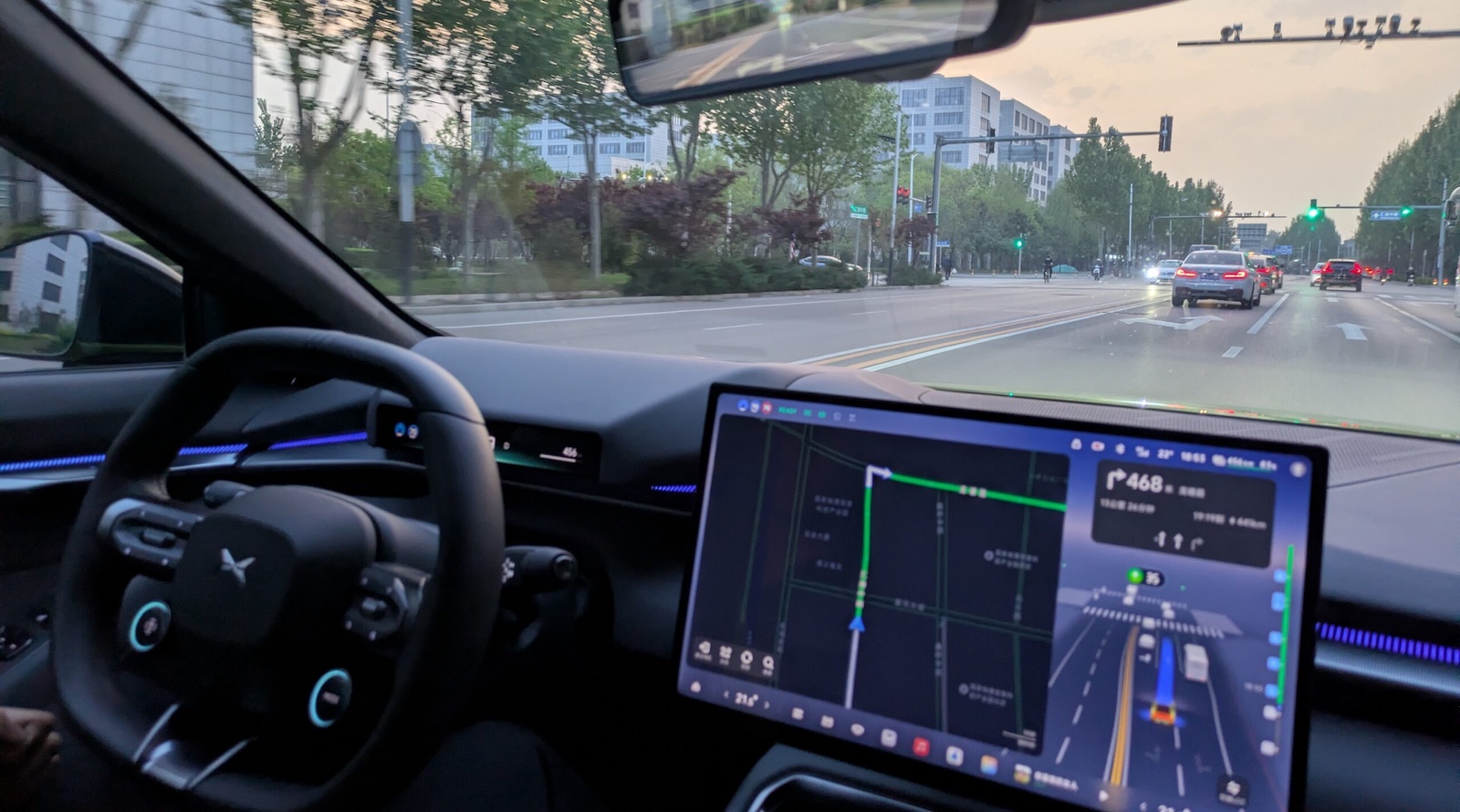
That demand spans from consumer gadgets to commercial applications. XPENG, the Chinese automaker, is bringing its camera-only self-driving technology to Europe in the second half of this year, betting that its vision-language-action system can outcompete Tesla on European roads. More than half of XPENG's non-China sales already come from Europe. The competition is heating up—and that's pushing everyone to move faster.
What Comes Next
The through-line is unmistakable: batteries have become cheap enough, reliable enough, and versatile enough to challenge fossil fuels in one domain after another. Split heat pump water heaters are even entering the conversation for American homes, after a decade of dormancy. The $200 raffle tickets for a Rivian or Lucid, offered by the CCAN Action Fund's eighth annual EV giveaway, underscore how excitement has replaced skepticism for many consumers.
As Vinkhuyzen predicts that next 70% price drop, the pattern that emerges is clear: wherever diesel or gasoline once dominated, batteries increasingly look like the smarter bet. The question for the next five years isn't whether the transition will happen, but which sectors will feel it first.
Sign in to join the conversation.
Comments (0)
No comments yet. Be the first to share your thoughts.