Insights
AI-synthesized editorial coverage of positive news from around the world

How Old Eyes, Birdwatchers, and 19th-Century Math Are Powering a Quiet Tech Revolution
From Fudan University’s age-aware lighting model to Fast-DeePC’s 100x faster control algorithms, a new generation of data-driven systems is emerging. These frameworks leverage AI, 19th-century math, and even birdwatchers’ notes to create technology that adapts to human needs and physical limits.
A 19th-century math idea is now stabilizing AI systems and cutting energy use by 42%.
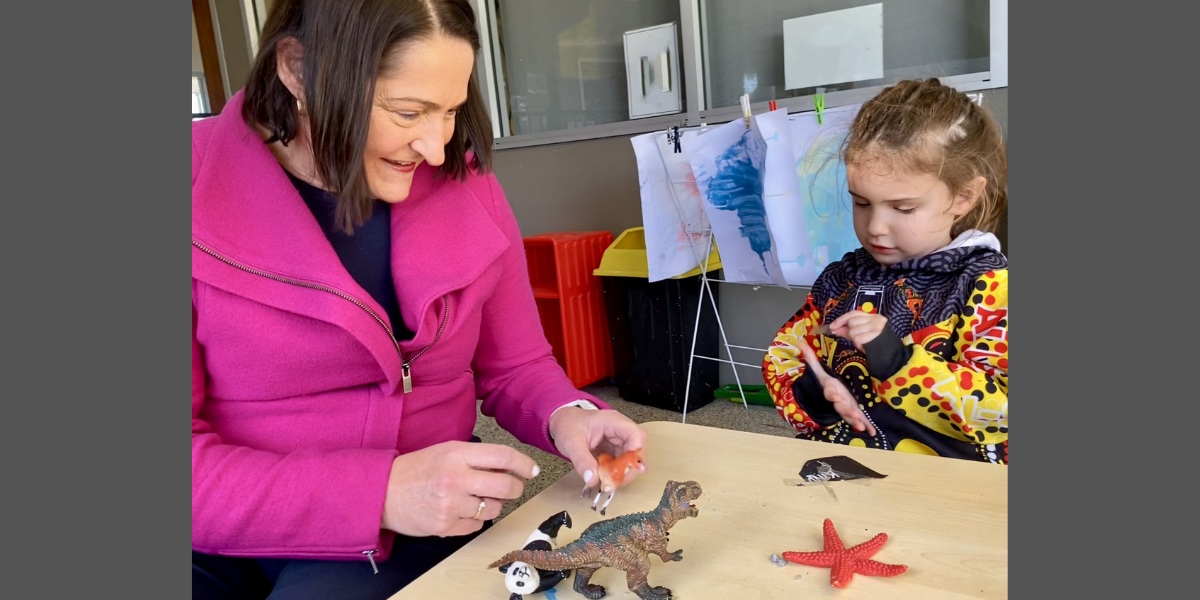
How Language, Leadership, and Legacy Are Reshaping Indigenous and Women's Futures
From Dharawal language revival in Shoalhaven to Cherokee on iPhone keyboards, communities are reclaiming linguistic heritage. Meanwhile, Indigenous women lead in water justice, and structural reforms boost women's rise to CEO roles globally.
A child speaks Dharawal for the first time in decades—thanks to a $179,000 grant and a movement to revive a dying langua

How a Village Football Match and a School Vegetable Market Are Quietly Changing the World
In Nigeria, a football tournament fosters unity among host communities. In India, students run markets and schools get digital labs. Meanwhile, young adults are building shelters and redefining what support looks like.
In Nigeria, a cement company is using football to build peace between rival villages.

How a Simple Act of Kindness Could Outsmart Alzheimer's
Research from UT Austin reveals that volunteering or informal helping slows cognitive decline in people with the APOE ε4 gene. This fits a larger trend: from prime gene editing at Aarhus University to AI-powered heart risk prediction, science is unlocking new paths to resilience. Healing may be as much about connection as it is about chemistry.
Helping others may delay Alzheimer’s symptoms by nearly two years—even with high genetic risk.

How Light, Space, and Tiny Clues Are Rewriting the Rules of What We Know
Researchers across the globe are unlocking nature’s deepest secrets: light’s hidden geometry, Earth’s magnetic waves, and even a 300,000-year-old primate tooth. These discoveries are reshaping our understanding of physics, evolution, and life itself.
Light can twist on its own in empty space—no lenses needed.

Bacteria Evolve Collective Intelligence to Survive in a Chaotic World
Bacteria don’t just count neighbors—they share noisy signals to make group decisions. A new study shows that in changing environments, bacteria evolve to pass signals better when one condition is more common. Their membrane lets signals through at a key level: about 0.119. This helps the group sense accurately, even if individual cells make mistakes. When conditions are equal, both signaling types survive in balance. Too much noise hurts, but some helps adaptation. The system acts like a smart, shared brain—shaped by evolution.
0.119 — the permeability threshold where bacterial populations overcome noise through collective sensing.

How People Really Cooperate: A New Method Reveals the Hidden Rules of Collective Action
In Barcelona, 77 groups played a climate game where they had to work together to avoid failure. Only 39% succeeded. Scientists studied how people made choices and found four common rules: repeat your last move, copy others, watch the group’s progress, or save your own money. Each person acts like a mix of these rules. When the researchers simulated decisions using a simple vote—most popular choice wins—the results matched real behavior better than any single rule. This shows people aren’t fixed types; their choices come from a mix of impulses.
41% of decisions in cooperation games involve internal conflict between competing behavioral rules.

A 98.6% Reduction in Space Collision Risk—By Smarter Math
A spacecraft once drifted 49.8 km into a danger zone despite passing safety checks. A new method fixes this. It focuses computing power where it matters most—during sharp maneuvers. Instead of spreading calculation points evenly, it clusters them near risky moves using the spacecraft’s own thrust data. This cuts errors by 98.6%, reducing violations to just 0.7 km. On the same 50-node grid, it outperforms even 80-node uniform methods. Tested against model predictive control (MPC), it proves reliable.
49.8 km: how far a spacecraft drifted into a debris zone—despite passing all safety checks.

A Battery That Learns How It Ages — Even in New Conditions
Scientists created an AI system that predicts how car batteries degrade, using just 5% of real-world data. It combines AI and physics to simulate battery aging, with less than 2.2% error in spotting problems like lithium loss or electrode wear. The method uses lab data and early real-world use, then generates realistic aging paths without waiting years for full test results. This helps batteries "self-diagnose" issues early, improving lifespan and safety.
1.53% error in diagnosing battery aging — using just 5% real-world data.

This Control Algorithm Just Got 100x Faster by Turning Data Into Math It Can Ignore
A new control method called Fast-DeePC fixes a big problem: using more data usually slows down real-time control. Fast-DeePC removes this penalty by solving part of the math once, offline. This cuts solve time from milliseconds to microseconds—up to 100 times faster—without losing accuracy. It works for complex systems like power grids and self-driving cars, where models are hard to build but data is plentiful. Unlike older methods, speed no longer depends on how much data you use.
Up to 100x faster: new control algorithm eliminates data-dependent computation

A New Message-Passing Algorithm Fixes a 30-Year Flaw in AI’s Reasoning About Uncertainty
Belief propagation, a key AI tool, struggles with loops in networks, giving wrong uncertainty estimates. This is risky in systems like power grids, where mistakes can cause big failures. A new method, ENMP, fixes this by automatically expanding each node’s neighborhood to account for loops. In tests on grids with over 13,000 variables and in physics models, ENMP gives exact results—perfect means and variances—outperforming current methods. Unlike older approaches that need manual tuning, ENMP works smartly and automatically.
On a 1354-bus power grid, a new algorithm achieves exact variance estimates where others fail by 15%.

A Single AI Model Can Now Identify Any Dynamical System — Without Retraining
Scientists made an AI that learns to predict how machines or chemical systems behave—just from a few seconds of data. It works without retraining, even on systems it’s never seen before. The model, based on Transformer tech (like in advanced language AI), was trained only on fake data from many types of systems. Still, it matches top methods in real tests like CSTR and Silverbox. It gives uncertainty estimates, helps train other models by creating fake data, and handles big differences between systems.
One AI model can identify any dynamical system—no retraining needed.

A New Filter Lets Drones Track Targets No One Can See—And It Works Even When Networks Break
In a big network of 50 drones spread over 100 square km, up to 40% may not see a moving target at any time. But a new algorithm, IWDKF, lets even "blind" drones help track it. Called the Information-Weighted Distributed Kalman Filter, it works without constant communication or knowing who else is in the network. It fuses data smartly, giving more weight to drones with better info. It handles changing connections and needs just one message round per step. Works in real time, nearly as well as a central system.
40% of drones may be blind to a target—yet still help track it accurately.

There’s a Hard Limit to How Efficiently We Can Control Noisy Systems
Engineers once thought systems could be controlled with almost no energy if given enough time. But noise changes that. New research shows real-world systems—like robots or spacecraft—have a minimum energy limit. Because of random noise, you can’t perfectly control them, no matter how long you try. The study introduces "stochastic minimum-energy control" for systems with noise. It proves open-loop control (pre-set commands) can’t reduce uncertainty—it only shifts averages. Even with infinite time, a minimum energy "floor" remains.
There’s a minimum energy needed to control noisy systems—no amount of time reduces it further.

Vaccines Don't Work the Same for Everyone — And That Changes Who Should Get Them First
A study of 2,279 people found that the best vaccine plan depends on how fast a virus is spreading. When spread is low, vaccinating the most exposed people first cuts both peak and total infections. At moderate spread, it lowers the peak but may cause more infections overall. When spread is high, vaccinating older people works slightly better. This challenges the idea that always targeting high-risk people is best. Most vaccines are “leaky,” meaning they reduce but don’t eliminate infection risk.
At 50% coverage, targeting high-exposure people reduces epidemic peaks by 15pp — but can increase total infections.

A New Lens on Earth's Invisible Waves: How a Morphology-Based Method Reveals Hidden Structure in Atmospheric Disturbances
Scientists found 84% of polar atmospheric waves aren’t random — they’re organized, rising gravity waves. A new method studies their shape, not frequency, avoiding old limits like the uncertainty principle. Using DE2 satellite data from the 1970s–80s, it measures wave peaks and troughs directly, revealing true structure. This gives 10–15° precision in phase shifts, corrects errors up to 15°, and shows waves move upward coherently. Unlike wavelet methods, it doesn’t blur data.
84% of atmospheric wave packets over polar regions are coherent structures decodable with 10–15° phase precision using

The Nordic Power Puzzle: Why Hydrogen’s Timing Could Make or Break the Energy Transition
A new study shows hydrogen use in the Nordics may start in 2045, not 2030 as planned. A cost-optimized model found that wind and solar will grow as expected, but hydrogen isn’t cost-effective until later. Right now, plans assume hydrogen will power industry and store energy starting in 2030. But the model says it’s cheaper to wait until 2045, when excess wind and solar power can make hydrogen for seasonal storage. The delay reveals a major uncertainty in climate plans.
Hydrogen deployment in the Nordics is delayed until 2045 in cost-optimal models—15 years later than official plans.

How a Whale, a Skydive, and Street Dogs Are Rewriting the Rules of Learning
Innovative teaching methods—from clinical escape rooms to AI-supported online learning—are transforming education by embracing failure, empathy, and real-world decision-making. Research shows that when students feel safe, supported, and trusted, they learn better, think critically, and grow into resilient leaders.
What if the best way to learn is to fail safely, think freely, and care differently?

The Quiet Revolution: How Patience, Grass, and Brain-Reading AI Are Reshaping Our Future
Researchers are using AI to decode vision from brain scans, turning grass into textiles, and proving patience fuels entrepreneurial success. Meanwhile, new frameworks aim to boost Africa’s economy and make digital finance more human-centered.
AI can now reconstruct what you're seeing—just from a brain scan.

How Tiny Changes Are Unlocking Big Health Breakthroughs
New research reveals how subtle changes in cells, environments, and even AI prompts can dramatically improve health outcomes—from Alzheimer’s clues to depression recovery and heart disease prediction.
A single safety reminder reduced harmful AI choices across 19 of 20 models tested.