Sisters, Strangers, and Second Homes at Glasgow 2026
At the kitchen table in their family's Yorkshire cottage, sisters Astrid and Ursula Carroll are debating something they've been debating their whole lives. On Saturday, they'll compete in the same race at the Commonwealth Games—Astri for Scotland, Ursula for England.
"Scottish, unbelievable," Ursula jokes, rolling her eyes. But the laughter won't last once they hit the water at Glasgow's Tollcross Centre.
"It'll be nice walking out and just seeing you," Astrid says. "But it'll be nice to be competing against you."
Their story captures something essential about these Games: the beautiful absurdity of a world where borders blur, families split between nations, and strangers find common ground.
Just down the pool at the same venue, Sean McCann takes his marks. He's 21, a Loughborough University student, and making his debut at a major championships in the 400m freestyle. He was two years old when his older sister Madeleine vanished in Portugal in 2007. Now he's here, representing Scotland through his father, living out a dream he first glimpsed watching these very Games in 2014.
"I was there in 2014, watching as a kid," he told Loughborough University. "So to make it now, 12 years later, is really a full-circle moment."
In lane four and five of the 100m breaststroke final, a different kind of family drama unfolds. Adam Ramsay-Peaty—33 major golds deep into a glittering career—faces 18-year-old Filip Nowacki, his own apprentice. They train together in the same AP Race programme. Last year, Nowacki broke Ramsay-Peaty's junior British record.
"I saw his front wave," Ramsay-Peaty said after their semi-final, "but at the same time, that is what I train for."
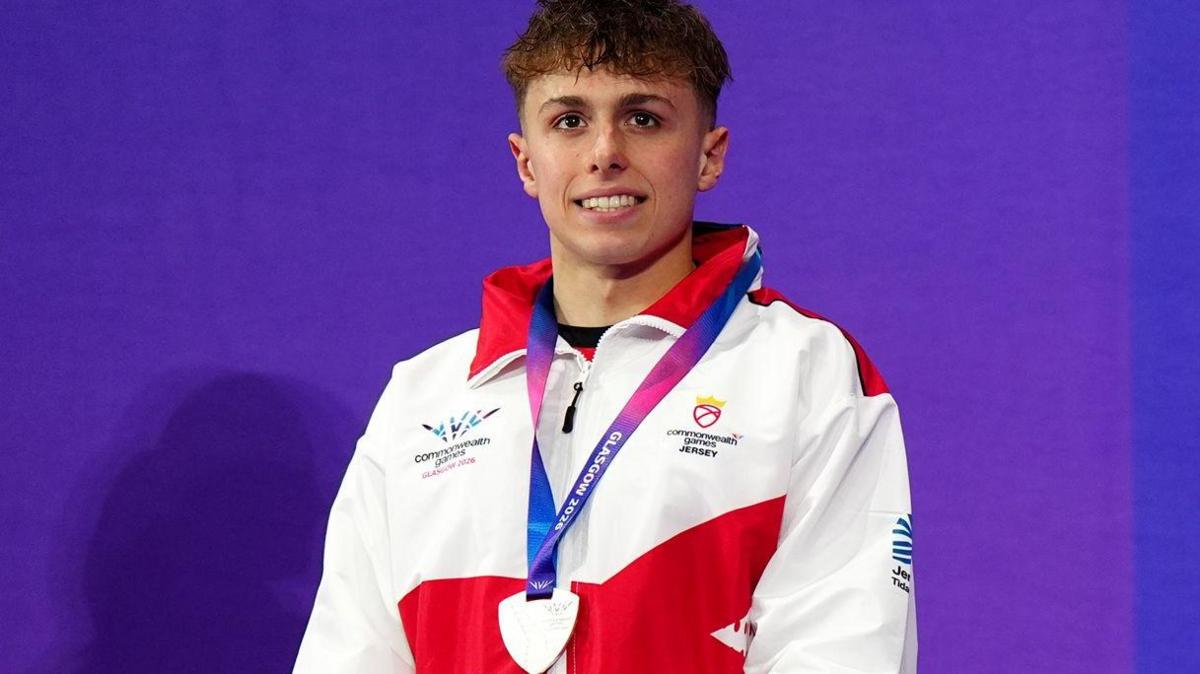
The veteran won that day. But 24 hours later, Nowacki flipped the script. Silver in the 100m breaststroke—Jersey's first Commonwealth Games medal in 36 years.
"I love a good scrap," Ramsay-Peaty had said before the final. He got one. And somehow, both men won.
Twenty miles from Tollcross, Mohammed "Chico" Qureshi grips his bowls ball at Kelvingrove. The curry shop owner has lived in Glasgow for 52 years. On Friday, he represented Pakistan against his home nation.
"That's the worst game I've ever played," he said after his opening match, still grinning. "I'm a bit scared to go back to my restaurant in case the customers put something in my food."
His loss didn't matter. He was here. That's what counts.
Half a world away, Tonga's netball team prepares for Saturday's clash with Australia—the world's preeminent side. When Salote Sisifa took over as CEO in 2014, she had no team, no coach, no facilities.
She promised to resign if she failed.
Twelve years later, after a volcanic eruption, a tsunami, and Covid arriving two years after it hit everywhere else, Tonga sits eighth in the world rankings—ahead of Scotland and Northern Ireland.
Back at Tollcross, Scotland's Duncan Scott—14 medals deep into his Commonwealth career—defended his 200m individual medley gold in a new Games record. Stephen Clegg, who thought his career might be over after an injury-ravaged year, took silver in the 100m freestyle S13, with brother James finishing fourth.
Katie Shanahan upgraded her bronze to silver in the 200m backstroke. Faye Rogers sparked bedlam with gold. Three medals in 45 minutes. The crowd went wild.
What ties these stories together? The Commonwealth Games isn't just about borders and flags. It's about the families we find and the ones we're born into—sisters on opposite sides of a rivalry, apprentices surpassing masters, strangers who become second homes.
This weekend, as 17-year-old Astrid Carroll stands on the blocks next to her 14-year-old sister, the world will watch two teenagers race for different nations. Their grandparents debated wearing a split Scottish-English T-shirt.
They should just wear one that says "family."
Sign in to join the conversation.
Comments (0)
No comments yet. Be the first to share your thoughts.