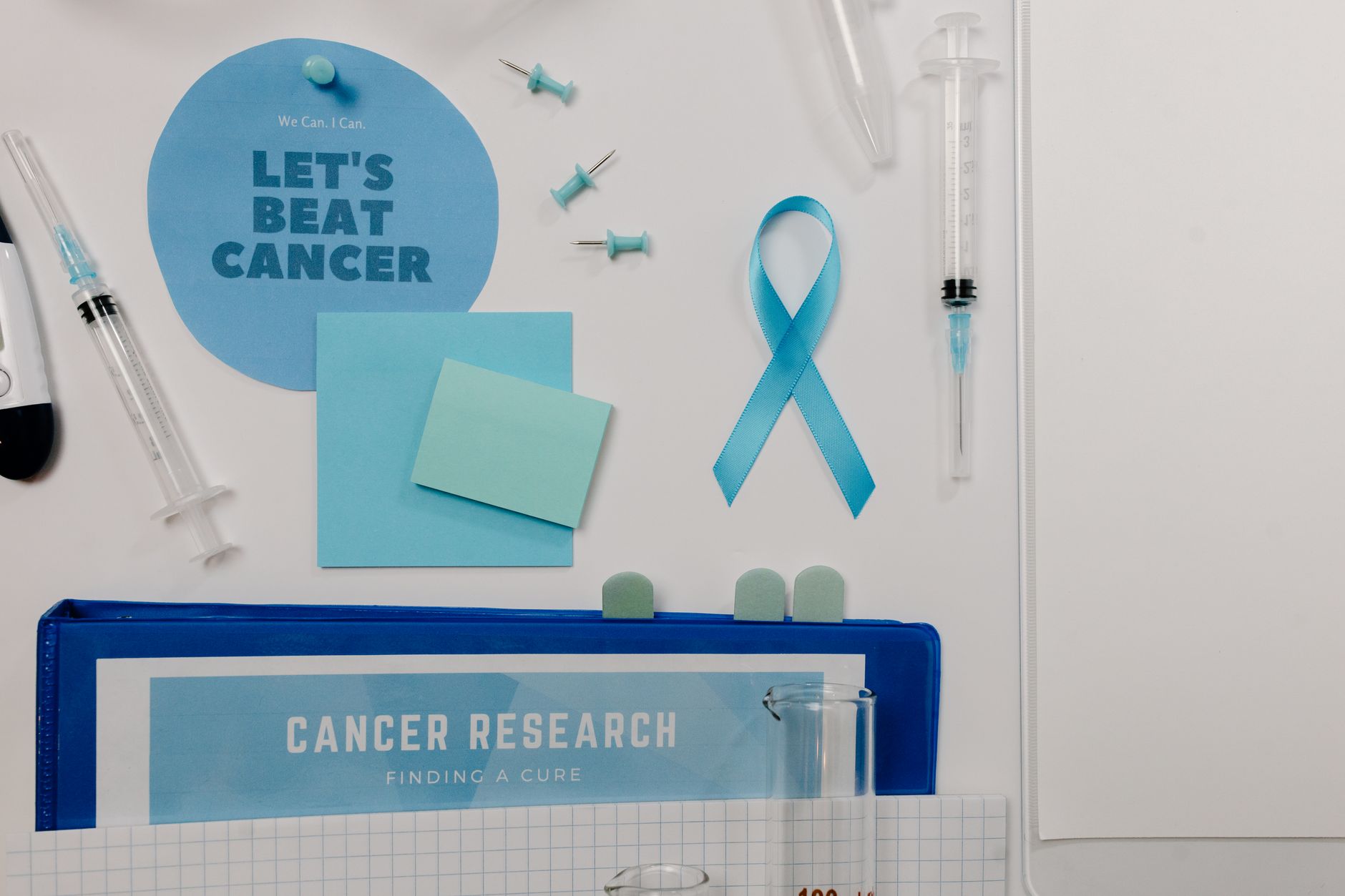
Picture a man sitting in an oncologist's office, his prostate cancer now resistant to every standard therapy on the shelf. The window for effective treatment is narrowing. His doctor is waiting — waiting for a test, a tool, an answer that doesn't exist yet.
That answer may be arriving from several directions at once.
Across a remarkable cluster of new research, scientists are quietly dismantling some of medicine's most stubborn walls — from the molecular machinery of aging to the way eyes stay wet, from an AI that reads tumors in minutes to a blood test that catches failure before failure catches you.
A New Weapon Against Prostate Cancer's Resistance
Start with that man in the oncologist's office. Researchers at the Medical University of South Carolina (MUSC) and Emory University have been running a multi-institutional clinical trial testing whether an experimental drug can extend the life of existing hormone therapies for men with metastatic castration-resistant prostate cancer — one of oncology's most unforgiving diagnoses.
"This is a very difficult-to-treat population," said Besim Ogretmen, Ph.D., MUSC's assistant vice president for research. "These are patients whose cancer has already become resistant to standard therapies, so there's a clear need for new options."
The study, published in Cancer Medicine, offers a novel strategy to outmaneuver that resistance. And it's not arriving alone.
Getting the Right Drug to Patients — Faster
Even the best cancer drug candidate is useless if it can't be made reliably and at scale. That's the problem researchers at the University of Missouri, Cancer Targeted Technology (CTT), and Isotherapeutics Group (ITG) just cracked wide open.
Their drug candidate, CTT1403, combines lutetium-177 — a radioactive isotope produced at the University of Missouri Research Reactor — with a targeting molecule that selectively binds to prostate cancer cells, leaving healthy tissue largely unaffected. The catch: its traditional production method is painstakingly complex, taking up to six hours and involving extreme heat and acid.
Automation changed everything. Researchers collapsed that six-hour process to just 38 minutes — a 90% reduction — paving the way for more doses, larger clinical trials, and ultimately, more patients reached.
A Blood Test That Reads the Future
Meanwhile, a U.K.-wide study led by UCL researchers, published in Nature Cancer, has uncovered a way to know whether a treatment is working — or failing — weeks before current methods can tell. The test detects tiny fragments of tumor DNA circulating in the blood, revealing whether prostate cancer is still growing even when standard tests show little change.
About 10,000 men are diagnosed with advanced prostate cancer every year in the U.K. alone, and until now, there has been no rapid way to tell who will respond to hormone therapy and who will need chemotherapy. This blood test could allow doctors to pivot treatment within just 6 to 12 weeks — not months — of starting a failing regimen.
AI That Sees What Pathologists Can't
The breakthroughs aren't limited to prostate cancer. A team at Cedars-Sinai Health Sciences University has developed an AI tool called Path2Space, described in the journal Cell, that predicts gene expression across an entire tumor using only digital images of standard biopsy slides.
Conventional spatial gene expression profiling takes several weeks and costs thousands of dollars. Path2Space does it in minutes, for a fraction of the price. "It will enable us and others to study larger" patient populations, said Eytan Ruppin, MD, Ph.D., deputy director of the Translational Research Institute at Cedars-Sinai — meaning personalized cancer treatment, once a privilege of well-funded research centers, could soon be within reach for almost anyone.
Understanding Why the Same Disease Strikes Differently
Not everyone with the same diagnosis gets the same outcome — and researchers are beginning to understand why. At Washington University School of Medicine in St. Louis, scientists have identified a previously unknown biological pathway that explains why only 10–15% of people with alpha1-antitrypsin deficiency, an inherited disorder affecting 100,000 Americans, develop liver disease. Pinpointing that mechanism is the first step toward forecasting — and ultimately preventing — who is at risk.
Similarly, researchers at Marshall University Joan C. Edwards School of Medicine, publishing in Aging Cell, have traced a surprising link between the gut and the aging process. Tiny particles called gut luminal exosomes, they found, carry molecular signals associated with inflammation, insulin resistance, and gut barrier breakdown. Critically, transferring exosomes from older animals to young ones triggered aging-like metabolic effects — and the reverse was also true. The gut, it turns out, may be broadcasting the body's biological age in real time.
Eyes That Heal With Light
Perhaps the most startling finding of all involves spinach. Researchers at the National University of Singapore (NUS) have built an eye drop infused with thylakoid grana — the photosynthetic membranes found in spinach cells — that allow eyes to use ambient light to continuously produce moisture. In preclinical studies, the drops outperformed Restasis, the leading prescription treatment for dry eye disease.
Dry eye sounds trivial. It is not. The condition affects more than 1.5 billion people worldwide, causes corneal scarring and chronic pain, and carries an economic burden estimated at $3.84 billion annually in the United States alone. A light-powered, plant-derived eye drop that beats the current standard of care isn't a footnote — it's a glimpse at how radically biology can be repurposed.
The Bigger Picture
What unites all of this — the blood tests and AI tools, the automated drug factories and gut particle discoveries — is a single, accelerating truth: the pace at which medicine is learning to listen to the body is unlike anything we've seen before.
For every patient waiting in an oncologist's office, or managing a chronic disease, or living with symptoms that current medicine can't quite explain, these advances are not abstractions. They are the very specific, very real reasons that the next decade of medicine will look nothing like the last.
Sign in to join the conversation.
Comments (0)
No comments yet. Be the first to share your thoughts.