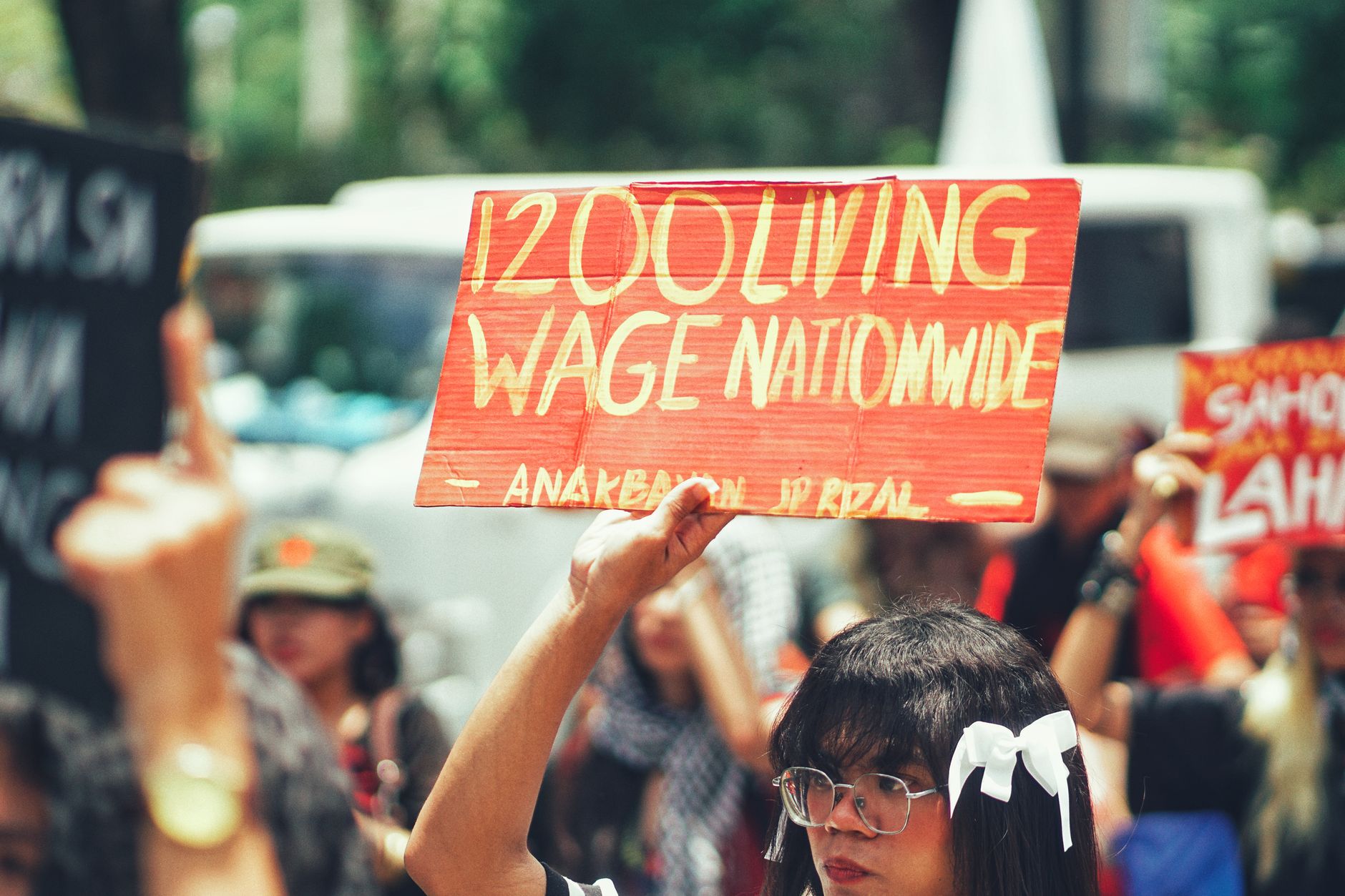
Before Sunrise, the Work Begins
Before sunrise in Neuchâtel, Switzerland, 24-year-old Amélie is already in the dairy barn — checking on cows, preparing feed, moving through routines she has known for years. Thousands of kilometres away in Uzbekistan's Jizzakh region, cotton farmers are gathering in a workshop hall to learn about their right to a grievance mechanism for the first time. In Accra, government ministers and trade union leaders are signing off on a five-year blueprint for Ghana's future workforce. In Abuja, Nigeria's Labour Minister is holding up the country's very first National Industrial Relations Policy.
Different continents. Different sectors. Different languages. But in the final weeks of May 2026, a remarkable wave of activity — seminars, conferences, policy launches, and cross-border exchanges — has drawn workers and their advocates together around a single, urgent question: what does it actually mean to work with dignity?
A Week of Milestones
The sheer breadth of what happened is striking. On 6 May, Nigeria officially launched its National Industrial Relations Policy (NIRP) — the first of its kind in the country's history. Developed through what the ILO describes as an "extensive and inclusive tripartite process," the policy brings together government, the Nigeria Employers' Consultative Association, the Nigeria Labour Congress, and the Trade Union Congress under one unified framework for dispute resolution and labour governance.
Launching the policy, Minister of Labour Muhammad Maigari Dingyadi was blunt about what had been missing. "For decades, industrial relations in Nigeria operated without a comprehensive guiding framework," he said. Now, he argued, "industrial harmony is not the absence of conflict" — it is something actively built.
Less than three weeks later, on 24 April, Ghana unveiled its own landmark framework: the Decent Work Country Programme III (DWCP III) 2026–2030, officially launched in Accra in partnership with the ILO. The programme targets youth unemployment, informality, and gaps in social protection — stubborn challenges that have long held back inclusive growth across sub-Saharan Africa.
Rights Are Not Privileges
In Botswana, a tripartite workshop in Gaborone brought together government, employers, workers, and civil society to align the country's social protection system with international standards. The stakes were made clear by Acting Deputy Permanent Secretary Ms. Tshenolo Omphitlhetse, who refused to soften the message: "Social protection is not a privilege but a right and powerful economic stabilizer for all Botswana citizens."
Her words echo a growing consensus. From Gaborone to Baku, policymakers and union leaders are increasingly framing social protection — healthcare, pensions, safety nets — not as charity but as infrastructure. The kind that makes economies resilient.
That same philosophy drove two days of workshops in Jizzakh, Uzbekistan, on 19–20 May. Under the ILO's RISE for Impact project, cotton farmers from the Dustlik and Syrdarya districts came together to learn about the five fundamental principles and rights at work — freedom of association, safe conditions, fair pay, transparent recruitment, and the right to organise. Agricultural insurance mechanisms also generated, according to ILO reporting, "significant interest," particularly around crop protection against natural disasters.
Climate, Skills, and the Borders Workers Cross
In Baku, Azerbaijan, two back-to-back events illustrated how interconnected today's labour challenges have become. On 13 May, an international conference on trade union activities and climate change brought together the Azerbaijan Trade Unions Confederation (AHIK), the National Centre of Trade Unions of Turkmenistan, ILO representatives, and senior government officials — including Azerbaijan's presidential representative on climate issues, Mukhtar Babayev. The message from AHIK Chairman Sahib Mammadov was direct: workers' interests must remain at the centre of the transition to low-carbon economies, not an afterthought.
The very next day, a seminar co-organised by AHIK and the ILO's Bureau for Workers' Activities focused on how trade unions can strategically use ILO supervisory mechanisms — the Committee of Experts, the Conference Committee on Standards — to actually hold governments accountable for ratified conventions.
Meanwhile, in Egypt, the ILO's THAMM Plus programme — funded by the European Union — is building something quieter but equally important: an evidence base. A skills needs assessment is mapping mismatches between Egyptian hospitality workers and labour market demand in Germany and Italy, laying the groundwork for structured migration pathways that protect workers rather than exploit them.
The Farmers Who Found Each Other
Perhaps the most human story of all unfolded in a knowledge-exchange session that brought together Indonesian dairy cooperative members and two young Swiss farmers — Amélie from Neuchâtel and her colleague Dylan. Organised under the ILO's Promise II Impact project, the session bridged two worlds that rarely meet: the small-scale dairy cooperatives of Indonesia and the increasingly pressured family farms of western Switzerland.
Amélie, who trained as a hairdresser before returning to farming, put it simply: "Farming has always been my passion." What she and her Indonesian counterparts discovered was that passion alone isn't enough — rising costs, changing regulations, access to finance, and questions of sustainability are the same headaches whether you're managing 50 cows in Europe or a smallholder operation in Southeast Asia.
The Thread That Runs Through All of It
What connects a Nigerian policy launch, a Botswanan workshop, a Swiss-Indonesian farming exchange, and an Azerbaijani trade union seminar? At its core, it is the same argument, repeated in different languages and different contexts: that the rules of work matter, that they must be designed with workers at the table, and that they must extend to the people who have historically been left out — informal workers, farmers, young people, migrants.
As Ghana's DWCP III puts it, the goal is a "resilient, inclusive, and future-ready world of work." That phrase could stand as a motto for everything that happened this May. The world is not waiting for some distant future to start building it. It is being built — field by field, seminar by seminar, policy by policy — right now.
Sign in to join the conversation.
Comments (0)
No comments yet. Be the first to share your thoughts.