A Bronze Rat and a Blue Fish Walk Into the News
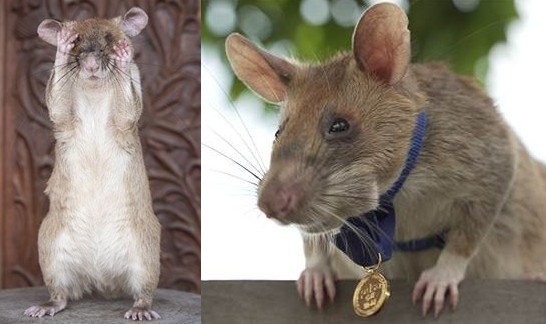
In Phnom Penh, a bronze statue now stands in honor of a rat. Not a metaphorical rat — an actual African giant pouched rat named Magawa, who spent his career sniffing out 100 landmines and unexploded bombs across Cambodia before a single person could be hurt by them. Cambodian artists and authorities unveiled the memorial to ensure he would never be forgotten, according to the Good News Network.
It's the kind of story that stops you mid-scroll. But Magawa isn't alone. Right now, across the world, animals are doing extraordinary things — and so are the humans paying attention to them.
What Animals Show Us When We're Watching
Across the Pacific, a woman with 15 years of experience raising betta fish brought home a new family member: Stevie, a dull, depressed-looking white fish she found languishing in a pet shop cup. She nursed him back to health. He responded by turning a vivid, electric blue. As the Good News Network reports, Stevie's color transformation became a viral reminder that environment shapes everything — for fish, and probably for the rest of us too.
Meanwhile, at the New England Aquarium, a harbor seal named... well, the internet doesn't need his name. It needs his rubber duckie. Staff posted video of the seal playing with the toy as part of an enrichment program designed to stimulate the resident Atlantic harbor seals. The clip went viral almost immediately — because sometimes joy is just joy, and watching a seal with a rubber duck is enough.
Then there's Morty the rabbit, a rescue who now spends his days beating his owner at Jenga. And Honey, a 12-year-old, half-blind dog in rural New Mexico who is, by all accounts, afraid of the vacuum cleaner — but who was captured on security camera audio chasing off a bear that had just emerged from hibernation, famished and encroaching on her family's property. "She's our little savior," her family said afterward, in what may be the understatement of the year.
The Species That Need Us Back
Not every story is a feel-good punchline. Some are urgent — and the urgency makes the hope more meaningful.
In Australia, the regent honeyeater is critically endangered, with fewer than 300 individuals left in the wild. The bird is so rare that young males, growing up without enough elders around, have started mimicking the calls of other species — losing their own song entirely. A bird forgetting how to be itself is a quietly devastating image. Conservationists responded with something almost poetic: captive breeding programs that now include "singing lessons" from wild males, teaching young birds the songs their species is in danger of losing forever, as the Good News Network reports.
Across the globe, bestselling author Scott Weidensaul has written a new book cataloguing exactly these kinds of recoveries. In an interview with Mongabay, he points to the American oystercatcher — a large shorebird that had been declining for decades — as a symbol of what's possible. "People made a plan and the birds responded," Weidensaul says. His book spans scientists, conservationists, and Indigenous communities working together on species revival, arguing that saving birds isn't a niche cause. It's a way of protecting the entire planet's web of life.
The Shadow Side: When Care Becomes Exploitation
Not all human-animal relationships are built on love. A striking and troubling counterpoint emerged from Nairobi's main international airport, where Kenyan authorities seized over 2,000 live garden ants being smuggled out of the country in 2026. It echoed a 2025 case in which four men were sentenced for attempting to smuggle more than 5,000 ants. As Phys.org reports, the Kenya Wildlife Service has flagged a growing demand for exotic insect pets in Europe and Asia — a black market so unexpected it has caught many conservation advocates off guard.
Insects are rarely the face of wildlife protection campaigns. But the Nairobi seizures reveal how the very human impulse to keep animals — to feel close to something wild — can tip from care into exploitation when it goes unchecked. The ants, unlike Stevie the betta fish or Morty the Jenga rabbit, were given no choice.
The Thread Running Through All of It
What connects a bronze rat in Cambodia, a singing bird in Australia, a seal with a rubber duck, and a contraband ant colony in Nairobi? Attention. The direction of human attention — whether it's a woman noticing a pale fish in a cup, a conservationist recording birdsong for posterity, or a customs officer flagging a suspicious package — determines what animals get to become.
Magawa the rat cleared 100 landmines because someone believed his nose was worth training. The regent honeyeater is relearning its song because someone noticed the silence. Honey the dog fought a bear at age 12 because a family gave her a home worth defending.
The animal kingdom is not waiting to be saved by a single breakthrough. It's being shaped, right now, by thousands of small decisions made by people who are paying attention. That's not a small thing. That might be everything.
Sign in to join the conversation.
Comments (0)
No comments yet. Be the first to share your thoughts.