From the Track to the Stadium: Glasgow's Golden Week
The rain came down sideways at Scotstoun Stadium on Tuesday evening, hammering the track in sheets that turned the evening session into something out of a war movie. Kate O'Connor stood in the middle of it all, water dripping from her number, and waited for her name to be called.
She'd just thrown 12.85 meters in the shot put. "Gutted," she said later. But this was never going to be the moment that defined her 2026 Commonwealth Games.
By Wednesday evening, O'Connor had transformed that disappointment into something Northern Ireland hadn't seen in forty years: an athletics gold medal. The 25-year-old from Newry crossed the 800m finish line first, ran 2:10.45, and secured 6,511 points—Northern Ireland's first gold of these Glasgow Games and the country's first athletics gold since Dame Mary Peters won the pentathlon in 1974.
"I'm not turning up to championships to come second and third," O''Connor had said before the Games began. "I want to be top.
She meant it. After leading the heptathlon after the first four events on Tuesday—running 13.54 seconds in the 100m hurdles, clearing a season's best 1.82m in the high jump—she bounced back from that rain-soaked shot put with a 6.37m long jump and a season's best 52.85m in the javelin. By Wednesday morning, she sat 258 points ahead of England's Jade O'Dowda, and the gold was hers to lose.
O'Dowda finished second. Northern Ireland's Anna McCauley took eighth. On Thursday evening, O'Connor will finally stand on the podium, receive that gold medal, and hear her anthem play for the first time in four decades.
Scotland's Five-Hour Deluge
Across the city, Scotland was having its own golden week. By Wednesday evening, the host nation had won eight medals in five chaotic hours—two of them gold. The men's 3x3 basketball team kicked things off before 5 PM. Then swimmer Amy Evans claimed her second gold of the Games in the 200m breaststroke. Emma Woods took the women's T54 1500m. The medals kept coming like confetti: bronze for Skye MacKenzie in the long jump, silver for Anna MacInnes in the 200m butterfly, and a 4x100m medley relay silver that saw Katie Shanahan and Evie Davis dive into the pool alongside Evans and MacInnes.
Scotland's tally hit 23 medals by Wednesday night. Three more were guaranteed in boxing alone.
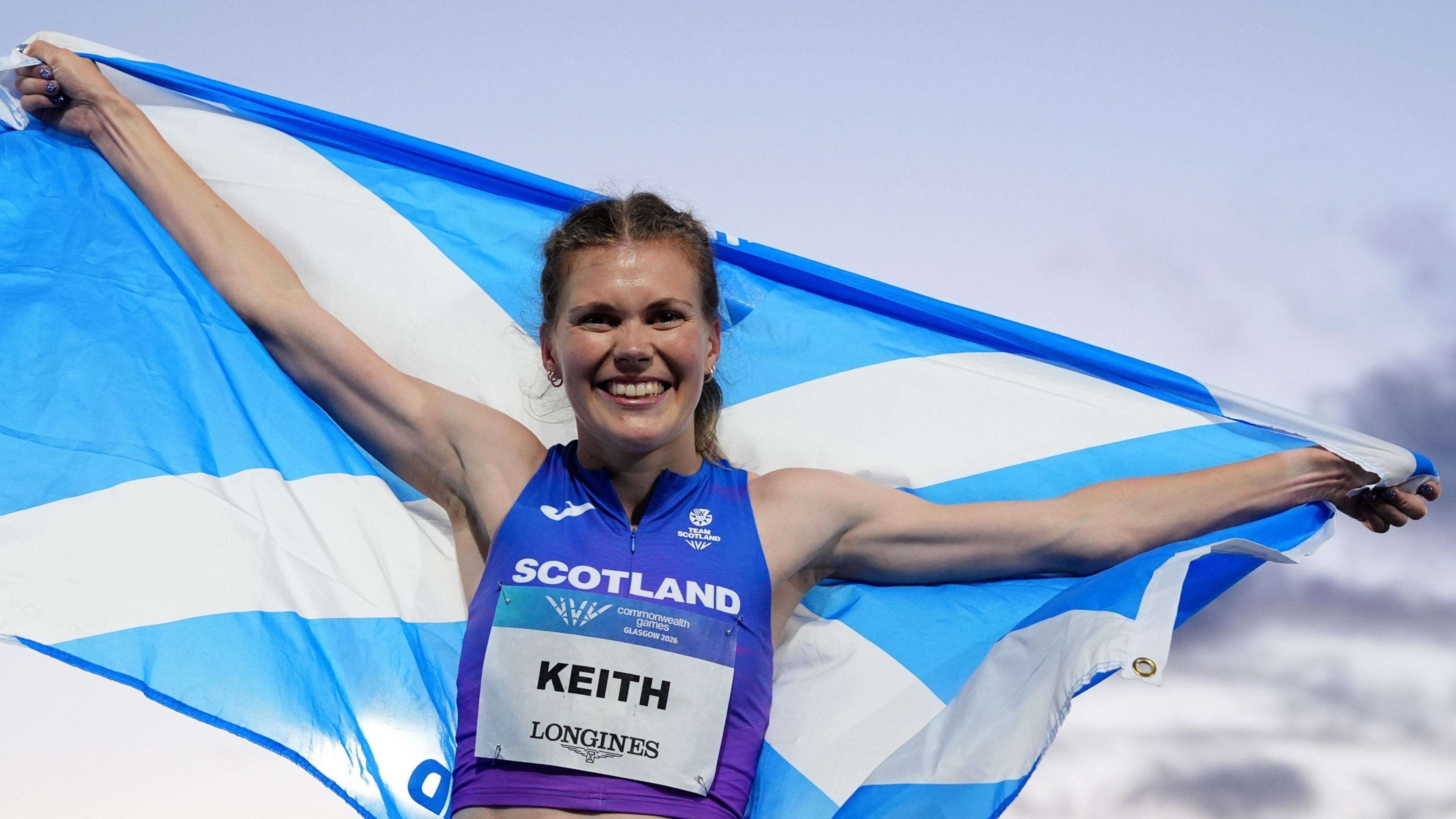
But perhaps the most poignant medal of the week belonged to Megan Keith, who claimed bronze in the women's 5000m with a 100-year-old man watching from the stands.
One Hundred Years in the Stands
Dr. Murray Kirkwood had two goals: live to 100, then watch the Commonwealth Games in Glasgow. He achieved both—and on Wednesday night, he watched his granddaughter sprint to a bronze medal at Scotstoun.
Keith had finished a disappointing ninth in the 10,000m earlier in the week. "The 'can Megan win a medal?' talk" had been floating around, she admitted. But with that weight lifted, and with "the help of two other Scots in the race," she turned her week around.
"He's a bit of a phenomenon," Keith said of her grandad, who once delivered the match ball for Glasgow Warriors before his 100th birthday. "I was trying my best to rival that tonight... I'll have to go and ask him for his verdict."
The Gamblers Who Rode Through Sickness
Back at the velodrome, England was making its own luck. Josh Charlton—world champion, individual event winner—had vomited over his team-mate's bike during Thursday morning qualifying. "I wasn't actually meant to be doing this event this evening," said Will Tidball, who was called in as a last-minute replacement to a line-up he'd never ridden with before.
The untested squad beat Olympic champions Australia to gold.
"There's strategy in play, different heights and orders," said veteran Charlie Tanfield. "It was always going to be a bit of a gamble."
They gambled. They won.
Racing Friends, Rivals, and Records
In the pool, four swimmers who won world relay gold together last year were suddenly rivals. Scotland's Alex McMillan. Wales's Medi Richards. England's Tom Dean. Scotland's Evan Jones. They represent different nations now—Northern Ireland, Wales, England, Scotland—but they train together year-round as Team GB.
"We're all good friends and that camaraderie helps us as team-mates, but also as rivals to push each other," McMillan said. "Swimming is an individual sport too."
Richards, who had already won three medals in Glasgow, was still hunting his first gold. The heats swim Wednesday. The medals, as always, come later.
The Weight of Gold
Across Glasgow this week, athletes carried different burdens toward the same finish line. O'Connor carried forty years of Northern Irish history. Dr. Kirkwood carried a century of memories. Charlton carried whatever he'd eaten that morning—and then got on his bike anyway.
The Commonwealth Games don't always make sense as a concept: friends competing against friends, teammates suddenly strangers, nations divided by miles that mean nothing at the world level. But in Glasgow this week, something clicked. The rain came down. The athletes ran through it.
And when the medals were counted, there was gold to go around.
Sign in to join the conversation.
Comments (0)
No comments yet. Be the first to share your thoughts.