The Party That Started Something
Thousands of fans poured into Mexico City's legendary Azteca Stadium on Thursday as Shakira lit up the opening ceremony of the 2026 FIFA World Cup — the first time in 40 years that Mexico has hosted the beautiful game on home turf. "I just want Mexico to get off on the right foot," fan Javier Pérez told the BBC, his family wide-eyed beside him in front of the iconic stadium. A day later, Michael Bublé headlined Canada's ceremony in Toronto, and Katy Perry, Tyla, and Future brought SoFi Stadium in Los Angeles to its feet for the USA's turn.
It was a week of grand openings. But behind the spectacle — and perhaps more lastingly — a quieter set of openings was happening in classrooms, labs, and forests around the world.
Girls, Code, and a City Called Kumasi
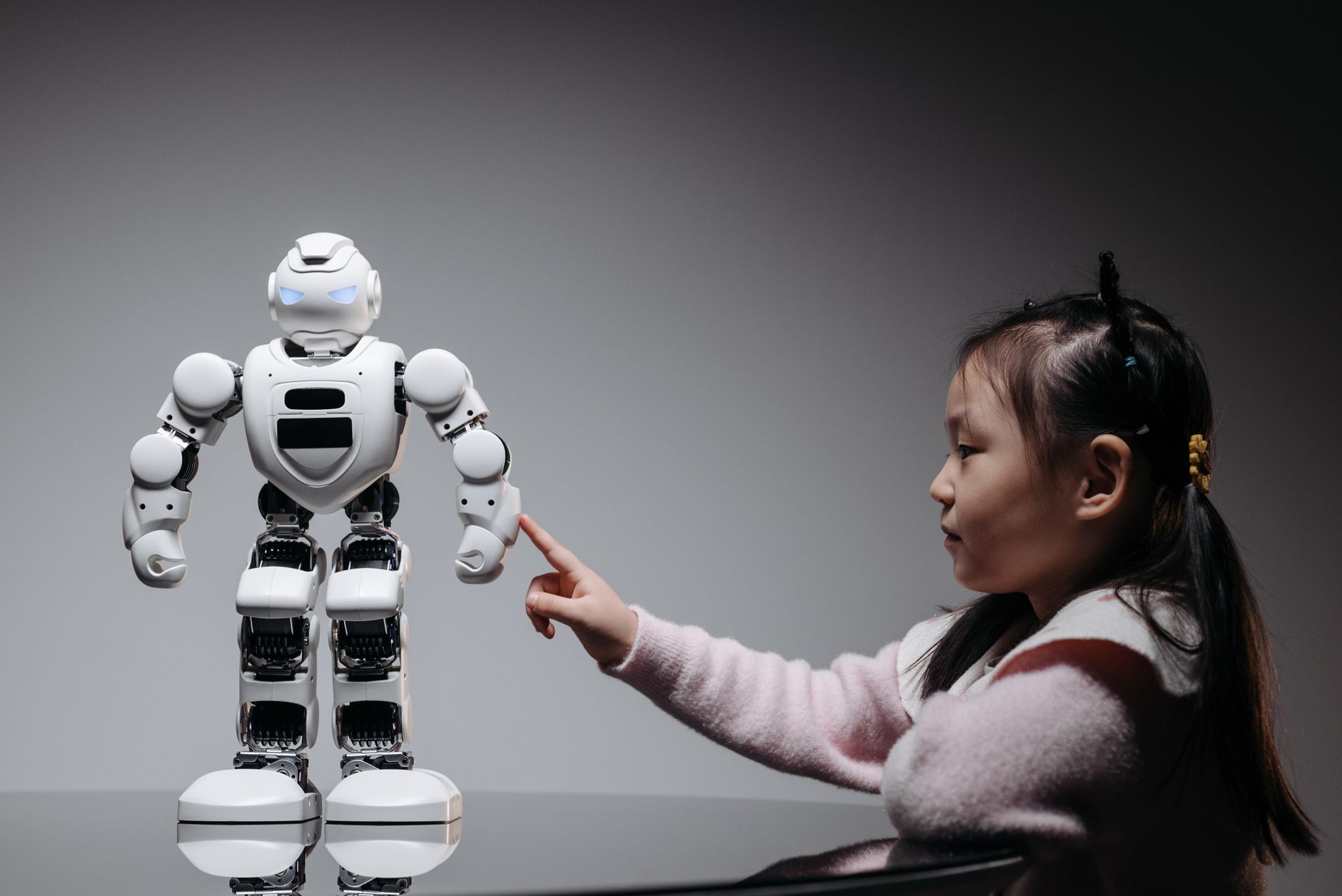
In Kumasi, Ghana, a different kind of launch was taking place. Telecel Ghana unveiled its Ashanti Codes initiative: a 12-week programme bringing students from Kumasi and Obuasi together to learn coding, AI, and digital technology. At the launch event, students showcased driverless vehicles, smart toll gates, and obstacle-avoiding robots they had built themselves.
Seventy percent of the participants are girls.
"At Telecel we believe that if we are able to equip our own young ones and grow with it," said External Affairs Director Komla Buami, "it will be a part of them." The programme aims to reach 1,000 beneficiaries across its two centres, while the Telecel Foundation simultaneously trains teachers to become digital skills trainers in their own schools — and plans to supply standard kits aligned with Ghana's national curriculum.
The goal isn't just to teach tech. It's to make technology feel native to a generation that will live inside it.
The Maine Woods as a Classroom
A few thousand miles north, in Millinocket, Maine, English teacher Anna Loome is making a different kind of argument about what school can be. Just outside the doors of Stearns Junior-Senior High School sits Baxter State Park — and Loome has turned it into a curriculum. Her students learn navigation, trail building, wilderness cooking, and outdoor safety. Some have never hiked before. Some have hiked their whole lives.
"My goal is to help kids get access to the skills they need to participate in a lot of the amazing recreational activities we have right in our backyard," Loome said.
A new study led by University of Maine researchers and published in The Rural Educator now offers a roadmap for other schools looking to replicate what Stearns has built — identifying strategies to make outdoor education more accessible even for institutions that lack the natural infrastructure of a national park next door.
Green Chemistry, Student-Led
Down in Atlanta, at Georgia State University, undergraduate students are doing something that sounds modest but carries real weight: they're redesigning their own chemistry experiments to be more environmentally sustainable. The effort, published in the Journal of Chemical Education, was led by Principal Academic Professional Jianmei Cui inside the CHEM 3110 organic chemistry lab.
What makes this project notable isn't just the green chemistry itself — it's who's driving it. "This initiative is especially exciting because it is driven forward by students' voices," Cui said. Students aren't passively absorbing knowledge; they're actively reshaping how science is done and imagining how those habits will extend into their daily lives beyond the lab.
The Longest Investment: Early Childhood
Perhaps the most striking data point of the week came not from a stadium or a coding bootcamp, but from a long-running study out of Penn State. Researchers tracked children who, during preschool, had parents enrolled in the Research Based, Developmentally Informed (REDI) programme — which provided coaching and support materials to families. Seven-plus years later, those children showed fewer conduct problems in middle school and higher working memory scores.
"This study shows how important it is to involve parents in the development of key educational skills," said Karen Bierman, Evan Pugh University Professor of Psychology and lead author of the study.
Complementing that finding, a separate study by Sammy Ahmed at the University of Rhode Island found that when preschool teachers themselves receive professional coaching, their students show measurable gains in executive function — the ability to control impulses, hold attention, and follow instructions. These are the foundational skills that, as Ahmed's research shows, ripple outward across a child's entire educational and behavioral life.
One Week, One Thread
It would be easy to see these stories as unrelated: a World Cup party, an AI bootcamp in Ghana, a forest classroom in Maine, a chemistry lab in Atlanta, a preschool study in Pennsylvania. But they share a spine. Every one of them reflects a growing, global conviction that the skills people carry inside them — technical, physical, cognitive, emotional — are worth extraordinary investment.
The opening ceremonies will fade from memory. The girl in Kumasi who learned to code probably won't. The preschooler whose parent got coaching will carry something invisible and powerful into every classroom they ever enter. That's not spectacle. That's infrastructure — the kind that compounds quietly, over years, into a different kind of world.
The party this week was for football. But the real opening ceremony may be something much bigger.
Sign in to join the conversation.
Comments (0)
No comments yet. Be the first to share your thoughts.