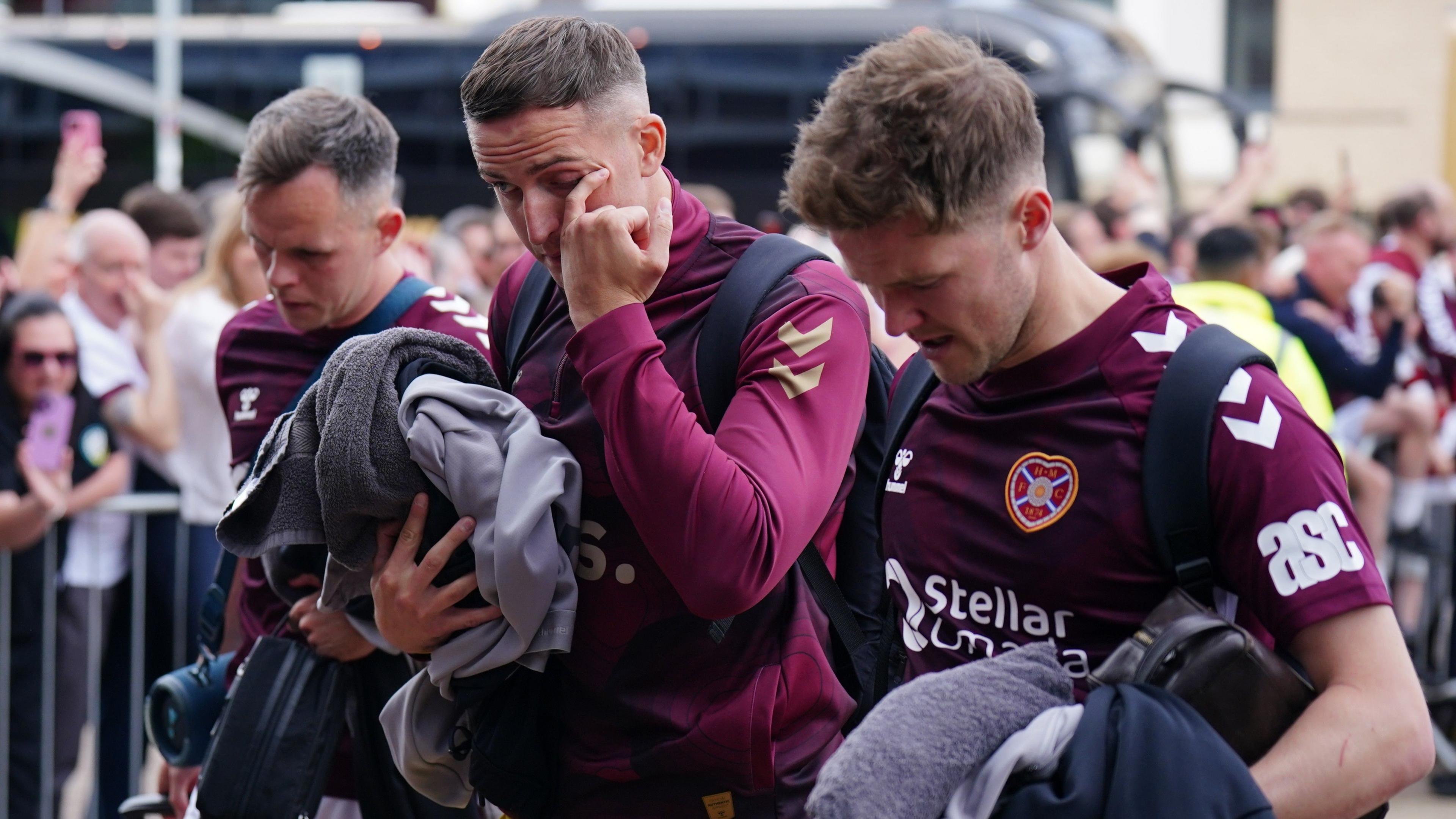
60,000 Seats. Fewer Than 800 Away Fans. Everything on the Line.
Celtic Park was already electric before a ball was kicked. On a Saturday lunchtime in May, the eyes of the world — as BBC Sport Scotland put it — were fixed on Glasgow for a Scottish Premiership finale unlike anything the country had seen since 1991.
Hearts had led the table for 250 days. Since September, Derek McInnes's side had been out front, daring to dream of a first Scottish title since 1960. No team outside Celtic or Rangers had topped the pile since Aberdeen in 1985. This was history knocking loudly on the door.
"It's pure box office," McInnes said. "I felt for a while it would go the full way."
He was right. It did.
"We've Ripped the Script Up So Often This Season"
The Hearts head coach arrived in Glasgow brimming with defiance. His side had done the hard work — beating Falkirk 3-0 the previous week to ensure a one-point cushion going into the final day. Avoid defeat and Edinburgh would erupt. Lose, and Celtic would claim a fifth successive title.
With fewer than 800 Hearts supporters inside a 60,000-capacity stadium, the noise would be overwhelmingly hostile. McInnes didn't flinch. "There might be people out there who think everything's back on script," he said. "'Celtic win their home game, they win the league.' But we've ripped the script up so often this season, and we've got one more in us."
As BBC Sport Scotland reported, it was the first final-day title shootout between the top two clubs since Rangers edged out Aberdeen in 1991 — a 34-year wait for Scottish football's most dramatic afternoon.
It wasn't to be. Celtic won. The trophy stayed in Glasgow, ribbons intact, five titles in a row secured.
"I Really Can't Believe It"
In the middle of the Parkhead celebrations stood a 74-year-old man who, just months earlier, had been sipping coffee on the King's Road in London, enjoying retirement. Stand-in boss Martin O'Neill looked around at the stadium in full voice and struggled to find words.
"In October, I was having coffee on the King's Road, enjoying retirement," he said. "I thought the days of me here at Celtic Park lifting trophies were well and truly gone. It has been really sensational for me. I really can't believe it."
O'Neill, the veteran manager who guided Leicester City to League Cup glory and Aston Villa to European nights, was candid about what this Celtic tenure has meant to him personally. "Celtic gave me reasons to live," he said. Whether he continues into next season remains genuinely open — "I genuinely don't know," he admitted — but the moment itself was unambiguous. "This is the most special place on earth," he said. "When there is absolute unison in this stadium, it is a sight to behold."
The Heartbreak That Comes With a Plan
For Hearts, the pain is real. Sixty-six years of waiting, 250 days at the top, and then — gone, in an afternoon. But as BBC Sport Scotland reports, the man behind the club's transformation isn't treating this as a near-miss. He's treating it as a beginning.
Tony Bloom, the businessman and data analytics pioneer whose company has backed Hearts, set a target of winning the league within a decade. It took one season to split the Old Firm's stranglehold. Hearts have already secured a place in the second round of Champions League qualifying for next season. Three tough ties stand between them and the tournament proper, with the Europa League and Conference League as safety nets beneath.
"I think we've got a very good chance of at least being second this season," Bloom had said — and he was proven right in the most painful way possible. The infrastructure, the analytics, the long-term vision: none of it has gone anywhere.
A Different Shade of Blue in Manchester
The drama wasn't confined to Scotland. In Manchester, a different trophy was finally lifted after a seven-year wait. Manchester City's women's team claimed the Women's Super League title, ending their campaign with a four-point advantage over Arsenal and holding off the challenge of European champions Chelsea.
"It is pretty magical, to be honest," said midfielder Laura Coombs, who scored in her final league game before retiring from playing after 19 years. Coombs, who joined City from Liverpool in 2019, has now won the FA Cup, League Cup, and WSL with the club. Her name is etched on the wall of City's new £10m training facility — a symbol of what the club is building. "They are really trying to create something for the future," she said. "It is going to be incredible to watch the journey."
With a Women's FA Cup final against Brighton on 31 May still to come, City's season isn't finished yet.
Ulster's Unfinished Business
Further afield, Ulster rugby are refusing to let their season end in disappointment. A final regular-season defeat to Glasgow Warriors in the United Rugby Championship knocked their play-off hopes into uncertainty — but a Challenge Cup final against Montpellier in Bilbao on 22 May remains. It would be the province's first trophy in 20 years.
"We're all aware of what's at stake and what it will mean to people," said flanker Nick Timoney. "There hasn't been a trophy since 20 years ago, which is a historic statistic. It means the same to us as the fans, so we'll make sure nothing is left unturned."
What These Moments Are Really About
From Celtic Park to the Etihad Campus to Bilbao, this has been a weekend that reminded sport of its own power. The finals, the near-misses, the veteran managers rediscovering reasons to live, the retiring midfielders soaking in one last championship — none of it was guaranteed. All of it mattered.
Hearts will be back. Manchester City are building something lasting. Ulster are one game from glory. And somewhere in Glasgow, Martin O'Neill is still deciding whether retirement can possibly compete with moments like these. It probably can't.
Sign in to join the conversation.
Comments (0)
No comments yet. Be the first to share your thoughts.