In a limestone quarry beneath the shadow of the Great Sphinx, a crocodile’s fossilized skull lay buried for 45 million years—unseen, unnamed, and unknowable—until modern eyes and CT scans revealed it as Herugavialis cairensis, a species new to science. Its discovery, a century after it was first unearthed, is a quiet testament to how much of our world remains hidden, waiting for the right questions, the right tools, the right moment to emerge.
This year, those moments are multiplying.
At Drimolen Cave in South Africa’s Cradle of Humankind, researchers from La Trobe University uncovered an adult Homo erectus skull fragment dating back 2 million years—200,000 years earlier than previously believed. As reported in the Annals of Human Biology, this fossil rewrites the timeline of human evolution, placing our ancestors in southern Africa far earlier than textbooks once claimed. Alongside it, remains of Paranthropus robustus show a species adapting in real time, evolving stronger jaws and larger teeth in response to a changing climate.
Meanwhile, in a wind tunnel at Lund University, European nightjars flapped their broad-winged silhouettes against controlled airflow. These nocturnal migrants travel thousands of miles between Europe and Africa, yet they also hunt on the wing, darting after insects in slow, agile bursts. As the PLOS Biology study reveals, their wings are not perfectly optimized machines but evolutionary compromises—excelling at maneuverability but losing lift efficiency at high speeds. "The nightjar’s wings appear to be a compromise between several different demands," says Christoffer Johansson. Nature, it seems, doesn’t build specialists—just survivors.
In Cologne and Gatersleben, Germany, another kind of partnership is unfolding—one between plants and bacteria. When iron in soil becomes chemically locked and inaccessible, Arabidopsis plants don’t just struggle. They communicate. As the Cell study shows, they release specific coumarins into the rhizosphere, chemical signals that recruit bacterial allies. At acidic pH, one compound called sideretin teams up with microbes to reduce iron into a soluble form. At neutral pH, fraxetin works differently, chelating iron with bacterial siderophores. It’s a finely tuned, pH-sensitive dialogue that reveals nature’s sophistication in solving scarcity.
And deep in the quantum realm, lithium—the element used for over 70 years to treat bipolar disorder—is finally giving up one of its secrets. At the University of Surrey, researchers used quantum simulations to explore why two isotopes, lithium-6 and lithium-7, produce different biological effects despite being nearly identical. The answer may lie in nuclear spin, a quantum property that influences electron behavior in reactions involving flavin and vitamin C radicals. As their PLOS ONE paper suggests, quantum mechanics might not just govern particles—it could shape mood.
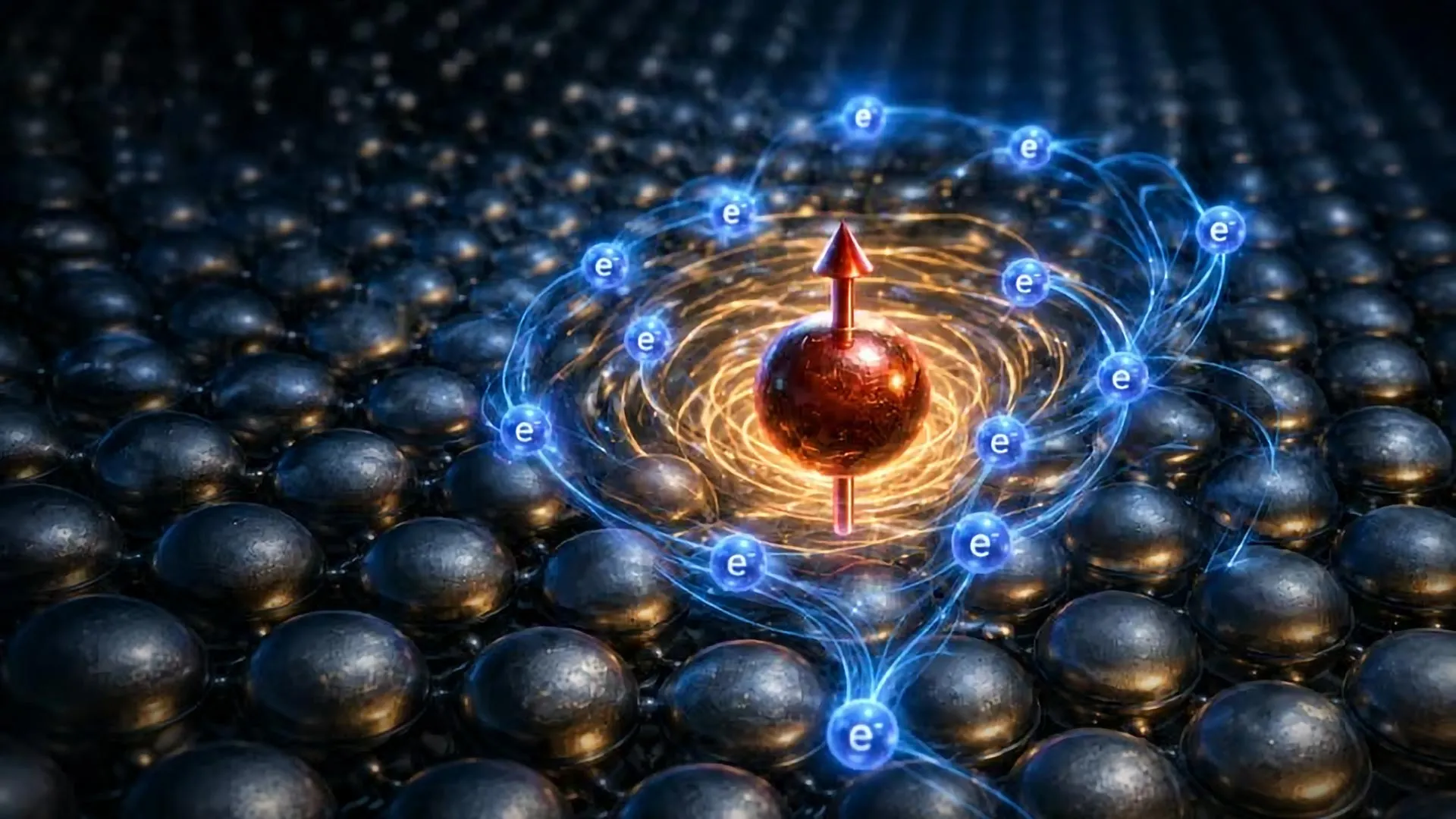
At Caltech and Yale, scientists have taken another leap, developing a method to predict the Kondo effect—a quantum phenomenon where magnetic atoms alter electron behavior in metals—using real atomic structures, not simplified models. As Garnet Chan explains, this is a "baby step" toward simulating high-temperature superconductors and quantum magnets. For the first time, researchers can compute material properties from first principles, without relying on experimental data.
Even Earth’s ancient tectonics are being redrawn. In northwestern Iran, an international team led by Istanbul Technical University uncovered traces of a lost magmatic arc, active 101–97 million years ago. Published in Geoscience Frontiers, the discovery of the Azerbaijan Continental Magmatic Arc reshapes our understanding of the Arabia–Eurasia collision zone, revealing how continents grow and collide over eons.
And in South Africa’s Addo and Marakele National Parks, elephants are teaching us about intention. Over 90 hours of observation, researchers documented 840 gestures—trunk raises, ear flaps, head jerks—used by wild African savanna elephants in competitive contexts. As the Animal Cognition study shows, they check if their audience is watching, wait for responses, and repeat or adjust when ignored. This isn’t reflex. It’s communication with purpose.
Together, these discoveries form a mosaic of curiosity, persistence, and revelation. They remind us that knowledge isn’t a straight line—it’s a web, stretching from quantum spins to elephant gestures, from crocodile fossils to root microbiomes. Each finding is a thread, pulled from the dark, that helps us see the pattern more clearly.
We are not done learning. We are just beginning.
Sign in to join the conversation.
Comments (0)
No comments yet. Be the first to share your thoughts.