A 63-Year-Old Man. His Brother's Cells. And a Virus That Vanished.
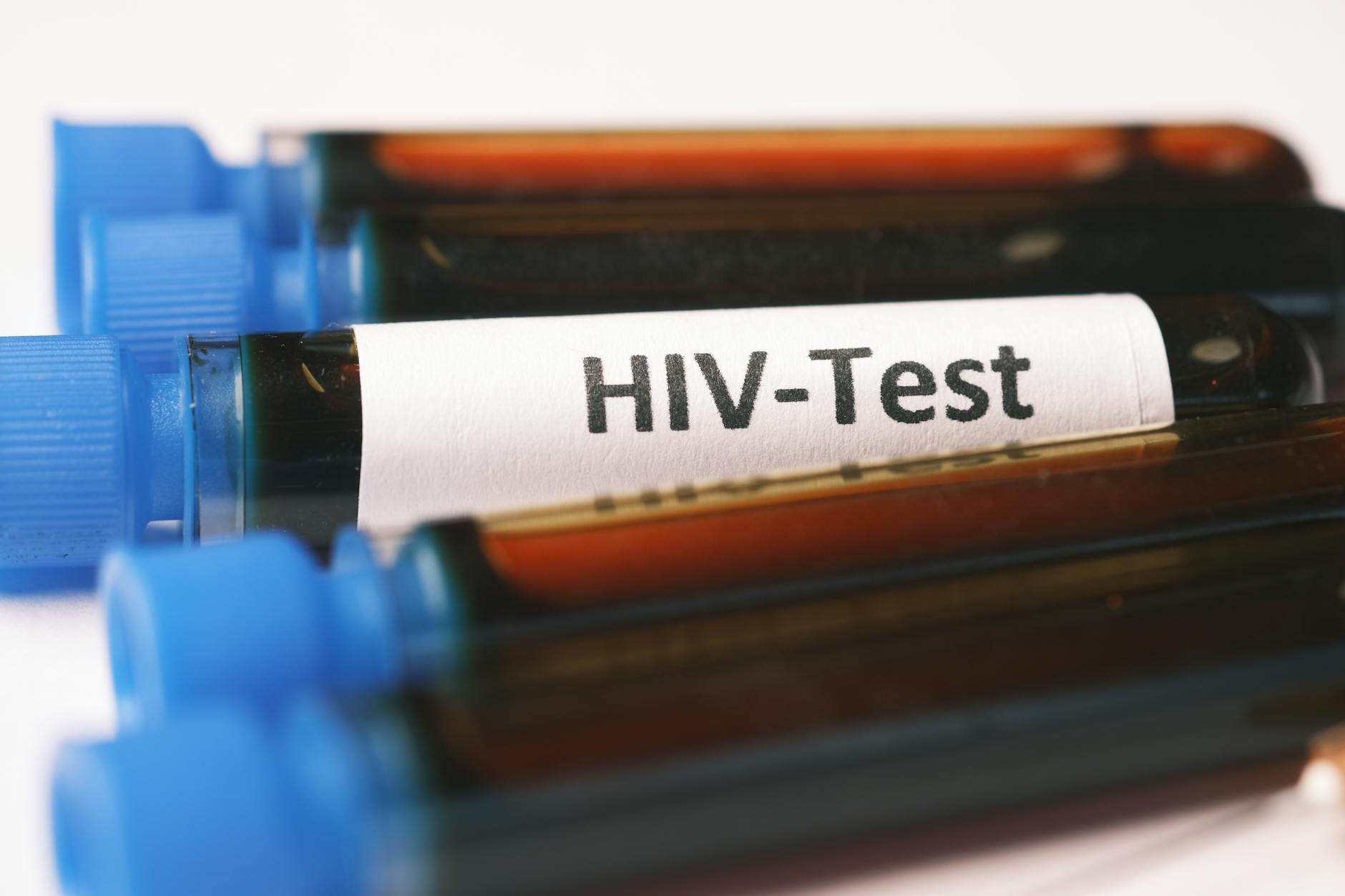
When the man known as the Oslo patient received a bone marrow transplant from his brother, nobody in the room knew the cells carried a rare protective mutation. The procedure was meant to treat a life-threatening blood disorder. What it also did — quietly, almost accidentally — was eradicate HIV that had lived in his body for 14 years.
As Singularity Hub reports, fewer than 10 people worldwide have ever cleared HIV through stem cell transplantation. The Oslo patient is now among them, joining a small and extraordinary group of human beings who have been functionally cured of a virus that still affects tens of millions globally. The discovery that his brother's cells harbored the protective mutation wasn't made until transplant day. A two-for-one deal that rewrote one man's life.
That story is singular. But it doesn't stand alone. It lands in the middle of a week in which scientists, across disciplines and across institutions, quietly pushed the boundaries of what we thought we understood about the world.
Cells Are Smarter Than We Thought
While stem cells were making headlines for what they can cure, a parallel story was unfolding at the molecular level. A new MIT study reveals that the lipid membranes surrounding cells aren't just passive wrappers — they actively influence the behavior of the protein receptors embedded within them.
According to MIT News, changing the composition of a cell membrane can alter how a receptor functions. That's a significant shift in thinking. For decades, membranes were treated as structural scaffolding. Now evidence is mounting that they are more like a control panel, tuning cellular behavior from the outside in. The implications for drug development — particularly for diseases where receptor dysfunction plays a role — could be profound.
And speaking of drug development: the company OpenProtein.AI is working to make sure these kinds of biological discoveries can move faster from lab bench to medicine cabinet. As MIT News reports, the company has built a no-code platform giving scientists access to powerful AI foundation models for designing proteins — no machine-learning expertise required. Artificial intelligence is already accelerating drug discovery, but the bottleneck has always been access. OpenProtein.AI is trying to remove that bottleneck entirely.
The Scientists Behind the Breakthroughs
None of this happens without people. This week, MIT announced two sets of recognitions that put faces to the relentless curiosity driving modern science.
MIT Professor Michael T. Laub — the Salvador E. Luria Professor in the Department of Biology and an HHMI Investigator — was named a 2025 AAAS Fellow, alongside 21 MIT alumni. The 2025 class includes 449 scientists, engineers, and innovators spanning all 24 disciplinary sections of the American Association for the Advancement of Science. Laub's own work focuses on how cells process information — a thread that connects directly to the membrane research making waves this week.
Meanwhile, MIT Associate Professor Jacob Andreas of Electrical Engineering and Computer Science, and Associate Professor Brett McGuire of the Department of Chemistry, were named winners of the 2026 Harold E. Edgerton Faculty Achievement Award. Established in 1982, the award honors exceptional younger faculty — the researchers who are still early enough in their careers to be surprising, but accomplished enough to already be reshaping their fields.
Looking Up — Way Up
The week's scientific imagination didn't stop at the cell wall. It reached past the atmosphere entirely.
On Saturn's moon Titan, a mild breeze — the kind that barely ripples a lake on a calm Earth afternoon — would generate waves 10 feet tall. That striking image comes from a new wave model developed by MIT scientists, published in the Journal of Geophysical Research: Planets. The model is the first to capture the full dynamics of wave formation under different planetary conditions, and it will matter enormously as future missions consider landing on or studying Titan's hydrocarbon seas.
Closer to home — but still very much in orbit — MIT researcher Richard Linares is working on one of the least glamorous but most urgent problems in modern space exploration: traffic. As MIT News reports, more than 10,000 satellites are currently operating in low-Earth orbit, with another 5,000 deorbiting. Chances are, you used one today — to navigate, stream, or check the weather. Managing that increasingly crowded orbital environment is becoming a scientific and logistical challenge that will define the next era of the space economy.
The World Underneath the Headlines
And then there's the quieter work — the economics of how communities change and grow. A new study by researchers at MIT and the University of Cincinnati examines how Asian immigrants' home purchases affect housing prices, K-12 education, and community life in the United States. Asian immigrants are currently both the fastest-growing and highest-earning immigrant ethnic group in the country, and understanding the mechanisms behind the data — not just the correlation, but the cause — matters for policy, planning, and for the people living those realities.
One Week. One Direction.
What connects a cured HIV patient in Oslo, a cell membrane study in Cambridge, a no-code AI platform for protein design, a wave model for Titan, and a traffic management system for satellites?
The answer is the same thing it always is: scientists, asking the next question. The 449 new AAAS Fellows represent a generation of researchers who refuse to treat the current understanding as the final one. The Oslo patient is alive and well because two brothers shared a rare genetic gift — and because decades of stem cell research made it possible to recognize what that gift meant.
The world is more knowable than it was last week. That's not a small thing.
Sign in to join the conversation.
Comments (0)
No comments yet. Be the first to share your thoughts.