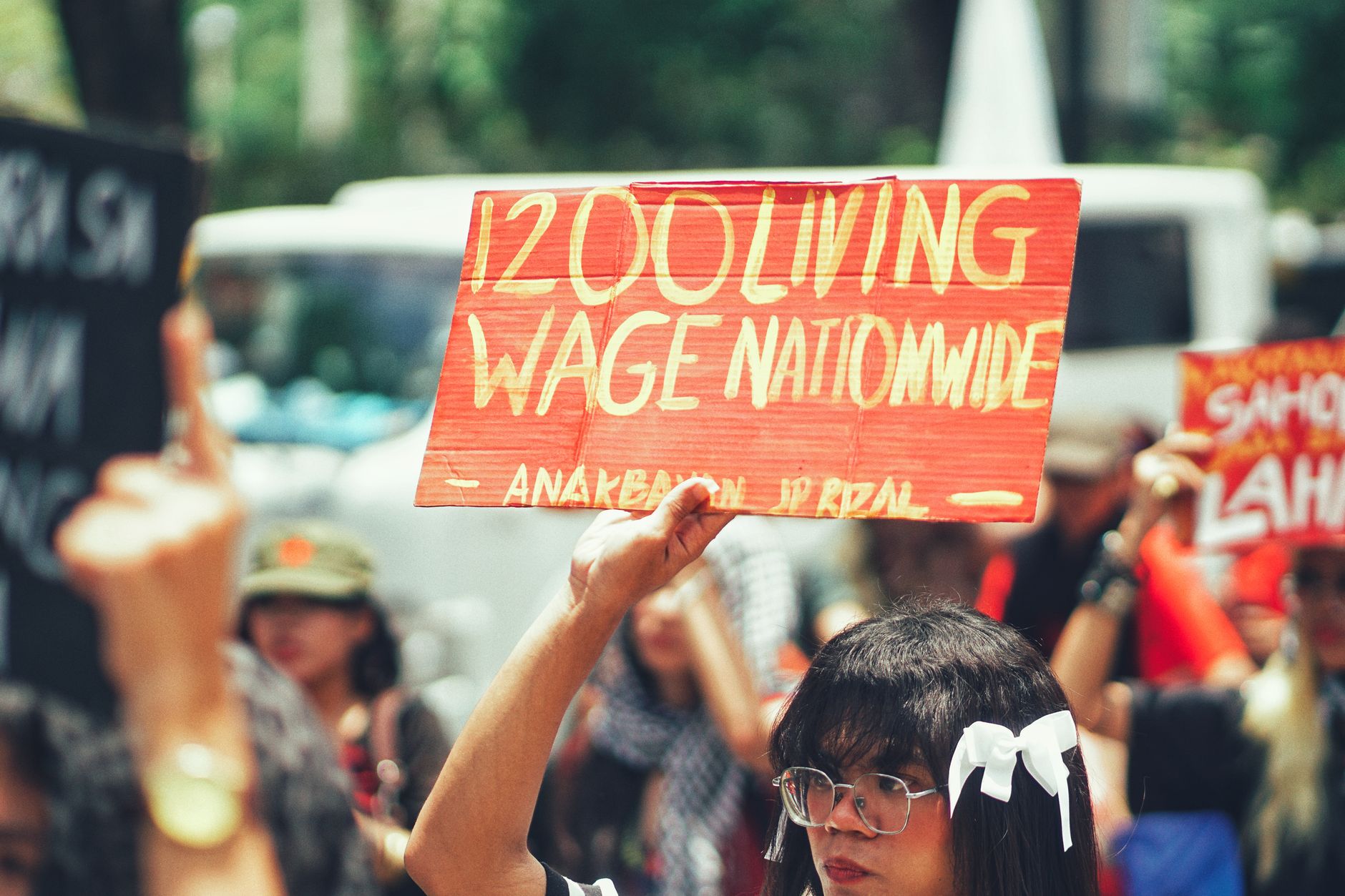
A Village in Madhya Pradesh, a Boardroom in Accra
The sun rises over Sarvan Village in Ratlam district, India, and the cotton fields are already dangerous. By 11 May 2026, more than 50 small and marginal farmers — many of them women bent low beneath the heat, picking cotton by hand — had gathered not to work, but to learn. To learn how to survive the work.
That morning in Sarvan was one thread in a much larger fabric. Across Africa, Europe, and Asia, something remarkable is happening: governments, workers, employers, and international bodies are weaving together a new global compact around what work should look like, feel like, and deliver for ordinary people.
From Fields to Capitals
In Madhya Pradesh, the ILO's Rise for Impact programme — implemented in partnership with the Confederation of Indian Textile Industry (CITI) — is training cotton farming communities on occupational safety amid extreme heat. As the ILO reports, these farmers face hazardous agrochemicals, biological dust, and grueling physical strain. Women workers are especially exposed, often performing the most labour-intensive tasks under the harshest conditions. The workshops aren't abstract. They're field demonstrations, held in the dirt, where the risk is real.
Meanwhile, roughly 7,000 kilometres away in Accra, Ghana's government was marking a different milestone. On 24 April 2026, officials officially launched the Ghana Decent Work Country Programme III (DWCP III) — a five-year framework running through 2030 designed to tackle youth unemployment, informality, and gaps in social protection. Dr. Vanessa Phala, ILO Director for Nigeria, Ghana, Liberia, and Sierra Leone, was present at the launch, which brought together government, labour unions, and employers' associations in a shared national commitment.
Just two weeks later, on 6 May, Phala was in Abuja. Nigeria's Federal Ministry of Labour and Employment had convened a landmark event: the launch of the country's first-ever National Industrial Relations Policy (NIRP). Minister Muhammad Maigari Dingyadi put it plainly. "This Policy provides the compass," he said — acknowledging that for decades, Nigeria's industrial relations had operated without a comprehensive guiding framework. The NIRP is built on three pillars: social dialogue, rights at work, and productivity.
Across the Continent, Across Borders
On 8 May 2026 in Monrovia, Liberia's Ministry of Labour convened its own high-level tripartite consultation. Deputy Minister Steve Kolubah described it as "a key milestone in building a labour market that delivers for all Liberians." The consultation advanced Liberia's Decent Work Country Programme and announced the development of a National Employment Policy and a National Employment Observatory — tools for evidence-based policymaking in one of West Africa's most fragile economies.
In Gaborone, Botswana, a Tripartite Workshop convened by the Ministry of Labour and Home Affairs laid out an equally ambitious vision. Acting Deputy Permanent Secretary Ms. Tshenolo Omphitlhetse captured it with striking clarity: "Social protection is a national development vehicle; it is not a privilege but a right and powerful economic stabilizer." The workshop, supported by the ILO, focused on extending coverage to informal workers and aligning Botswana's policies with international social security standards — recognizing that a safety net with holes in it protects no one.
Workers Organizing for What's Coming
The urgency isn't only about jobs today. In Baku, Azerbaijan, trade unions are preparing for the world of work that climate change will reshape. On 13 May 2026, an international conference gathered the Azerbaijan Trade Unions Confederation (AHIK), the National Centre of Trade Unions of Turkmenistan, and ILO's Bureau for Workers' Activities to confront a central question: how do workers stay protected during the shift to low-carbon economies? AHIK Chairman Sahib Mammadov stressed that workers' interests must remain "at the centre of the transition."
The following day, 14 May, Baku hosted a second event — a seminar on ILO supervisory mechanisms, helping Azerbaijani trade union representatives understand how to use international labour standards as a practical shield for workers' rights at the national level. Knowledge, these sessions argued, is not separate from power. It is power.
Matching People to Opportunity
Not every breakthrough is about protection from harm. Some are about opening doors. In Cairo, the ILO's THAMM Plus programme — funded by the European Union — is building a skills bridge between Egypt and Europe. A skills needs and mismatch study, examining tourism and hospitality sectors across Egypt, Germany, and Italy, is generating the evidence base needed to connect Egyptian workers with real opportunities abroad. As the ILO reports, a National Technical Forum on Tourism and Hospitality will translate these findings into structured policy dialogue — a model for how labour migration can be governed fairly, with workers' dignity intact.
The Common Thread
From a cotton field in Ratlam to a conference hall in Baku, from Accra's launch ceremony to a workshop in Gaborone, the same conviction runs through every initiative: that decent work is not a luxury reserved for wealthy nations or formal-sector employees. It is a foundation. And that foundation is being laid, carefully and with genuine collaboration, right now.
For anyone paying attention, the message from May 2026 is clear. The global labour movement — governments, unions, employers, international bodies — is not waiting for perfect conditions. It is building them.
Sign in to join the conversation.
Comments (0)
No comments yet. Be the first to share your thoughts.