At Windsor Park, Northern Ireland’s defenders have spent four Nations League matches doing something no other team among the competition’s 54 nations could claim: conceding no goals. For a young side that had won only one of its first 16 games in the second tier, that quiet record has turned promotion into a real possibility—and changed what the team can imagine next.
The story of power in sport is often told through trophies. But across rugby, hockey, golf and football, these results point to something broader: power can mean sustaining excellence, breaking through a ceiling, or giving a team the belief to face bigger stages.
A clean sheet becomes a doorway
Northern Ireland’s unbeaten run in League B2 has been built by a squad with an average starting age of 22.9 in its 1-0 win over Ukraine; eight starters were 23 or younger. The team had already beaten Ukraine away and Georgia away, alongside two goalless home draws. With promotion to League A within reach, the next games offered more than points.
A win over Ukraine would leave the side needing only a point in Budapest against Hungary. As BBC Sport reported ahead of the decisive match, promotion would give Michael O’Neill’s players competitive experience against top-ranked nations—and help their development. Finishing in the group’s top two also mattered for Northern Ireland’s seeding in the Euro 2028 qualifying draw.
Midfielder Isaac Price captured the ambition plainly: “You’ve got to play on the biggest stages.” The Puskas Arena, with a capacity of 70,000, offered a glimpse of that future. The point is not that one result guarantees a new era. It is that a young team can earn the chance to learn at a higher level.
Champions show what consistency looks like
Elsewhere, power meant defending a position at the summit. Australia beat New Zealand 34-10 in the women’s rugby league World Cup final, with Jamie Chapman scoring a hat-trick. The victory delivered a record-breaking fourth consecutive title. A streak like that is not a single moment of dominance; it is the repeated work of staying excellent while every rival is trying to stop you.
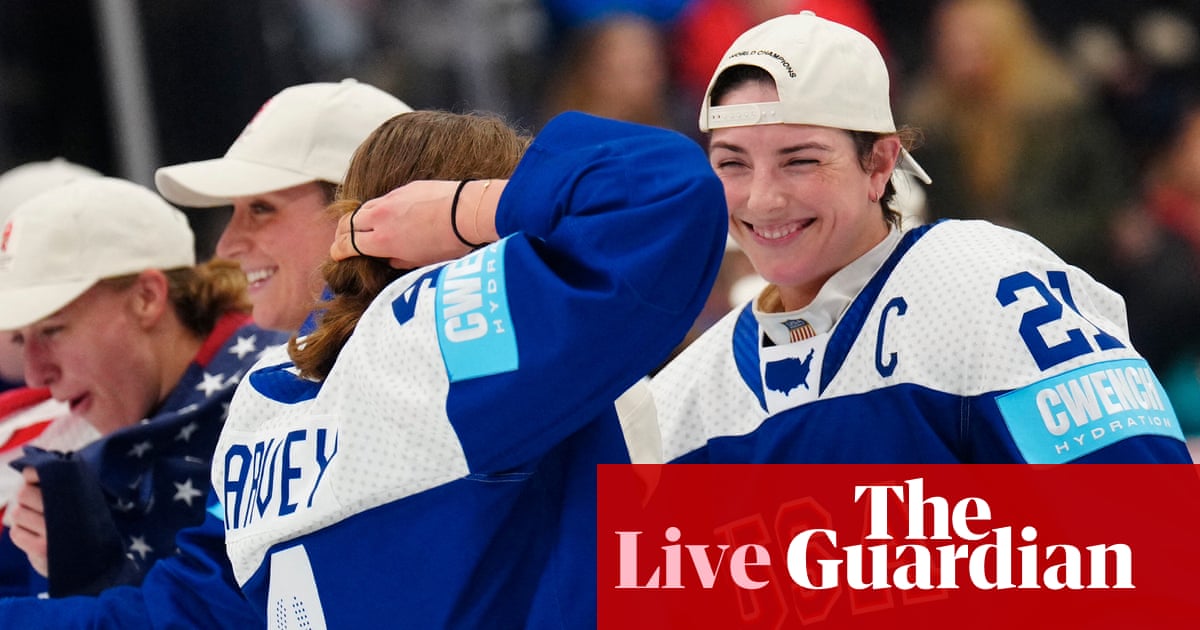
The United States women’s hockey team offered another kind of statement. In the world championship final, the Americans came from behind to beat Canada 6-2, earning their 12th world title. Hilary Knight and Kelly Pannek scored twice each, and the US added the championship to its Olympic gold from Milan in February. The Guardian reported that the team went unbeaten through seven games and trailed for only five minutes and 14 seconds in the tournament—those minutes coming in the final.
That comeback was not a foregone conclusion. Canada scored first through Sarah Fillier. The Americans answered with five straight goals, turning an early setback into a commanding finish. Their power showed up not in avoiding adversity, but in responding to it.
The long season, and the next step
Rory McIlroy’s Race to Dubai victory reveals the same strength over a longer clock. He finished second at the DP World Tour Championship, ahead of Spain’s Eugenio Chacarra, to secure the season-long European tour title for a fifth successive year. It was his eighth overall, equalling Colin Montgomerie’s record. The final-day pressure mattered, but so did the accumulated performance that brought him there.
And power can also be personal and still ripple outward. Jack Moylan, 25, joined Cardiff City from Lincoln City in the summer and quickly became a force for club and country. BBC Sport reported 11 goals and three assists in 17 Cardiff appearances, alongside a goal and an assist for the Republic of Ireland in a 3-0 Nations League win over Israel. His rise—from Shelbourne’s joint top scorer to an emerging international—shows how a new opportunity can widen the possibilities for a player and a team.
These achievements are not interchangeable: a world title, a season-long golf crown, a breakout career and a promotion chase each demand different kinds of work. Together, though, they offer a useful reminder. Power is not only the final score or the trophy lifted. It is also the record built over time, the response after falling behind, and the door opened for those coming next.
For young teams and fans alike, that may be the most encouraging measure of success: not just standing on a podium, but making the next challenge feel possible—and giving others a reason to believe they belong there.
Sign in to join the conversation.
Comments (0)
No comments yet. Be the first to share your thoughts.