The Oldest Things Are Teaching Us the Most
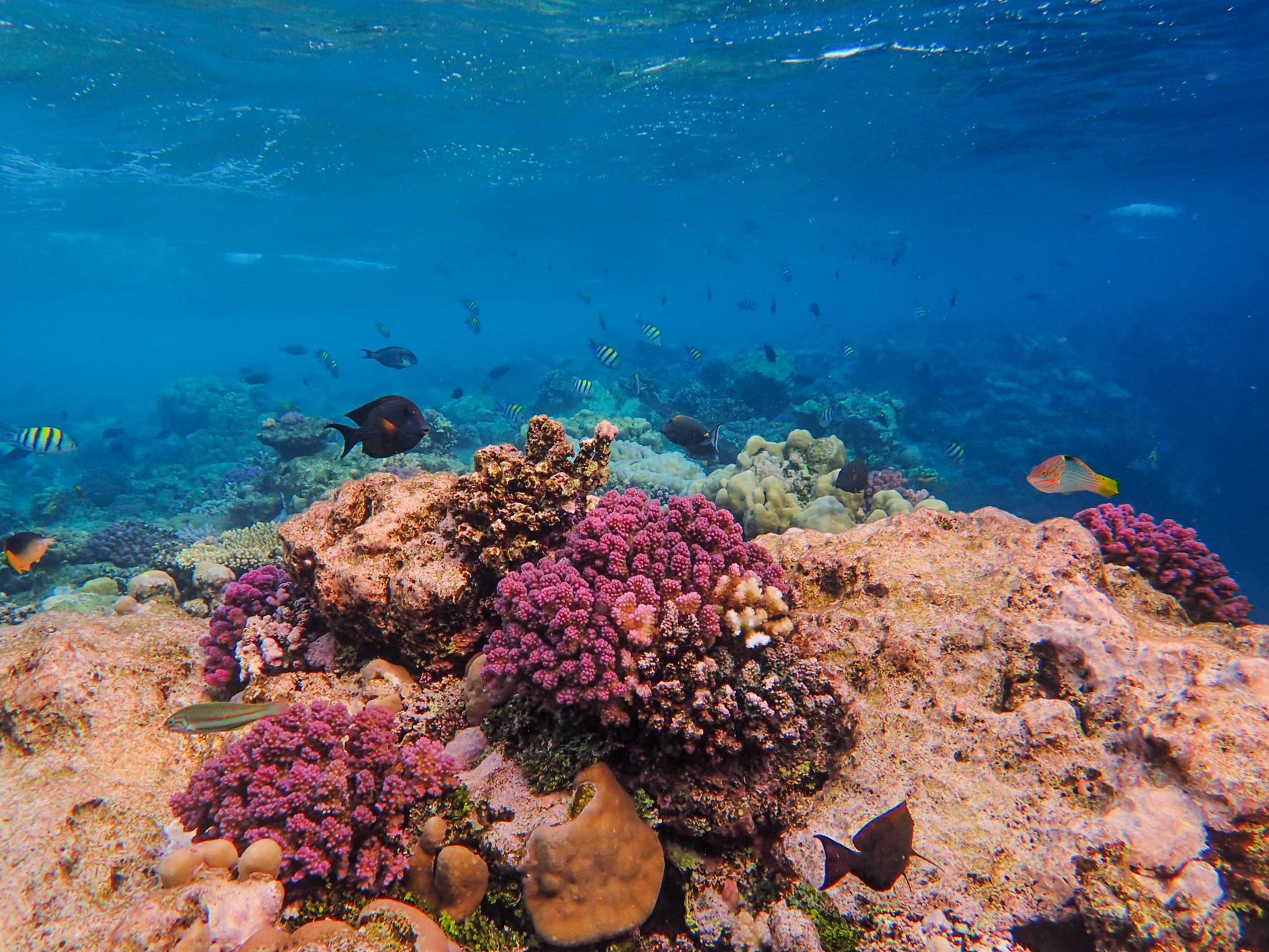
Somewhere beneath the surface of a warming ocean, a coral colony has been quietly growing since before the American Revolution. It has survived storms, bleaching events, and the slow churn of centuries. And until very recently, science had barely noticed it.
That's changing fast. A new study published in Nature Conservation introduces "Map the Giants," a citizen-science initiative led by researchers at the University of Milano-Bicocca. The project is racing to document "centennial corals" — ancient reef organisms that represent irreplaceable biological archives — before escalating climate pressures erase them forever. Anyone with a snorkel and a smartphone can contribute. The science of the living world, it turns out, needs all the help it can get.
And right now, that science is moving at an extraordinary pace.
Fish, Plankton, and a Tale of Two Reefs
Halfway around the world from those giant corals, researchers at James Cook University have cracked open a long-standing mystery about coral reef ecosystems. After analyzing a staggering 2.5 million observations of plankton-eating fish, the JCU-led team found that Indo-Pacific reefs produce dramatically bigger and faster-growing fish than their Caribbean counterparts — and the secret ingredient is surprisingly wobbly.
Gelatinous plankton, the jelly-like drifters most people overlook entirely, appear to be a major driver of fish biomass and productivity across the Indo-Pacific. The findings, published in Nature Ecology & Evolution, reveal fundamental differences between the two reef realms that could reshape how conservationists manage fish populations globally.
It is, in a sense, a reminder that the most consequential forces in nature are often the ones we've been ignoring.
The Forest That Burns, and the One That Doesn't
Not every discovery this week comes with good news — but even the sobering findings carry vital, actionable clarity. In Tasmania, a team led by Professor David Bowman at the University of Tasmania's Fire Center studied the aftermath of the 2019 Riveaux Road fire in the Huon Valley, which created a rare natural experiment by burning through both logged and old-growth forests side by side.
The conclusion, now among the strongest evidence on record: logged forests burn significantly more severely than old growth. The structure, moisture, and biodiversity of ancient forests, it seems, offer a form of fire resistance that plantations and logged land simply cannot replicate.
The finding lands with particular urgency alongside work from Adelaide University and Kangaroo Island Research Station, where researchers have been focused on what happens to wildlife after the flames pass. Their study, published in the Australian Journal of Zoology, offers a simple but powerful solution: artificial nectar feeders. Placed in burned landscapes, these low-cost devices were readily used by a wide range of native animals struggling to find food in the critical days and weeks after a fire. A small intervention — but in the right moment, a lifesaving one.
A Planet Climbing Higher, Growing Stranger
Meanwhile, the Himalayas are on the move. A study led by the University of Exeter tracked the alpine "vegetation line" — the upper limit of continuous plant growth — across six regions of the mountain range, from Ladakh in India's far west to Bhutan in the east. Plants, the researchers found, are consistently growing higher up the mountains as the climate warms, a slow creep published in the journal Ecography that signals deep, system-wide ecological change.
On a molecular level, scientists are probing the machinery that drives plants in the first place. A team from the Realizing Increased Photosynthetic Efficiency (RIPE) project at Lancaster University has identified a potential link between a plant's photosynthetic pathway type and the rates at which a key enzyme — Rubisco — becomes inhibited in the dark. Published in the Journal of Experimental Botany, the meta-analysis opens new doors for engineering more efficient crops at a time when feeding a changing world has never mattered more.
Reading the Past Without Destroying It
Perhaps the most quietly elegant breakthrough of the week comes from archaeology. Ancient human remains hold irreplaceable genetic information — but extracting that DNA has traditionally meant destroying the very samples scientists are trying to study. A team led by the University of Bonn found a way around this dilemma using computed tomography, essentially CT-scanning bones to identify the best DNA extraction sites while leaving the specimens themselves intact. Their findings, published in PLOS One, offer a path forward for studying ancient humans with both scientific ambition and ethical care.
And in materials science, an international team including researchers from Loughborough University has developed a method that maps complex material structures — including the elusive, rule-defying formations known as quasicrystals — in as little as a single day, rather than the weeks or months such analysis once required. The study, in Physical Review Letters, could accelerate the design of advanced materials across industries from aerospace to medicine.
The World Is Still Full of Answers
What connects a centuries-old coral and a jelly-fish plankton and a CT-scanned bone? Each one is a reminder that the living world is still generous with its secrets — if we show up with the right questions. The science published this week is not just filling gaps in textbooks. It is equipping us to protect forests, feed wildlife, grow food more efficiently, and understand our own ancient past without losing it.
The pace of discovery, right now, is worth paying attention to.
Sign in to join the conversation.
Comments (0)
No comments yet. Be the first to share your thoughts.