The body's hidden code: researchers unlock smarter ways to heal
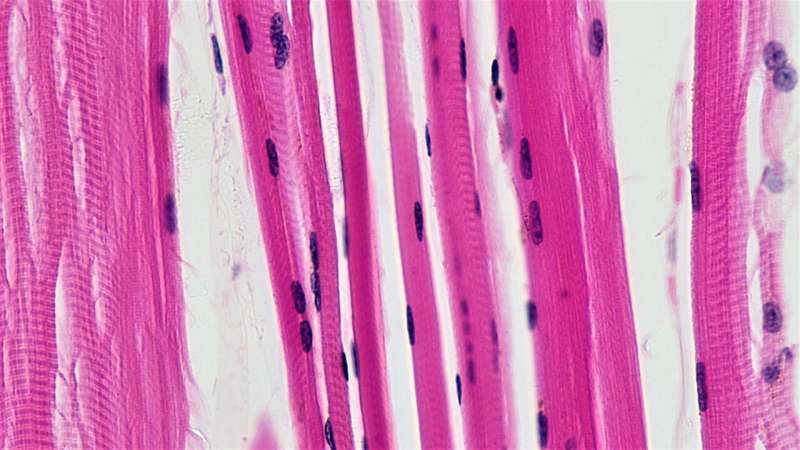
Deep inside muscle cells, a protein called TRF2 has spent decades doing what scientists thought was its only job—shielding chromosome ends from damage. But in a new study from the Perelman School of Medicine at the University of Pennsylvania, researchers discovered this protein does something far more remarkable: it helps muscles regenerate throughout life by preserving the identity of muscle stem cells. "Rather than simply protecting DNA, TRF2 seems to be key to regenerating muscle," said Foteini Mourkioti, Ph.D., associate professor of Orthopaedic Surgery. The findings, published in Science Advances, offer fresh hope for treating muscular dystrophy—and surprising new clues about why muscle cancers are so rare.
Meanwhile, across the country at Virginia Commonwealth University, scientists uncovered a protein that makes one of the deadliest brain tumors vulnerable to treatment. Glioblastoma kills most patients within two years of diagnosis, partly because cancer stem cells keep the tumor growing and resist every attempt to stop it. But researchers found that targeting a protein called TRNAU1AP could flip that script. "If we have a way to inhibit these proteins, it could open up new pathways to treat this deadly disease," said lead author Suyun Huang, Ph.D. The discovery, published in Neuro-Oncology, represents a potential turning point for a cancer that has seen few advances in decades.
Teaching the immune system to fight
At the Mayo Clinic, a different kind of breakthrough was unfolding. An international phase 3 trial tested a new immunotherapy called cretostimogene grenadenorepvec on patients with aggressive bladder cancer that had returned despite standard treatment. For these patients, bladder removal surgery is typically the only remaining option. But the results, published in The Lancet Oncology, told a different story: 75% of patients experienced complete remission, with no detectable cancer remaining—and many stayed cancer-free for more than two years. "This study shows we may be able to offer many of those patients another option without compromising cancer control," said urologist Mark Tyson II, MD.
But understanding the immune system isn't just about fighting cancer. Researchers at The University of Texas MD Anderson Cancer Center made an unexpected discovery about depression—specifically, why some treatments work when others fail. Their study in Molecular Psychiatry found that rapid-acting antidepressants like ketamine and psychedelics work by changing communication signals between the immune system and the brain. Co-led by Gregory Jones, M.D., the research suggests these very different therapies share common neuroimmune pathways, which could help doctors identify which patients will respond best to these treatments.
Reaching the people medicine often misses
These advances in understanding our bodies matter little if they don't reach the people who need them. That challenge—from chromosome-level science to the clinic—runs through the rest of this research.
In Stockholm, researchers at Karolinska Institutet studied more than 450,000 young people and found striking differences in how they access sexual health care. While young people with ADHD visited youth clinics at higher rates than their peers, autistic youth were far less likely to do so—especially young men. But the study, published in Autism Research, offered a solution: digital health consultations could narrow these gaps. When traditional clinic visits create barriers, bringing care to young people on their own terms might make all the difference.
The same principle drove a study in Toronto, where researchers tested whether placing rapid testing directly in long-term care homes could change outcomes. During the pandemic, delayed testing in these facilities led to devastating outbreaks. But a four-hospital collaboration with 20 LTC homes found that onsite testing for respiratory infections dramatically reduced emergency room transfers. "Outcomes like hospitalization and death are directly linked to how quickly an outbreak is detected," said Jerome Leis, MD, of Sunnybrook Health Sciences Center.
The future of healing is personal
Researchers at Western Sydney University took a step back to ask a simpler question: Why do so many women who want to breastfeed struggle to meet their own goals? The answer, according to their review of 41 studies published in Women and Birth, isn't a lack of information—it's a lack of tailored support. Most women understand breastfeeding's benefits and want to breastfeed. Yet they're often offered one-size-fits-all encouragement rather than personalized, culturally sensitive care that addresses their individual circumstances. "Effective breastfeeding support must reflect women's individual experiences," the researchers concluded.
This pattern emerges again and again: the most exciting health research isn't just finding new treatments—it's learning how to deliver the right treatment to the right person at the right time. From targeting glioblastoma with a newly discovered protein pathway to meeting autistic youth where they are, researchers are mapping the terrain between scientific discovery and human need.
And in New Jersey, residents seem to understand this instinctively. A Rutgers study found that nearly 6 in 10 adults support regulating how AI chatbots interact with people seeking mental health advice. As AI tools become more embedded in health care, the public is already thinking ahead—asking not just what technology can do, but how it should be used.
The body still holds countless secrets. But increasingly, researchers aren't just unlocking them in labs. They're finding ways to bring those discoveries home—to clinics, to bedrooms, to the hands of patients who need them most.
Sign in to join the conversation.
Comments (0)
No comments yet. Be the first to share your thoughts.