A Wimbledon Story of Roots, Resilience, and Breaking Through
Arthur Fery grew up just a short walk from Centre Court, watching players from the stands before he ever dreamed of stepping onto the hallowed grass himself. Now the 23-year-old is doing something no British man has managed this Wimbledon—carrying the home nation's singles hopes forward.
Fery became the sole British player to reach the third round, a remarkable achievement for someone who was born near Paris to French parents before his family moved to Wimbledon when he was still in nappies. "I grew up coming to the tournament, watching the players and that definitely contributed to my development," Fery told BBC Sport. "I was trying to imitate players—like you do when you're a kid. Now I'm here winning matches. It's awesome."
His journey to this moment reads like a transatlantic coming-of-age story. After coming through the Lawn Tennis Association system, Fery headed to Stanford University in California on a tennis scholarship, studying science, technology, and society while sharpening his game against top collegiate competition. The world number 114's fightback against Finland's Otto Virtanen—rallying from a set down to win 5-7, 7-6 (7-3), 6-3, 6-3—showcased the kind of resilience that Stanford's competitive environment helped forge.
"It's the biggest win of my career, for sure," Fery said after reaching the last 32. "To do it here at Wimbledon, where I've spent so much of my childhood, makes it even more special."
His mother, Olivia, a former Fed Cup player who worked for the LTA, and father Loic—an asset manager who owns Ligue 1 football club Lorient—have clearly passed on both tennis genes and ambition. Summer holidays spent near La Rochelle and time honing his craft near Nice's courts packed with academies shaped a player who feels equally at home on either side of the Channel.
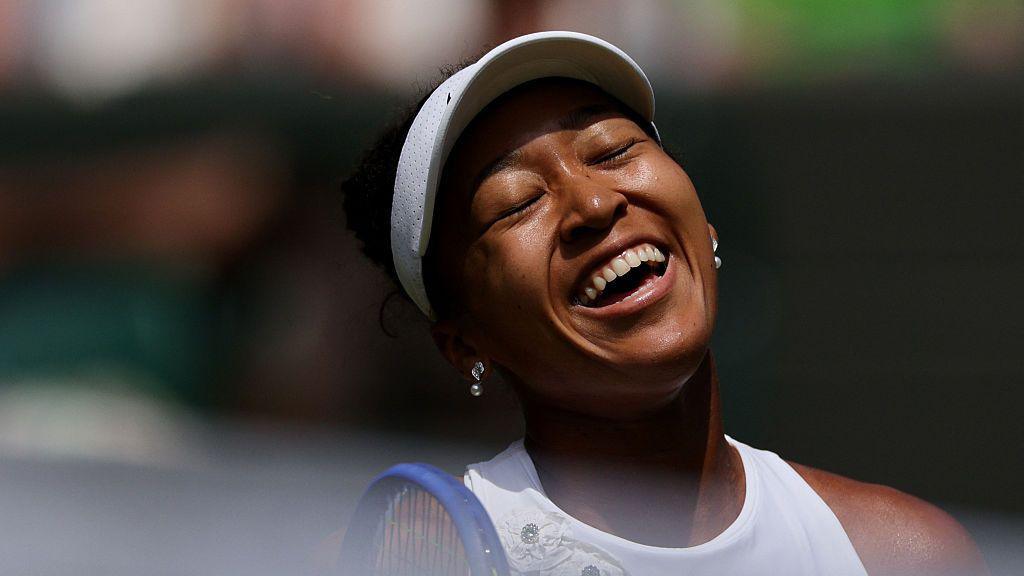
Meanwhile, on the other side of the draw, Naomi Osaka is rewriting her own Wimbledon narrative. The former world number one, who arrived at SW19 in yet another showstopping outfit—a white jacket with floral pattern and traditional obi belt—thrashed Daria Kasatkina 6-1, 6-3 in just 65 minutes to reach the fourth round for the first time in her career. All four of her Grand Slam titles have come on hard courts, making this breakthrough on grass feel like uncharted territory.
"I definitely felt really good today. I've played a lot of matches on grass for the past two weeks, so I felt really confident," said Osaka, 28, who also made her first grass-court final at the Bad Homburg Open last month before retiring injured. Now she's yet to drop a set at Wimbledon and could face top seed Aryna Sabalenka in a blockbuster next-round clash.
Both Fery and Osaka share something beyond their tournament success: they've had to prove people wrong. Fery briefly represented France as a child before choosing to play for Britain. Osaka, born in Japan to a Haitian father and Japanese mother, mostly grew up in Florida and has spoken about finding her identity through sport.
"I feel like my inspiration can be anything," Osaka explained, reflecting on her bold Wimbledon fashion choices inspired by Tokyo's Harajuku district. "I don't really ever have a plan when it comes to clothes. I think it's OK to try something and fail, but I'd rather just try it and see how it goes."
That willingness to take risks—to step onto unfamiliar grass, to embrace new cultures, to reach across borders—captures something essential about what makes Wimbledon magical. It's the place where a French-born Brit can become a local hero, where a player who conquered hard courts discovers new dimensions of her game, where thousands of spectators once watching as children now dare to dream as competitors.
For Fery, the dream continues. For Osaka, the breakthrough is real. And for anyone who's ever sat in those stands wondering what it might feel like to play on that grass—the answer, it turns out, is worth crossing oceans and continents to find out.
Sign in to join the conversation.
Comments (0)
No comments yet. Be the first to share your thoughts.