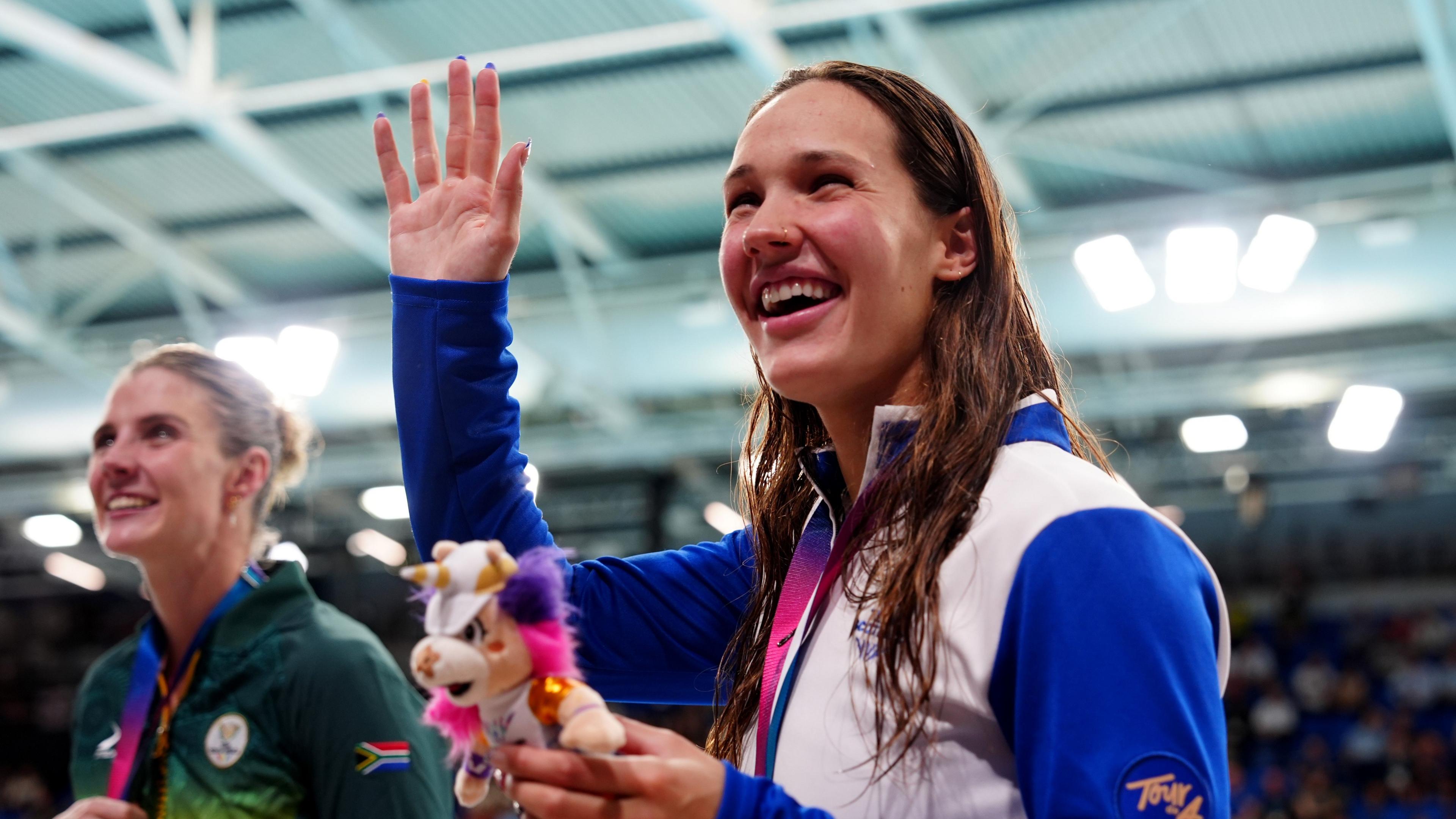
A Night for the Ages at Scotstoun Stadium
The rain had hammered Scotstoun Stadium all evening, but Kate O'Connor didn't care. On Wednesday, after two remarkable days of heptathlon competition at the 2026 Commonwealth Games, the 25-year-old from Newry stood exactly where she'd dreamed of being since she first laced up track spikes: at the very top of the podium. Northern Ireland's first gold of the Glasgow Games. The country's first athletics gold since 1986.
"I'm not turning up to championships to come second and third," O' Connor had said before the Games. "I want to be top."
She meant it.
The Weight of Silver
O' Connor had collected medals aplenty in a breakthrough 2025—silver at both the World Indoor and Outdoor Championships, bronze at European Indoors. But that top step had always eluded her at senior level. She finished second in Birmingham in 2022 behind Katarina Johnson-Thompson, who pulled out of Glasgow on the eve of competition. When the Englishwoman withdrew, a door opened. O' Connor didn't just walk through it—she sprinted.
She led after the first four events on Tuesday, running 100m hurdles in 13.54 seconds and clearing a season's best 1.82m in the high jump. A rain-soaked shot put gave her trouble (just 12.85m), but she rallied, running a season's best 24.14 in the 200m. By Wednesday morning, she sat 258 points ahead of England's Jade O' Dowda with 5,611 points total—her javelin throw of 52.85m a season's best and the only athlete to clear 50m all week.
"I showed the competitive side of me which I had to do because people were nipping at my heels right until the very end," she told BBC Sport NI.
Breakthroughs Across Glasgow
O' Connor wasn't the only one defying nerves and expectations in Glasgow.
In the pool at Tollcross, Scotland's Angharad Evans—who describes herself as a "nervous swimmer" who dared not even think about medals—left everyone breathless. Double breaststroke gold. A relay bronze. A relay silver. Four medals total. Only her training partner Duncan Scott had tipped her for big things. Even Evans didn't believe it.
"I'm a very nervous swimmer but I proved to myself that even though I am nervous I can get medals," she said. "It makes it a lot easier doing in front of a crowd like that."
Over on the bowls green, 37-year-old Sam Tolchard from Torquay finally struck gold at his fifth Commonwealth Games. An electrician by trade, Tolchard had collected three bronzes and a silver across four previous appearances but never gold. Down 6-3 in the final set, he picked up a four-shot maximum on the penultimate end, then clinched it on a dramatic final end.
"I've had some really hard defeats over the years to take, but I've kept going," Tolchard said. "Every game I've played now, every bit of practice has been worth it."
The Commonwealth Spirit
Not every story ended in gold, but the spirit was unmistakable. England's netball team—10 of 12 players making their Commonwealth debuts after injuries and a coaching change—bounced back from a tough loss to Australia with a 73-38 victory over Malawi. Goal shooter Eleanor Cardwell scored all 21 of her shots after coming off the bench in the second half.
Meanwhile, in the pool, the friendly rivalry between British swimmers representing different nations gave the Games an extra spark. Richards, McMillan, Jones, and Dean—who won world relay gold together as Team GB—were now competing against each other.
"We're all good friends and that camaraderie helps us as team-mates, but also as rivals to push each other," said McMillan.
The Podium Awaits
On Thursday evening at 18:30 BST, O' Connor will finally receive her gold medal at Scotstoun Stadium—Northern Ireland's first multi-class gold since Dame Mary Peters won the pentathlon in 1974. Her team-mate Anna McCauley finished eighth.
These Glasgow Games have reminded us what persistence looks like: a heptathlete who turned silver into gold, a nervous swimmer who conquered her fears, and a 37-year-old electrician who refused to give up on his dream. In a world that often fixates on what we haven't achieved, these athletes show us the quiet power of showing up, again and again, until the scoreboard finally reads what you know you've always been capable of.
Sign in to join the conversation.
Comments (0)
No comments yet. Be the first to share your thoughts.