From Paying for Her Own Blazer to Packed Houses at Lord's
Charlotte Edwards remembers the days when she had to buy her own cricket blazer. When she laced up for her first England women's Test, she wore a skirt paid for from her own pocket — a stark contrast to the sold-out crowds and historic milestones unfolding at the Home of Cricket just over two decades later.
"Sometimes I sit in the dugout or on the balcony and I'm just so proud of where the game is at," Edwards, now England's head coach, told BBC Woman's Hour. "30 years ago, probably 10 people were watching England play. And we're now playing in front of packed houses and at Lord's."
That transformation is why last month's first-ever women's Test at Lord's felt like more than just another match. It was a reckoning with cricket's long exclusion of women from its most sacred ground — one the Independent Commission for Equity in Cricket had called "appalling" just a year earlier when it highlighted that England women had never played a Test there.
The history started writing itself on the second morning, when India's Kranti Gaud struck. A diving catch from Shafali Verma in the slips gave Gaud her fifth wicket of England's first innings — and made her the first woman ever inscribed on the Lord's Test honours board. The ground erupted. A week earlier, more than 28,000 spectators had filled those same stands for the Women's T20 World Cup final. Now they were witnessing something no woman had achieved in 150 years of Tests at this ground.
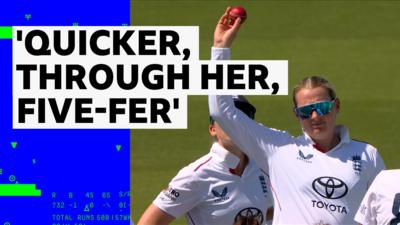
England's Sophie Ecclestone answered with her own piece of history. Taking five wickets during India's second innings, she became the first English woman on the prestigious honours board — and simultaneously became England's leading wicket-taker in all formats. On the same historic day, India's Yastika Bhatia crashed 113 to become the first woman to score a Test century at Lord's.
It was a cascade of firsts. A first women's Test at the Home of Cricket. First wickets on the board. First century in the record books. All within 72 hours.
But for Edwards and captain Heather Knight — who made her international debut in 2010 and is now playing her 15th overall Test — the real story is the journey. Knight has lived through the transition from grassroots funding struggles to ICC recognition. Edwards has transitioned from paying for her own kit to coaching the side at the world's most famous cricket ground.
The match itself — scheduled awkwardly just days after the T20 World Cup final, without the usual multi-format series structure — had its critics. Some wondered about relevance, about whether the historic framing overshadowed competitive cricket. But ask anyone who was there, or anyone watching from the dressing room, and they'll tell you: the walls of Lord's have finally opened to women. That's the point.
The honours board now bears two women's names. The records show women's centuries and five-wicket hauls alongside a century of men's achievements. And somewhere in the England women's camp, a young player is thinking about what she might achieve the next time Lord's hosts a women's Test — because now, finally, there will be a next time.
Sign in to join the conversation.
Comments (0)
No comments yet. Be the first to share your thoughts.