A Forest, a Freight Truck, and a Satellite Walk Into 2026
Picture a crew of forest workers moving through dry scrubland in California's Sierra Nevada foothills, thinning overgrown brush with chainsaws and controlled burns. It's unglamorous, slow work. But according to a new study led by researchers at the University of California, Davis, every dollar they spend on those fuel treatments saves $3.75 in wildfire damages. Across nearly 300 fires in the western United States, those treatments prevented an estimated $2.8 billion in losses and measurably reduced fire spread and severity.
That ratio — do a little now, avoid a catastrophe later — turns out to be the quiet logic running through almost every clean energy story breaking in May 2026.
On the Ground: Coal Fades, Freight Goes Electric
Start with something that rarely makes headlines. According to CleanTechnica, the volume of coal delivered in the United States for non-electricity uses — primarily manufacturing — has dropped by roughly half over the last 15 years. The South led the retreat, shedding 75% of that coal volume between 2010 and 2025, a decline of 14.7 million short tons. No drama, no single policy moment. Just a slow, structural exit.
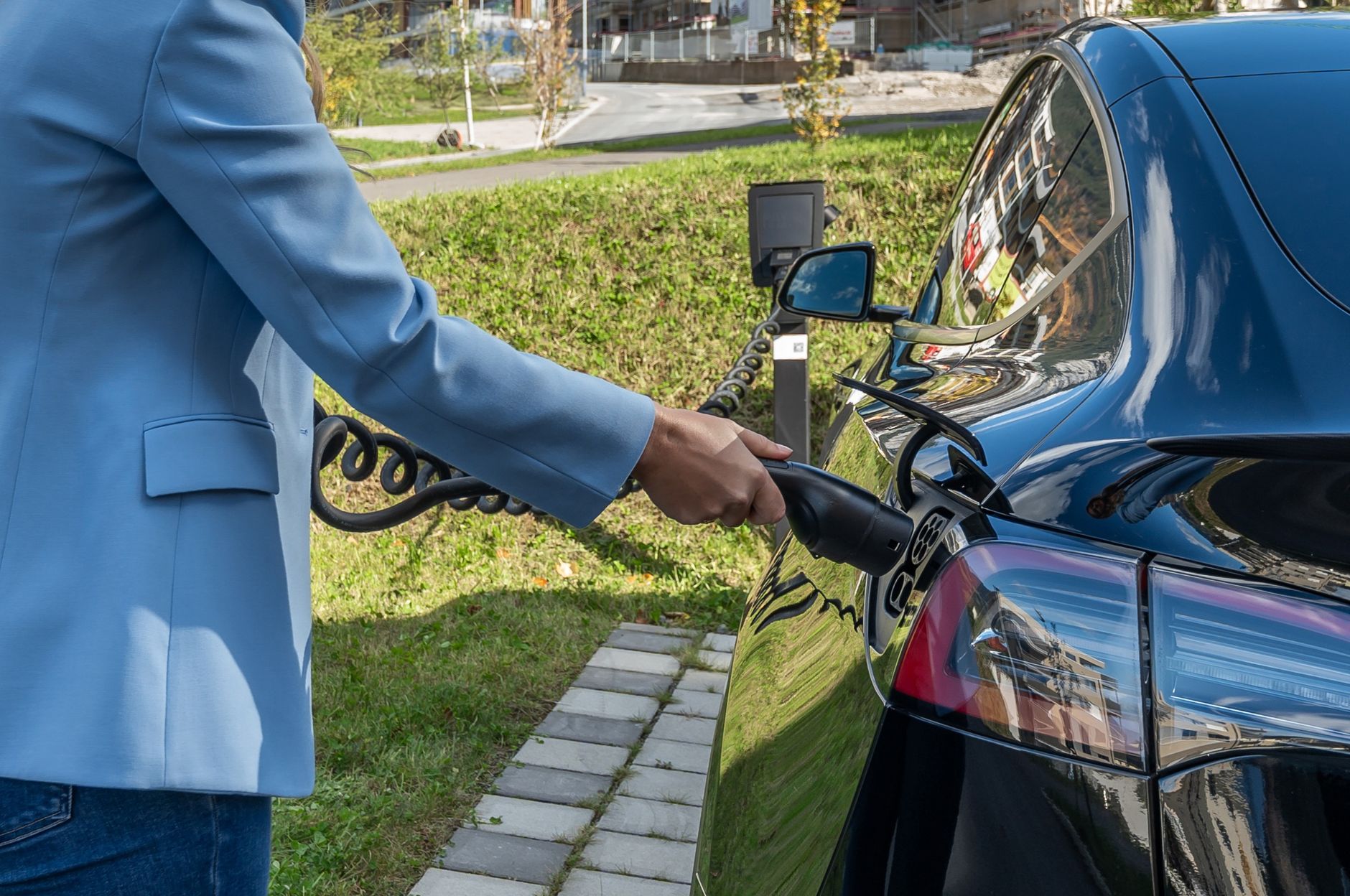
Meanwhile, the vehicles doing the heavy lifting of the modern economy are going electric, too. A new autonomous freight startup profiled by CleanTechnica is pushing into the fleet electrification space — a segment that tends to get overlooked because most of us don't drive 18-wheelers. But fleet vehicles log enormous mileage, consume enormous fuel, and emit at scale. Electrifying them isn't glamorous. It's consequential.
In Southeast Asia, the urgency is sharper. As CleanTechnica reports, the VinFast CEO for ASEAN described how an Iran-linked oil supply shock sent fuel prices spiking — and even as prices begin to ease, a "full return to pre-crisis fuel costs is increasingly unlikely." That shift, he argued, is "subtle but structural," and it's accelerating the EV conversation in markets where gasoline price pain is immediate and personal.
In the Air: Smarter Routes, Cleaner Skies
Aviation's decarbonization story has long been dominated by the search for better fuel — sustainable aviation fuel, hydrogen, synthetics. But CleanTechnica highlights a faster, cheaper lever that's been hiding in plain sight: better flight planning. Contrails — those wispy white trails jets leave in cold, humid air — trap heat with surprising efficiency. Rerouting flights to avoid the atmospheric conditions that form persistent contrails could meaningfully cut aviation's climate impact, with no new infrastructure, no new fuel, and no waiting for a breakthrough. Just smarter software and the willingness to use it.
On the Horizon: China's Clean Tech Ambitions, From the Road to Space
At Auto China — the Beijing Auto Show — the pace of change was, by CleanTechnica's account, "a bit overwhelming." Legacy automakers are pivoting hard, trying to shed their combustion-era identities in a market where Chinese brands have set a ferocious pace on software, electrification, and automation. Some are succeeding. Others are scrambling.
One of the most striking exhibits on the floor came from ARIDGE, a division of XPENG. CleanTechnica got a tour of their Guangzhou factory and a flight demonstration of what they're calling a "Land Aircraft Carrier" — a modular, electrified, highly automated vehicle platform that blurs the line between car and aircraft. It's the kind of product that would have seemed like a concept-show stunt five years ago. In 2026, it's coming off a production line.
Then there's space. CleanTechnica makes a pointed observation: Western analysts have repeatedly underestimated China's ambitions — on solar, on batteries, on EVs — and are now making the same mistake with space. China is treating orbital infrastructure not as a prestige project but as climate infrastructure: satellite-based Earth observation for weather modeling, disaster response, and emissions monitoring. "Betting against China in space," the piece argues, "has become one of those comfortable Western assumptions that deserves to be retired."
The Same Story, Told Eight Ways
A forest crew in California. A coal terminal going quiet in Alabama. An autonomous truck on a freight corridor. A Vietnamese EV executive watching oil markets restructure. A flight route adjusted by an algorithm. A flying car rolling off a line in Guangzhou. A satellite humming in low Earth orbit.
These aren't separate stories. They're the same story told in eight different languages — the language of economics, ecology, logistics, aviation, manufacturing, mobility, and space. The fossil-fuel era isn't ending in a single dramatic moment. It's ending the way the forest workers do their job: steadily, unglamorously, patch by patch. And the math, as the UC Davis researchers would tell you, increasingly favors doing the work now.
The transition is messy and uneven and full of competing interests. But in May 2026, across eight different corners of the global economy, the direction of travel is unmistakable.
Sign in to join the conversation.
Comments (0)
No comments yet. Be the first to share your thoughts.