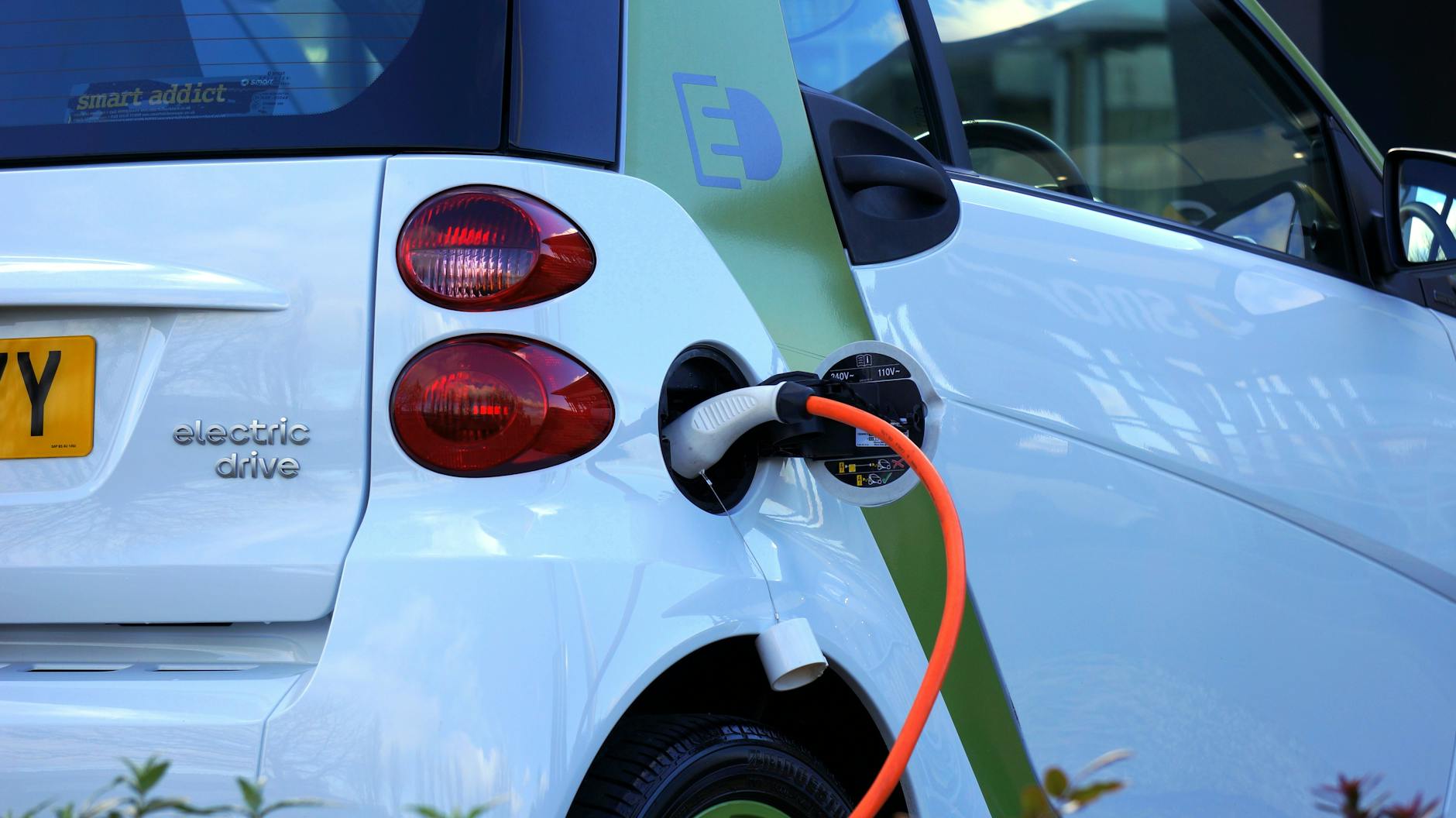
A Quarter That Changed the Record Books
115,000. That's how many electric vehicles were sold across Latin America in the first three months of 2026 — a 74% jump year-on-year, and a new all-time record for the region, according to CleanTechnica. Just one quarter earlier, analysts were celebrating the first time the region had ever crossed the 100,000 mark. Now that milestone is already in the rearview mirror.
It's a number worth sitting with. Not because it solves everything, but because it signals something real: clean transportation is no longer a rich-country phenomenon. It's going global, fast.
And Latin America isn't the only place where the momentum is building quietly, in ways the headlines often miss.
Charging Up While the World Sleeps
In Texas, Ford EV and plug-in hybrid owners have discovered something almost absurdly simple: the best time to "fill up" is 2 a.m. Through a partnership between Ford and TXU Energy, as CleanTechnica reports, drivers are saving real money on home charging overnight — turning sleep into a financial strategy. It's a small program, but it illustrates a larger truth: the EV transition isn't just about the cars. It's about reimagining the entire system around them.
That system-building is happening at the infrastructure level too. A fresh wave of 150 new fast public EV chargers is coming online, all powered by 100% renewable energy, according to CleanTechnica. Even as new EV sales figures in the US have been uneven, the charging network keeps quietly expanding — the unglamorous backbone that will matter enormously a decade from now.
When the Old System Starts to Crack
While the new infrastructure grows, the old one is showing its age — and its instability.
In April 2026, the Alberta Energy Regulator ordered a company called MAGA Energy to suspend operations over unpaid obligations and unmet commitments. As CleanTechnica reports, this wasn't an isolated case. The Rural Municipalities of Alberta have flagged a systemic pattern of weak oil and gas operators leaving behind financial liabilities that fall on rural communities to absorb. Holding these operators accountable isn't anti-industry — it's what responsible stewardship of a region actually looks like.
Zoom out further, and the structural pressure on fossil fuels becomes even clearer. The UAE's recent decision to distance itself from OPEC+ discipline, CleanTechnica notes, is being read by analysts as a telling signal: a major producer with low-cost barrels and a long view of electrification is betting that flexibility is worth more than cartel solidarity. Oil demand isn't collapsing overnight. But the petroleum system, as CleanTechnica puts it, is entering its volatile decline phase — and the cracks are becoming harder to paper over.
The Unexpected Costs of Good Intentions
Not every green story is a triumph, and honest optimism requires acknowledging that.
In Saarbrücken, Germany, the transit agency Saarbahn has opened a brand-new hydrogen refueling station for its fleet of 28 Wrightbus Kite Hydroliner fuel-cell buses. The station features three 350-bar dispensers, significant storage capacity, trained staff, and full safety systems. It is, by any measure, an impressive piece of infrastructure. It also cost €7.6 million — to serve 28 buses. As CleanTechnica's analysis makes clear, that capital burden raises hard questions about whether hydrogen bus programs, however well-intentioned, can scale without dramatically different economics.
Complexity, it turns out, has a price tag.
Science Getting Its Hands Dirty — Literally
While the energy world debates its future, researchers are quietly solving problems in the present.
At the University of New England, Ph.D. candidate Nivetha Sivarajah has led the development of a new framework that could become a global "gold standard" for extracting microplastics from soil. Published in the journal Soil Advances, the method identifies the most effective way to extract six common plastic types from different soil textures — a seemingly technical achievement with enormous real-world stakes. Agricultural soils worldwide are contaminated with microplastics, and until now, the lack of a standardized extraction method has made it nearly impossible to compare data across countries or set consistent safety thresholds.
Sivarajah's work changes that. It's the kind of foundational science that doesn't make front pages but makes everything else possible.
The Bees Are Trying to Tell Us Something
And then there are the bees — perhaps the most quietly urgent story of all.
Urban beekeeping has boomed in cities across Europe and beyond. It feels virtuous: rooftop hives, local honey, reconnection with nature. But a collaborative study involving researchers from the Technical University of Munich, published in the journal People and Nature, has found that the honeybee boom may be putting pressure on wild bee populations, who compete for the same urban flowers. The research brought together beekeepers, political stakeholders, and scientists to develop what they're calling the "Urban Bee Concept" — a set of measures to help honeybees and wild bees coexist, rather than one crowding out the other.
It's a reminder that good intentions need good science behind them.
The Bigger Picture
Taken together, these stories sketch a world in genuine transition — not a smooth, linear march toward a clean future, but a messy, complicated, hopeful lurch. Records are being broken in Latin America. Soil scientists are building the tools to protect our farmland. Cities are learning that even beekeeping requires rethinking. And the old fossil fuel order is growing visibly unstable.
None of it is complete. All of it is moving. And the direction, on balance, is worth paying attention to.
Sign in to join the conversation.
Comments (0)
No comments yet. Be the first to share your thoughts.