A Rat, a Rack of Jeans, and a Landslide
Deep in the Manombo Special Reserve in southeastern Madagascar, a research team set traps in the lowland forest and waited. What they caught — and what they didn't — told a story bigger than any single species. In the intact interior forest, the traps held tuft-tailed rats, small mammals endemic to Madagascar. In the nearby degraded littoral forest, despite repeated attempts, those rats were gone. In their place: black rats, a global generalist associated with disease transmission to humans. As Mongabay reports, the finding appears in a paper describing the first complete mitochondrial genomes for two endemic species, Eliurus webbi and Eliurus minor — and it underscores a truth scientists are increasingly urgent about: forest conservation is not just an ecological concern. It is a public health emergency.
Halfway around the world, in Stockholm, 24-year-old art student Alva Palosaari Sundman was sifting through racks of secondhand jeans at a community clothing swap. She was one of hundreds at the event — part of a wave of similar gatherings that drew thousands across Sweden in a single weekend, according to the Associated Press. The goal: to "shop" for new-to-you clothes without generating new environmental waste. Two places, two very different scenes. One single, converging message.
The Signals Are Everywhere
The evidence is stacking up across every ecosystem and every continent. In New Zealand, landslides claimed eight lives in the Bay of Plenty in January and forced evacuations across the North Island just weeks later — events scientists link directly to intensifying rainfall patterns driven by climate change. As Phys.org reports, new early-warning technologies are being developed to reduce future risk, but the underlying driver is unmistakable: a destabilized climate is making the ground beneath our feet less certain.
Meanwhile, a new study published in the journal Earth's Future introduces the eLTER Framework of Standard Observations — a harmonized system designed to give scientists across Europe a shared language for long-term environmental monitoring. For too long, researchers measuring soil, water, biodiversity, and atmosphere have worked in silos, producing data that couldn't be easily compared. The eLTER Research Infrastructure aims to fix that, standardizing what gets measured and how, so that the signals the planet is sending can finally be heard clearly and consistently.
Another study, this one on amphibians, adds a further layer of urgency. Published recently and covered by Mongabay, the research found that when deforestation fragments habitats — a phenomenon called "habitat split," first identified in a 2007 study — amphibians' microbiomes are thrown into disarray, making them more susceptible to disease. The implications stretch far beyond frogs: the researchers suggest similar dynamics could affect a host of other species. But here's the hopeful flip side — reconnecting those habitats can restore microbiome health, offering conservationists a concrete, actionable target.
Solutions as Varied as the Problems
Not every answer looks like a scientific paper or a policy brief. Some look like a child nagging their parent.
Researchers have found that children are surprisingly effective at nudging adults toward more eco-friendly behavior — closing what scientists call the "intention-action gap," the stubborn distance between caring about climate change and actually doing something about it. As Phys.org reports, decades of behavioral science, from the Stanford Marshmallow Experiment to the Piano Stair Experiment, have tried to crack this code. It turns out a kid armed with the right information might be one of the most powerful tools we have.
On farms in Germany, researchers at the Leibniz Institute of Vegetable and Ornamental Crops (IGZ) have been testing something more agronomic: the effect of different mulch systems on vegetable yields under climate stress. Results recently published in the journal Plant and Soil found that strip tillage combined with rye mulch maintained stable yields of white cabbage and celeriac across varying site conditions — a meaningful finding as farmers seek to build resilience against increasingly erratic weather. Clover living mulch, by contrast, caused significant yield declines, largely due to shifts in soil nitrogen and water balance.
And for wetlands — ecosystems losing ground at three times the rate of forest loss since 1970, according to Wetlands International — a new Wetland Atlas has just launched. The interactive tool maps wetlands across Africa, integrating data on their climate mitigation potential, how many people depend on them, and their current protection status. It's designed to help governments and funders make faster, smarter decisions about where to act.
The World Is Listening
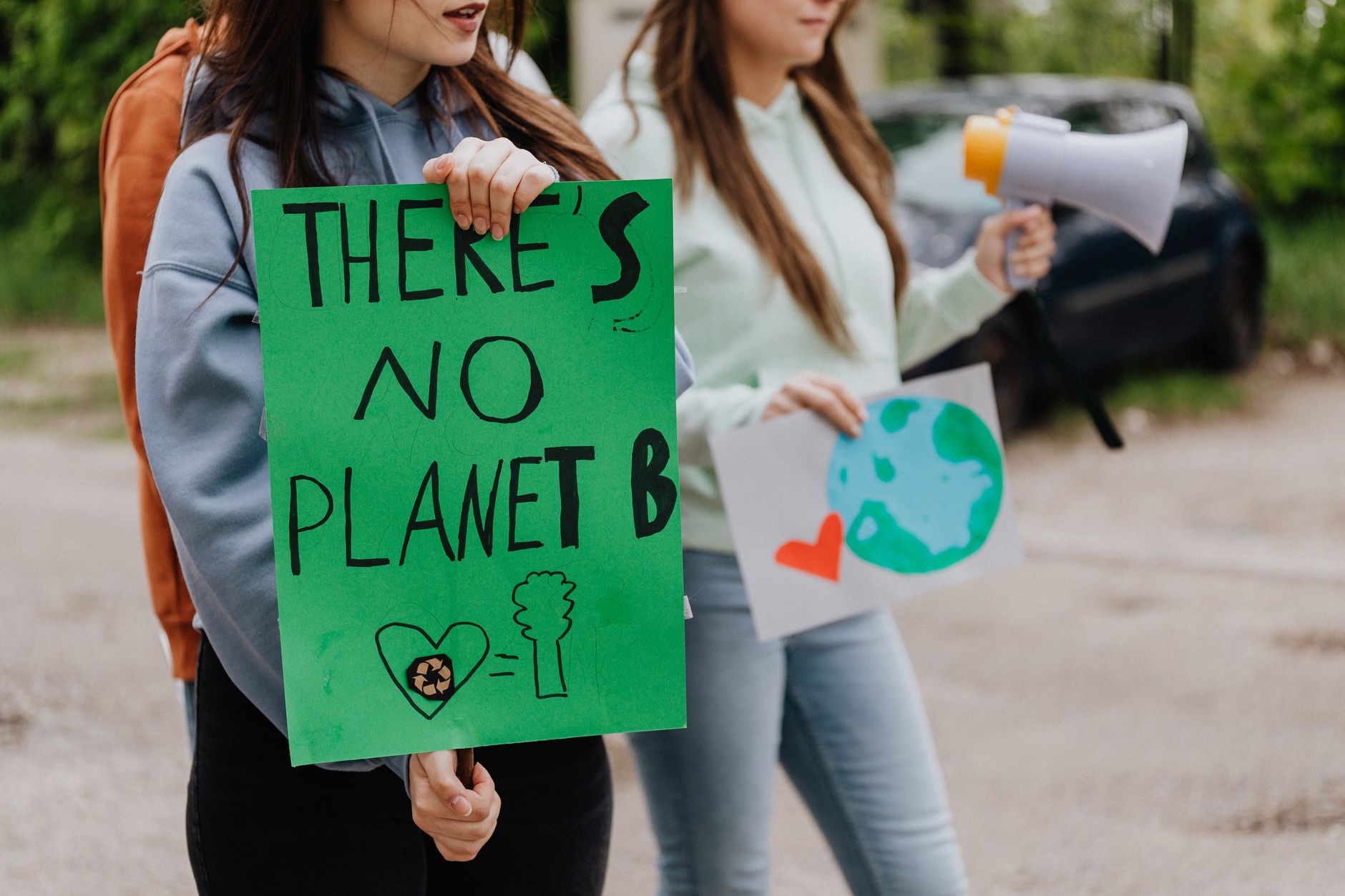
What connects a Madagascar forest trap, a Stockholm clothing swap, a New Zealand landslide, and a German cabbage field? Each is a data point in a larger story about a planet under pressure — and a global community learning, faster than ever before, to respond.
The tools are getting sharper. The networks are getting broader. The solutions are arriving from unexpected directions: from children, from farmers, from scientists coordinating across borders, from young people choosing pre-loved jeans over fast fashion. None of it alone is enough. Together, it starts to look like something. It starts to look like progress.
Sign in to join the conversation.
Comments (0)
No comments yet. Be the first to share your thoughts.