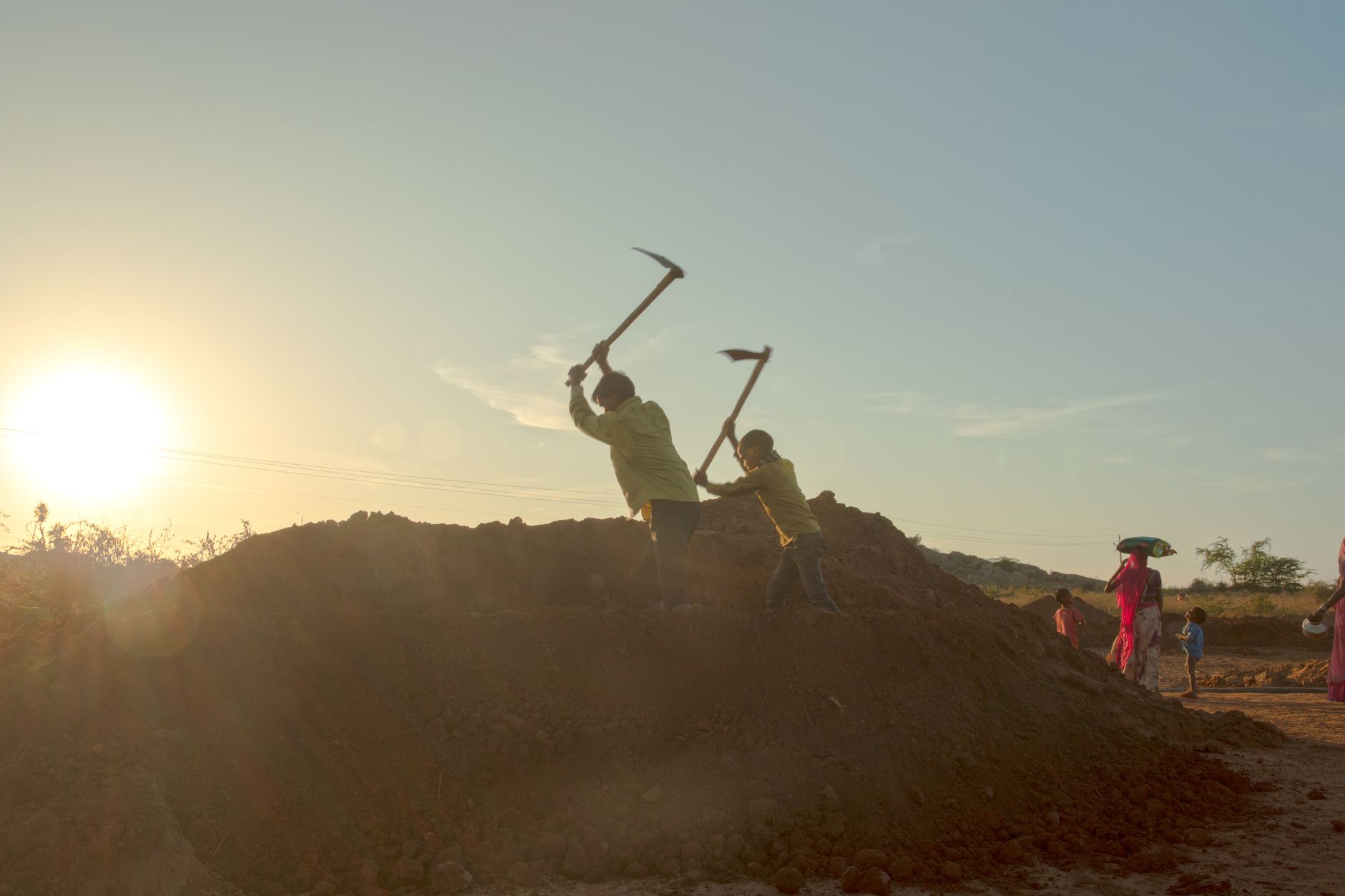
A Child on a Rubbish Heap Changes Everything
Picture a child on a rubbish heap in Metro Manila — small hands sorting through waste under the open sky, no school bag, no safety net. It was scenes exactly like this that prompted a landmark technical cooperation project between the Philippine Government and the International Labour Organization (ILO), implemented through the Department of Labor and Employment's National Manpower and Youth Council. The pilot programme didn't just remove children from scavenging sites. It tested an entirely new programmatic approach to ending child labour — one built on evidence, local institutions, and the radical idea that every child deserves better than survival work.
Decades later, that spirit of incremental, determined reform is still very much alive. In the spring of 2026, it is playing out simultaneously across a dozen countries and a hundred policy rooms.
Geneva, March 23 to April 2: The Room Where Rules Are Made
Between March 23 and April 2, 2026, the ILO's executive body — the Governing Body — concluded its 356th Session in Geneva. This is the room where global labour standards are debated, country situations reviewed, and the Organisation's strategic direction set. As the ILO reports, delegates discussed major labour issues worldwide, from the creeping precarity of gig work to the resilience of social protection systems under economic stress.
The timing could not be more charged. The global economy is shifting fast — automation, climate disruption, and post-pandemic restructuring have left many workers in what a new ILO policy paper calls "increasingly volatile" conditions. The paper, Universal Social Protection in Changing Labour Markets: Protecting Workers in All Types of Employment, published April 9, 2026, is bracingly direct: current gaps in coverage, adequacy, and financing are leaving millions of workers unprotected. It doesn't just diagnose the problem. It maps policy solutions, grounded in international social security standards and real country experiences.
The message from Geneva is clear. Universal protection is not a luxury. It is the floor beneath everything else.
Azerbaijan Steps Forward
On the same day that policy paper landed — April 9, 2026 — Azerbaijan made news of its own. The country formally joined the global dialogue on equal pay, associating itself with the ILO's EPIC (Equal Pay International Coalition) initiative. As the ILO reports, the move places Azerbaijan within a growing network of nations committed to closing gender pay gaps through international cooperation.
It is a signal worth noting. Equal pay progress in Europe and Central Asia has historically been uneven. Azerbaijan's entry into this dialogue, backed by its Ministry of Labour and Social Protection, suggests that the geography of reform is widening.
Malaysia: Unlocking Unions from the Inside
Over in Southeast Asia, a quieter but equally significant shift is underway. Malaysian trade unions are restructuring themselves from within — deliberately building more representative bodies that can actually serve women workers and migrant workers, two groups long marginalised from organised labour's protections.
According to the ILO, efforts are now underway to build capacity among Malaysian unions specifically focused on inclusive organising. This matters enormously. Migrant workers in Malaysia number in the millions and have historically faced barriers to union membership. Women workers in export industries have often found unions unresponsive to their specific needs. Changing that from inside the movement — rather than through top-down regulation alone — is a durable kind of progress.
Vietnam: Counting What Counts
Meanwhile, in Hà Nội, the Vietnam Chamber of Commerce and Industry (VCCI) and the ILO have launched a new survey targeting responsible labour practices in Vietnam's electronics sector. As the ILO reports, workers inspecting circuit boards in Vietnamese factories are now the subject of structured, evidence-based scrutiny — the kind of data collection that precedes meaningful policy change.
The electronics sector is one of Vietnam's most dynamic and most exposed to global supply chain pressures. Getting the data right is the essential first step toward getting the standards right.
A Convention Built to Last
Undergirding all of this activity is a legal architecture quietly growing stronger. The ILO's C191 — the Safe and Healthy Working Environment (Consequential Amendments) Convention, 2023 — formalises the right to a safe and healthy workplace as a fundamental principle. It is a framework designed not for one industry or one country, but for the full spectrum of where and how human beings work.
What All of This Adds Up To
From the streets of Metro Manila to the electronics factories of Hà Nội, the same question is being asked and, slowly, answered: who gets to be protected at work — and who has been left out for too long?
The answer emerging in April 2026 is ambitious. Women and migrant workers in Malaysia. Workers in volatile labour markets across the developing world. Women earning less than men in Azerbaijan and everywhere else. Children who should be in school, not on scavenging sites.
None of this is finished work. The ILO's own social protection report is a warning as much as a roadmap — the gaps remain vast. But the direction of travel, from Geneva to Hà Nội to Baku, is unmistakable. The world is not just talking about workers' rights. It is, piece by careful piece, building the structures to protect them. And for millions of people whose safety and dignity depend on getting this right, that slow, stubborn progress is everything.
Sign in to join the conversation.
Comments (0)
No comments yet. Be the first to share your thoughts.