Insights
AI-synthesized editorial coverage of positive news from around the world

The square peg that reshapes the hole: a week of science bending the impossible
This week's science shows what happens when you stop treating structures as fixed. A cancer drug made its protein target bend around it, an AI learned with a 20-Questions trick on a laptop, a new ash pangenome maps resistance to a deadly disease, and a pufferfish's taste receptor proves nature's versatility. Eight studies, one lesson: adaptation beats rigidity.
A cancer drug didn't fit its target—so it forced the target protein to bend and wrap around it, a 12,000-fold improvemen

Goodbye to the Wendell Berry era, hello to a planet healing itself
From a Georgia ranch mourning Wendell Berry to India flatlining its power emissions for the first time in 50 years, 2026 is full of quiet wins. US solar now powers 50 million homes, 20,000 salmon returned to the Klamath, and AI is decoding Yellowstone's wolves. Recovery is arriving faster than experts expected.
India just flatlined its power-sector emissions for the first time in 50 years — while adding enough solar for all of Sw

Six Extra Months: The Lung Cancer Trials Rewriting What's Possible
Two lung cancer trials at IASLC 2026 each handed patients six extra months of progression-free survival with targeted drugs. Meanwhile, the MAVERICK trial found brain MRI surveillance beats preventive radiation at protecting cognition, and a new mesothelioma drug turns cancer's antioxidant armor against it.
A single injection just doubled the time lung cancer patients live without their disease progressing.

What 1,000 volunteers, a cookie stand, and a 37-year-old festival have in common
Twenty-five years after 9/11 taught her what community means, Rebecca Faulkner's lesson echoes everywhere: from 1,000 volunteers raising a San Antonio home in 50 hours, to Frisco students baking $8,000 of cookies for food-insecure kids, to a Kentucky festival celebrating its 37th year. Belonging is something you build — and build together.
1,000 volunteers built a four-bedroom home in just 50 hours — and it was only the beginning.

The Week the Overlooked Won: Maps, Chess, and Tennis All Got Corrected
A week of upsets: 164 countries voted to fix the Mercator map (which has shrunk Africa by a factor of 14 for 450 years), a "funniest" underdog chess team toppled Magnus Carlsen, and rugby's Rhinos and tennis's Zverev both rose above the favourites' shadow. Plus: the two-minute fix for election trust.
After 450 years of being drawn 14 times too big, Greenland just lost its spot on the world map — and the underdogs swept

Lung Cancer Survival Just Doubled — and That's Only Half the Story
At the IASLC lung cancer conference in Seoul, trials added six to eight months of survival for aggressive cancers — but the week's deeper theme was subtler: MRI surveillance replacing brain radiation, tai chi easing survivor fatigue, fecal transplants calming immunotherapy side effects, and a drug restoring sexual function in depression. Medicine is finally treating the whole person, not just the
An aggressive lung cancer trial just doubled survival — but the week's bigger news was how medicine finally started trea

2,500 miles on paw: the wild dog marathon and 5 more comebacks proving nature's resilience
A Zambian wild dog pack ran 2,500 miles for mates; 20,000 salmon returned to a de-dammed river; Cincinnati got an anonymous $1.8M forest gift. From AI-decoded wolf howls to Vietnam corridors that pay families, the biology of restoration keeps outpacing our expectations. Comebacks are faster than we think.
Three African wild dogs just ran 2,500 miles across Zambia seeking mates—plus 6 more nature wins worth knowing.

What's hiding in plain sight: a 60-year-old fossil, a forecast that saves hearts, and 214 million hidden proteins
From a 60-year-old Tanzanian fossil to a Budapest weather chart to a pufferfish's versatile tongue, this week's science is full of discoveries hiding in plain sight — hidden proteins found by shape, overlooked oyster nutrition for 5 billion people, and cardiac warnings readable days in advance.
Doctors can now read a weather forecast to predict cardiac arrests 3 days ahead — and that's just one of this week's hid

The Surprising Math That Makes EV Charging 30% Cheaper — and Privacy-Safe
A team in the Netherlands linked three EV charging hubs with DC cables, solar panels, and batteries. By smartly scheduling when each car charges, they cut charging costs by 30% and emissions by 25%—without sharing private data. Each hub solves its own local puzzle and shares only tiny bits of info. An algorithm called ADMM makes sure the whole network reaches the best solution together. This works purely by timing charges, not by draining car batteries.
Charging EVs on a coordinated hub network cuts electricity cost 30% and emissions 25% — with total data privacy.

Evolution Has a Hidden Speed Limit — and It's Weirder Than Diffusion
One organism’s traits change randomly over time. Scientists used to think evolution works like simple diffusion: more mutations mean faster discovery of new traits. But Tetsuhiro Hatakeyama showed this is wrong.
Neutral evolution finds new phenotypes 3x slower than diffusion predicts — the wait scales as (σ²)^−3/2, not σ²^−1.
Nine Orders of Magnitude: The Matrix Math That Could Sharpen Every Weather Forecast
Weather forecasts rely on huge error tables, and working with them has always been painfully slow. But a new method from the University of Melbourne and Australia's Bureau of Meteorology fixes that. It runs about 9 billion times faster than old ways on one processor, and it still works well with up to a million processors working together.
Nine orders of magnitude: a matrix inversion 1 billion times faster could unblock the next leap in weather forecasting.

From 7.98% to 99.55%: The Volunteer Army That Nearly Erased Illiteracy in the Himalayas
From 7.98% literacy in 1951 to 99.55% today, Himachal Pradesh is now India's second-most literate state, powered by 94,930 adult learners and 19,232 volunteer teachers under the ULLAS program. The Himalayan state now targets 100% literacy by 2026-27 — proof that community-driven change can transform a region.
In 1951, 92 out of 100 people in this region couldn't read. Now it's India's 2nd-most literate state.

The Tall, Talented & Patient: How Leeds Is Building for Greatness — and the World Is Rewriting Its Map
Leeds is having its best sporting moment in decades: a towering Premier League rebuild (8 of 10 signings over 6ft, now third in the table), six Rhinos in the 2026 Dream Team after a 900+ point season, and a 16-year-old Arsenal star scoring twice in a League Cup win. Meanwhile the UN voted to finally replace the map that's made Africa look 14x too small for 450 years. The through-line? Patient deve
Eight of Leeds' ten new signings stand taller than 6ft — and it's reshaping a whole city's sporting fortunes.

Lung cancer's quiet revolution: new drugs nearly double survival — and brain radiation is on the way out
At the 2026 World Conference on Lung Cancer, trials showed new drugs nearly doubling progression-free survival and MRI surveillance replacing toxic brain radiation. Beyond the lung, single-cell science, gut microbiome transplants and a depression treatment are making care gentler — and more personal.
At WCLC 2026, one drug added 6 full months of life — and a landmark trial just axed decades-old brain radiation.
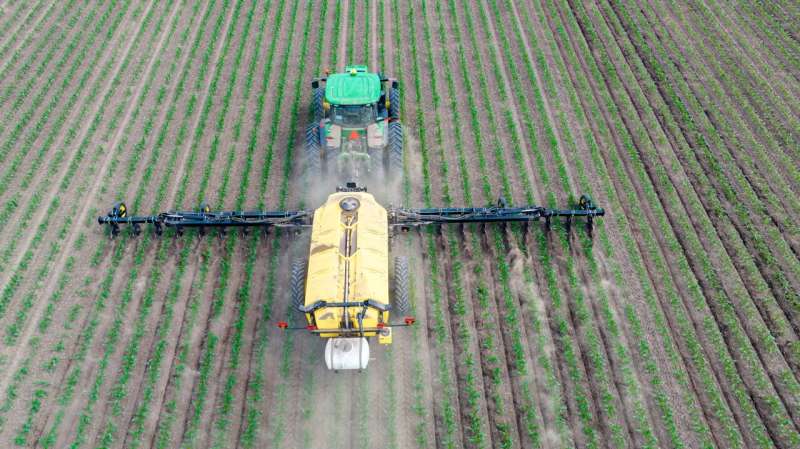
The coral gardener: how 8 small acts are regrowing the planet's reefs and forests
A 16-year-old surfer, a father-daughter 4-H project, and a marine biologist in Belize are restoring the world's reefs, one broken coral at a time. From Hawaii's rare corals to Tanzania's reforested hills and a 1976 South African farm, restoration is spreading—proving hope grows from the fragments others gave up on.
A teenager's broken-coral experiment planted 221,000 corals—and it's part of a worldwide regrowth movement.

The New Age of Seeing: What Science Finds When It Looks Again
Eight studies this month share a hidden thread: we're getting dramatically better at seeing. AI caught hidden proteins among 214 million structures, a compost microbe learned to eat shoe foam, NASA opened its lunar AI to the world, and a forgotten museum fossil rewrote dinosaur history. None of it replaces human curiosity — it amplifies it.
A forgotten fossil, 214 million proteins, and a compost microbe are quietly rewriting what science thought it knew.

The robot that refuses to try the other route — and the fix that makes it curious again
A robot that learns to drive around obstacles often gets stuck on the first working path. It keeps polishing that same route and never tries better ones, even if they exist. This is a hidden flaw in Learning Model Predictive Control (LMPC), a system that helps robots improve through repetition.
Of 8 viable robot routes, standard LMPC refines just 1 — a new controller breaks the fixation.

The hidden-state problem just got cheaper: mixed-type ecological models fit in seconds
Ecologists often use models with hidden states—like whether a species is present or how many individuals exist. These hidden states can be discrete (yes/no, counts) or continuous (size, habitat quality). Fitting such models used to be painfully slow, taking hours or days with complex coding.
Models that once took hours to days now fit in under a minute — a new RTMB method automates the hard math.

The season of comebacks: 100,000 in Melbourne, Wigan's treble chase, and Zverev's long-awaited crown
A hundred thousand strangers packed Melbourne Cricket Ground for America's game—and watched the underdog 49ers shock the favourites. Across one wild opening weekend, an NFL record fell, Wigan surged toward a treble a year after going trophyless, and Zverev finally stepped out of the Sincaraz shadow to claim his long-awaited crown.
100,000 people showed up in Melbourne for a sport that's never been played there—and the underdogs stole the show.
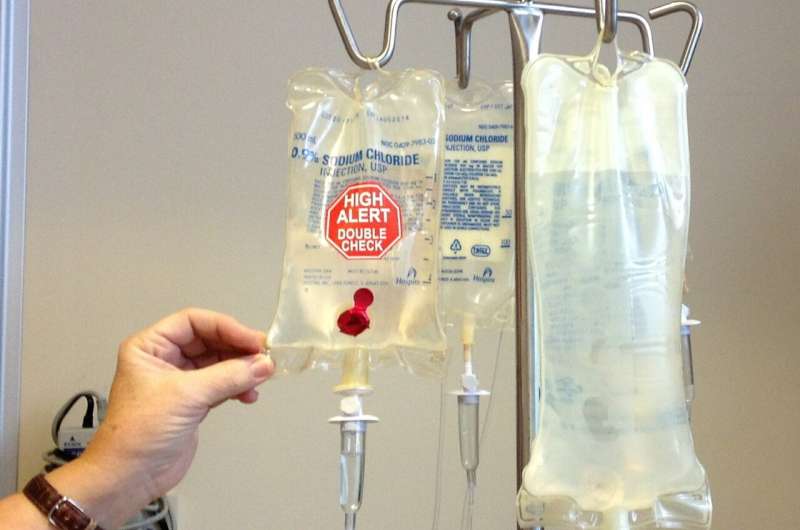
One conference, seven breakthroughs: how lung cancer treatment just got smarter
Seven clinical trials presented at one lung cancer conference are rewriting treatment — from a drug clearing brain tumors in 100% of patients to combinations nearly doubling progression-free survival. One study even showed doing less (skipping brain radiation) helps patients live better, not worse.
At one conference, a targeted drug cleared brain tumors in 100% of patients — and a 94% response rate was almost ordinar