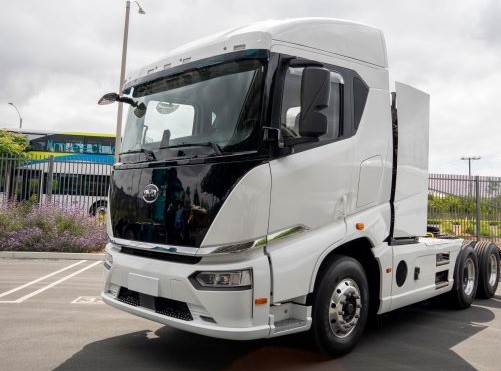
California has just launched the largest utility-led rebate program of its kind for commercial trucks, making electric heavy-duty vehicles suddenly far more affordable for fleet operators across the state. The California Clean Fuel Reward program offers point-of-sale financial incentives ranging from $7,500 to $120,000 per vehicle, depending on the truck's class—with the highest rebates reserved for the largest vehicles, where the environmental stakes are greatest.
The timing arrives as the nation's commercial transportation sector grapples with a dual crisis: toxic air pollution that sickens millions, and climate emissions that deepen with every diesel-fueled mile. Nearly 18 million Californians breathe air that exceeds safe pollution standards, and air pollution alone kills around 1,500 people annually in Southern California. The health toll is staggering—environmental factors drive approximately 30 percent of childhood asthma exacerbations in California, costing the state roughly $200 million each year in associated medical expenses.
These rebates apply exclusively to battery-electric vehicles purchased or leased for commercial use. Class 8 trucks—the largest heavy-duty category—qualify for the maximum $120,000 rebate, while Class 6 and 7 vehicles receive $85,000 each. Medium-duty trucks range from $15,000 for Classes 3 and 4, down to $7,500 for Class 2b vehicles. Critically, the program excludes hybrids and hydrogen vehicles, focusing entirely on zero-emission battery electric technology. The incentives can also be combined with other state and federal programs, multiplying their impact for fleet operators making the switch.
The announcement arrives amid genuine momentum in electric truck adoption. WattEV recently placed an order for 370 Tesla Semi trucks—one of the largest electric heavy-duty vehicle orders to date in the United States—signaling that the market for these vehicles is no longer theoretical. The Tesla Semi, after years of development and pilot programs, is now moving into commercial fleets at meaningful scale.
Southern California Edison, which is administering the program, framed the initiative as transformative infrastructure. "As the largest utility-led incentive program of its kind for medium- and heavy-duty vehicles, the California Clean Fuel Reward represents a historic step forward in fleet electrification," said Funmi Williamson, the utility's Senior Vice President and Chief Customer Officer. "By lowering upfront costs, it helps accelerate access to innovative vehicle technologies and supports long-term market transformation."
This shift matters because medium and heavy-duty commercial trucks generate staggering amounts of pollution. Replacing gas and diesel fleet vehicles simultaneously reduces toxic air pollutants that damage human health and greenhouse gas emissions that accelerate climate change. The rebate program directly addresses the upfront cost barrier that has long prevented smaller operators and mid-sized fleets from making the transition to electric—an obstacle that has kept cleaner technology locked behind premium pricing.
The California program reflects a broader reality: the electrification of transportation is underway, accelerating through market forces and policy support that neither political opposition nor industry lobbying has been able to halt. Solar, wind, geothermal, and hydroelectric power generation have followed the same trajectory, spreading despite resistance. California's new truck rebate program is simply the latest chapter in a transformation that appears inevitable.