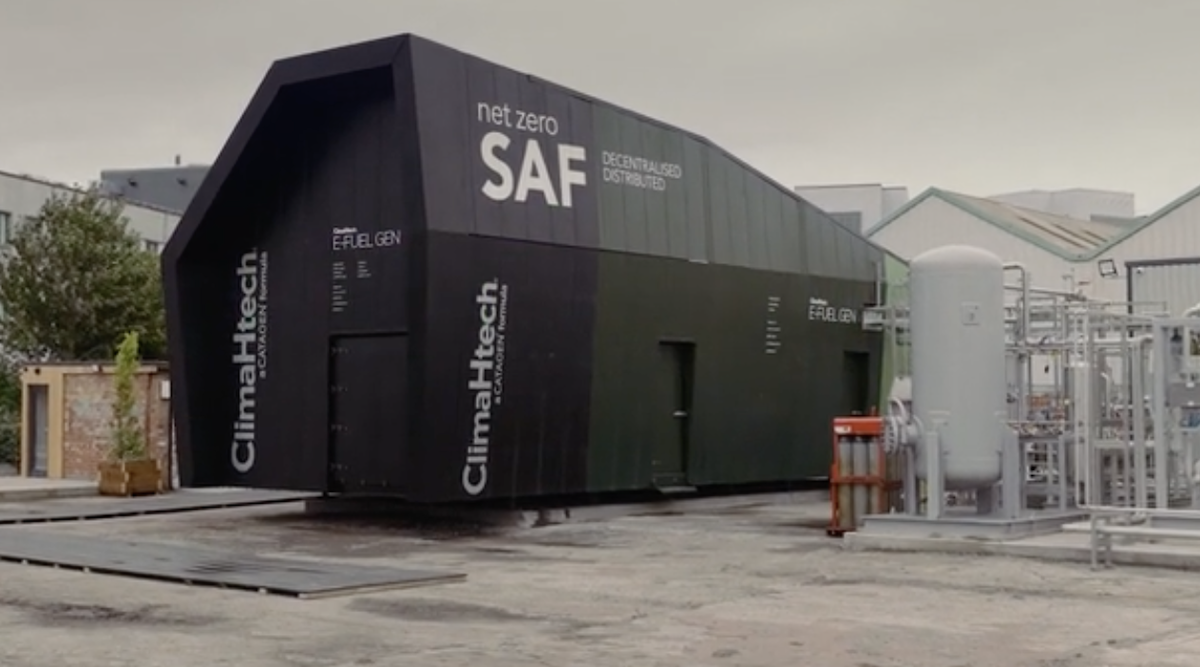
On May 26, Loganair—the UK's largest regional airline—signed a groundbreaking 15-year agreement with Belfast-based ClimaHtech Green Flight to secure sustainable aviation fuel produced using two cutting-edge pathways: biomass-to-liquid and power-to-liquid technology. The deal represents a decisive shift toward homegrown, decentralized fuel production at a moment when geopolitical turbulence and supply chain fragility have made energy security a genuine concern for the aviation industry.
The timing matters. While the global energy crisis has prompted airlines to think harder about alternatives to conventional jet fuel, Loganair's commitment stands out because it's betting on a dual-track approach—embracing both biological waste streams and electrofuel solutions that can plug directly into the UK's renewable energy infrastructure. This isn't about choosing between two competing visions of the future; it's about building resilience through diversification.
What makes this partnership particularly clever is its focus on a gap in the UK's wind power landscape. As of April 2024, the UK operated approximately 800 wind farms including nearly 10,000 onshore turbines with a combined capacity of over 15.8 gigawatts, yet more than half of those farms have capacities under 10 megawatts—too small to support conventional large-scale biofuel plants. ClimaHtech Green Flight's electrically driven platform is designed precisely for this scenario: it tolerates intermittent renewable power supply, harvesting the "stranded" wind energy that would otherwise be curtailed during periods of low demand or constrained by grid bottlenecks. In other words, Loganair's SAF will be powered partly by renewable electricity that the grid couldn't use anyway.
Luke Farajallah, Loganair's CEO, framed the agreement as "an important step in securing access to Sustainable Aviation Fuel that is produced closer to where we operate, supports UK supply chains, and reflects our commitment to lower our carbon footprint." The proximity matters as much as the sustainability: producing fuel locally reduces transportation emissions and insulates supply chains from the kind of global shocks that have plagued the aviation sector in recent years.
ClimaHtech Green Flight argues that their decentralized approach offers five distinct advantages over conventional SAF facilities: faster deployment through modular systems, reduced strain on electricity grids, local economic activity and job creation, production sites positioned near renewable generation that avoid costly grid upgrades, and fabrication using standard components that accelerate installation. The company also emphasizes broader systemic benefits—regional energy independence, greater energy security amid geopolitical tensions, and economic resilience as more value flows through local fuel production rather than international supply chains.
The UK's wind resources are vast, delivering roughly 29% of the country's electricity. Loganair's 15-year commitment effectively opens a market for that surplus renewable energy, transforming a potential waste stream into jet fuel. While Loganair acknowledges this arrangement won't completely replace fuel imports, the partnership signals a new model: smaller, distributed SAF production that leverages existing renewable capacity rather than demanding new grid infrastructure or agricultural land. For a regional airline operating across challenging terrain in Scotland and the North, having secure access to domestically produced fuel isn't just an environmental statement—it's a business imperative.