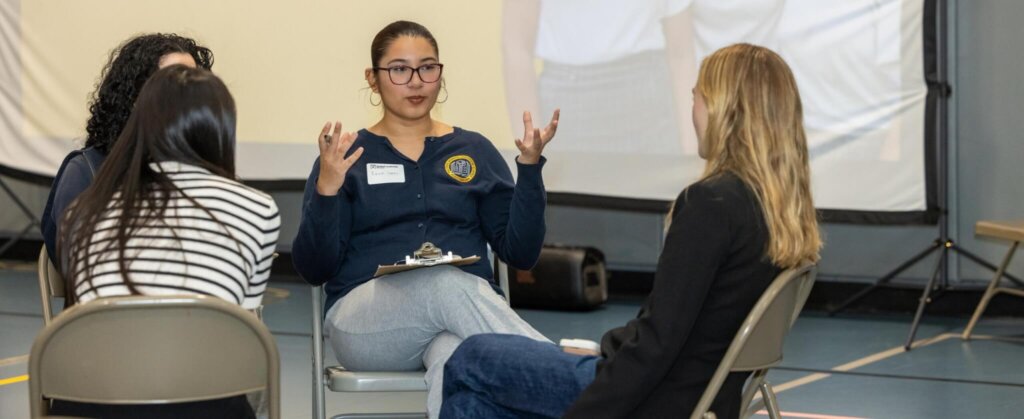
In a Manhattan classroom, a teenager hears from a Disney employee about free theme park tickets, then listens to a law school graduate describe her unexpected path from psychology to stenography to television and film. The conversation lasts maybe 15 minutes, but the impact may ripple across a student's entire future. This is Cool Careers Potential Paths in action—Student Leadership Network's initiative that connected 180 industry professionals with students from The Young Women's Leadership Schools (TYWLS) across New York City this year, transforming abstract career ambitions into vivid, achievable possibilities.
Early career exploration matters most when it's real. Too often, students see the jobs their parents do or the professions they read about in textbooks, with little sense of the human paths that lead there. Cool Careers closes that gap by bringing working professionals directly into classrooms at TYWLS locations in Manhattan, Astoria, Queens, and Brooklyn. The volunteers came from finance, law, the arts, healthcare, community organizing, and dozens of other fields—from organizations including Morgan Stanley, Citi, Ernst & Young, NYU Langone Health, PepsiCo, and Legal Aid Society. Each conversation gave students a chance to ask the questions textbooks can't answer: What's the day actually like? How did you get here? What if I change my mind?
The diversity of career paths shared was particularly powerful for younger students still wrestling with uncertainty. One volunteer, a TYWLS alumna named Naysa who attended a Historically Black College and University (HBCU) and later went to law school, noticed something striking: many students didn't even know HBCUs existed. "Some of them didn't know what an HBCU was, and I remember being in middle school when I had only known about public CUNYs or the Ivy League colleges," Naysa reflected. By sharing her experience at Howard University, she opened a door these students didn't know was there. Another volunteer made the case for flexibility itself, sharing a career arc few could have predicted: psychology to stenography to television and film. Her advice distilled years of living into two sentences: "Try everything. You don't have to feel stuck on one path."
The pragmatic details matter too. Volunteers spoke about company benefits—wellness stipends, on-site gyms, the occasional perk like park access—but more importantly, they normalized career pivoting. Students heard from professionals who didn't know what they wanted in high school or college, who changed directions mid-course, who discovered their calling later than expected. This honesty is a gift to students who feel pressure to have everything figured out now. One volunteer's advice captured it perfectly: "When thinking about a career, think about things that you enjoy doing, because you'll be spending a lot of time at your job."
The program's reach extended across New York's boroughs, with volunteers from organizations like The Nicotra Group, Apollo Global Management, RBC, and Paylocity opening windows into sectors many students had never considered. By year's end, hundreds of conversations had happened between industry professionals and teenage girls exploring their futures—each one a small act of mentorship that could alter the trajectory of a young person's life. As Cool Careers Potential Paths looks toward next school year, the question is clear: what possibilities will 180 new volunteers help students discover?