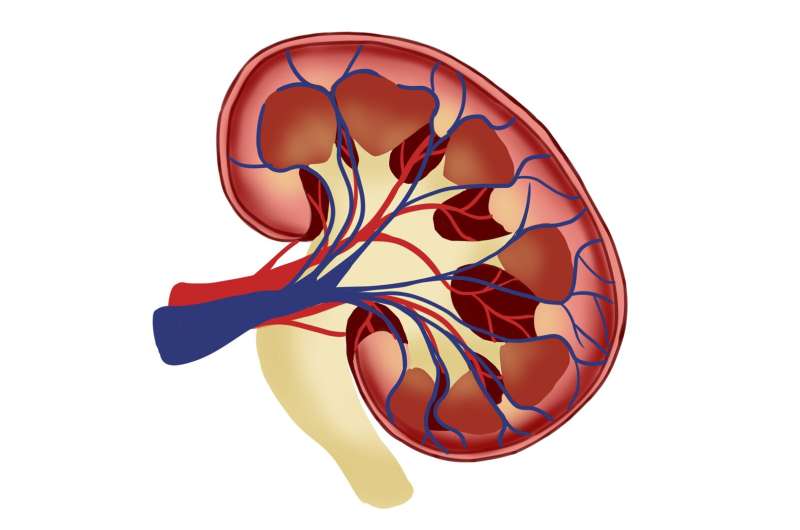
Fouad Chebib, M.D., remembers the moment he first held a vial of probenecid in his lab at Mayo Clinic in Rochester—a decades-old gout drug that would unexpectedly rewrite a chapter of kidney physiology. What began as a routine experiment in his team’s quest to understand polycystic kidney disease (PKD) spiraled into the discovery of a previously unknown pathway the kidneys use to regulate water, one that operates entirely outside the long-recognized control of vasopressin. This breakthrough, detailed in the Journal of Clinical Investigation, could transform how millions with PKD and other fluid-balance disorders are treated.
For decades, medical science has taught that the hormone vasopressin is the master regulator of urine concentration. Without it, the body can’t reclaim water, leading to dehydration. But Chebib’s team found that kidney cells can concentrate urine through a completely different mechanism—one triggered by urate, a molecule typically linked to gout. When probenecid blocks urate excretion, it inadvertently signals kidney cells to move water channels to their surface, allowing water reabsorption without any help from vasopressin. “It’s not every day that you uncover a new way the kidney carries out one of the most fundamental processes in the body,” Chebib says.
The implications are immediate for patients with autosomal dominant PKD (ADPKD), the most common form of the disease, affecting an estimated 140,000 people in the U.S. alone. The only approved drug, tolvaptan, works by blocking vasopressin to slow cyst growth—but comes with a grueling side effect: patients produce up to 7 liters of urine daily, often waking three or four times each night. Many discontinue treatment due to the burden. In early clinical testing, adding probenecid to tolvaptan therapy reduced daily urine volume by about 30% and cut nighttime urination from multiple episodes to just one. Patients reported better sleep and a marked improvement in quality of life.
Still, probenecid itself isn’t the endgame. The drug, first used in the 1940s to extend penicillin supplies, affects multiple biological systems and is not widely available. Instead, Chebib’s team is now designing new drugs that target this urate-mediated pathway with greater precision. The discovery isn’t just about a new treatment—it’s about revealing a hidden layer of human physiology. And for Chebib, whose father lived with PKD, the journey is both scientific and deeply personal. “This started with a personal motivation,” he says, “and led to something that could ultimately benefit patients.” The next chapter of kidney therapy may not come from a new molecule, but from finally seeing one that’s been there all along.