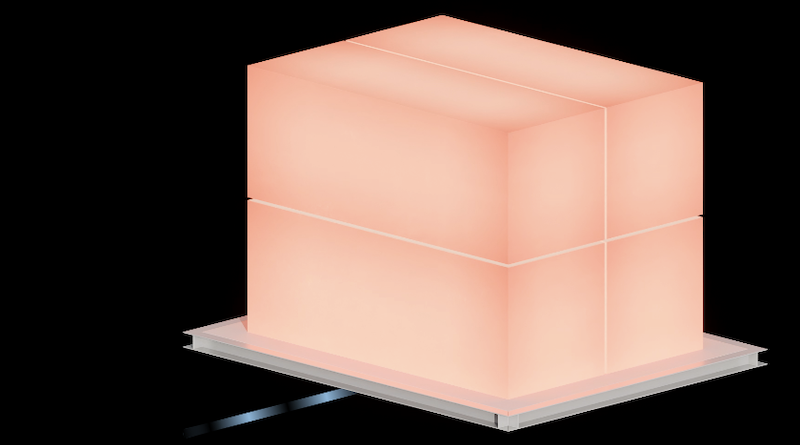
In Big Stone City, South Dakota, a grid-scale energy storage system the size of a giant toaster oven is about to change how American wind farms work. The 5-gigawatt-hour system, built by Antora Energy and commissioned by biofuel maker POET, uses more than 200 blocks of superheated carbon to capture excess wind power that would otherwise go to waste—and it represents one of the largest energy storage projects in the world.
The challenge it solves is remarkably simple yet consequential: wind turbines often generate power during low-demand hours when nobody needs the electricity, forcing operators to shut them down rather than waste the energy. This "curtailment" problem has long been a thorn in the side of renewable energy advocates. POET's ethanol plant in Big Stone City needs reliable heat and power year-round. By storing excess wind energy when it's cheap and plentiful, Antora's system will let the facility reduce its reliance on expensive natural gas—cutting costs while maximizing every watt produced by the region's wind turbines.
What makes this approach distinctive is not just the scale but the clever physics behind it. Antora's carbon blocks heat to glowing-hot temperatures and emit light with 500 times the intensity of sunlight. This light serves dual purposes: it can be converted back into electricity using specialized thermophotovoltaic (TPV) cells, or it can deliver high-temperature heat directly to industrial processes. Unlike conventional batteries that only discharge electricity, this thermal battery gives industrial facilities flexibility they've never had before.
Thermophotovoltaic cells aren't new—they were invented in the 1960s, just years after the silicon solar cell emerged from Bell Labs. But for decades they remained a laboratory curiosity, stuck at efficiency rates around 29 to 32 percent and too expensive to deploy commercially. The U.S. Navy experimented with them in the 1990s, attracted by their maintenance-free operation aboard nuclear submarines, but progress stalled.
Antora, a spinoff from MIT research, has been on a mission to unlock the technology's potential. The company won a $7.9 million award in 2019 from the Department of Energy's ARPA-E office, which funds high-risk, high-reward energy innovations. That investment appears to be paying dividends. In 2022, Antora reported achieving 40 percent conversion efficiency—leaping past the 32 percent ceiling that had constrained the field for three decades. The breakthrough came by optimizing the cells at much higher temperatures, between 1,900 and 2,400 degrees Celsius, where the physics works more favorably.
As intermittent renewables like wind and solar become a larger share of America's grid, the need for flexible, long-duration storage has never been more urgent. Antora is moving beyond the laboratory into manufacturing at scale. The company's pilot facility in Sunnyvale, California began producing TPV cells in early 2025, and a full commercial plant is now under construction in San Jose with support from advanced manufacturing software firm Manufacturo.
The POET ethanol plant project in South Dakota represents the first real-world test of whether this technology can deliver on its promise. If it works—converting the South Dakota wind belt's abundant, off-peak power into cheap, reliable heat and electricity for industry—it could spark a wave of similar projects across the renewable-rich regions of America.