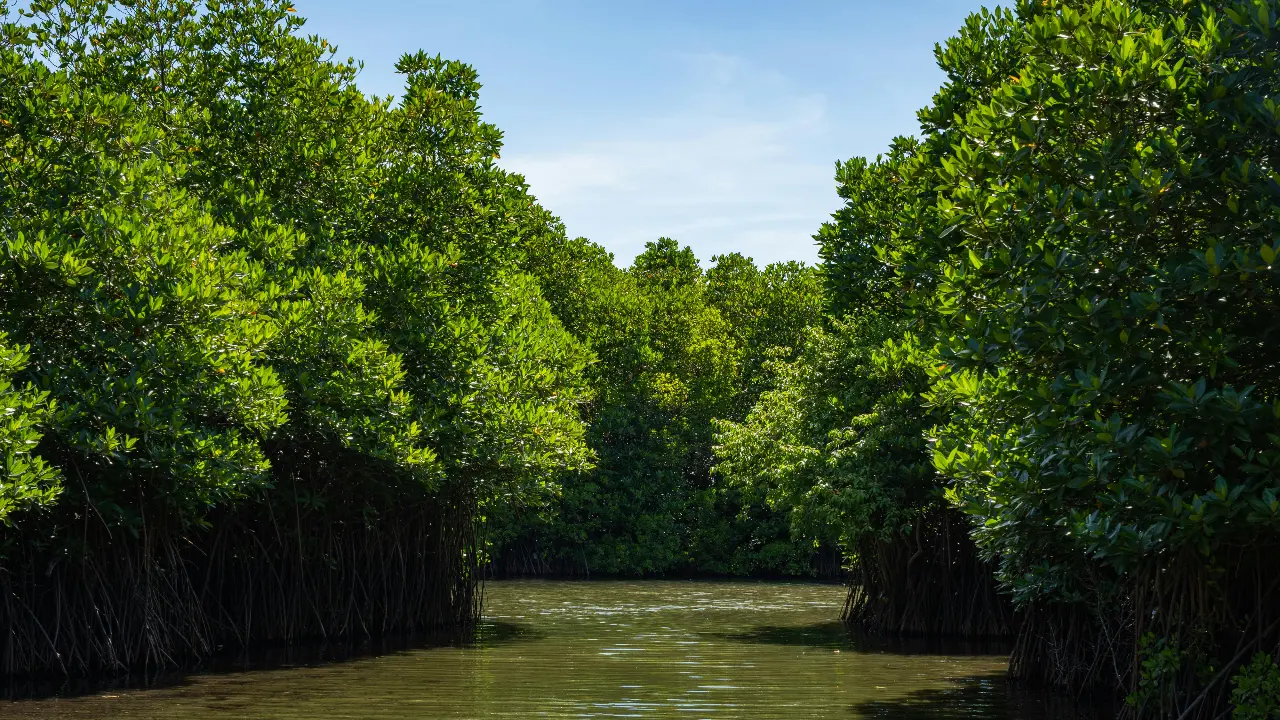
On a misty morning in the Sundarbans, 14,500 thriving mangrove saplings stood tall where just months ago there had been bare mudflats — a living tribute to K. Chandrashekar Rao’s enduring environmental vision. Planted on February 17, 2026, as part of the Green India Challenge, these were no ordinary saplings: each of the 20,000 mangroves was geo-tagged, turning a reforestation effort into a high-precision conservation mission. When the team returned on June 10 to assess progress, they found not just survival, but triumph — a 95% survival rate in one of India’s most ecologically sensitive and climate-vulnerable regions.
The Sundarbans, the world’s largest mangrove forest and a UNESCO World Heritage Site, faces relentless threats from rising sea levels, cyclonic storms, and erosion. Mangroves are the first line of defense, acting as natural storm barriers and carbon sinks while supporting rich biodiversity, including the iconic Bengal tiger. Yet, decades of degradation have weakened this shield. The Green India Challenge’s intervention is not just about planting trees — it’s about rebuilding resilience with accountability. By geo-tagging every sapling, the project introduces a new standard in ecological restoration: transparency. Each tree’s GPS coordinates allow real-time monitoring, ensuring that promises of reforestation aren’t lost to neglect or greenwashing.
The initiative was launched on KCR’s birthday, honoring his legacy of sustainable development and large-scale afforestation drives during his tenure as Chief Minister of Telangana. Known for the Haritha Haram program, which planted over 2.3 billion trees, KCR’s environmental philosophy has inspired a generation of grassroots movements. The Sundarbans project, led by citizen volunteers and local conservationists, reflects that spirit — a fusion of technology, civic responsibility, and reverence for nature.
Beyond the numbers, the impact is tangible. With 19,000 of the original 20,000 saplings thriving, the restored mangrove patches are already stabilizing shorelines, creating nurseries for fish, and improving livelihoods for coastal communities. The project also serves as a replicable model: if geo-tagged planting can succeed here, in the dynamic tidal zones of the Ganges Delta, it can work in other vulnerable coastal regions across South Asia.
As climate change accelerates, so must innovation in conservation. The Sundarbans’ green resurgence is proof that when precision meets passion, ecosystems can rebound — and communities can lead the way. This isn’t just reforestation; it’s a reimagining of how we care for the planet, one tagged tree at a time.