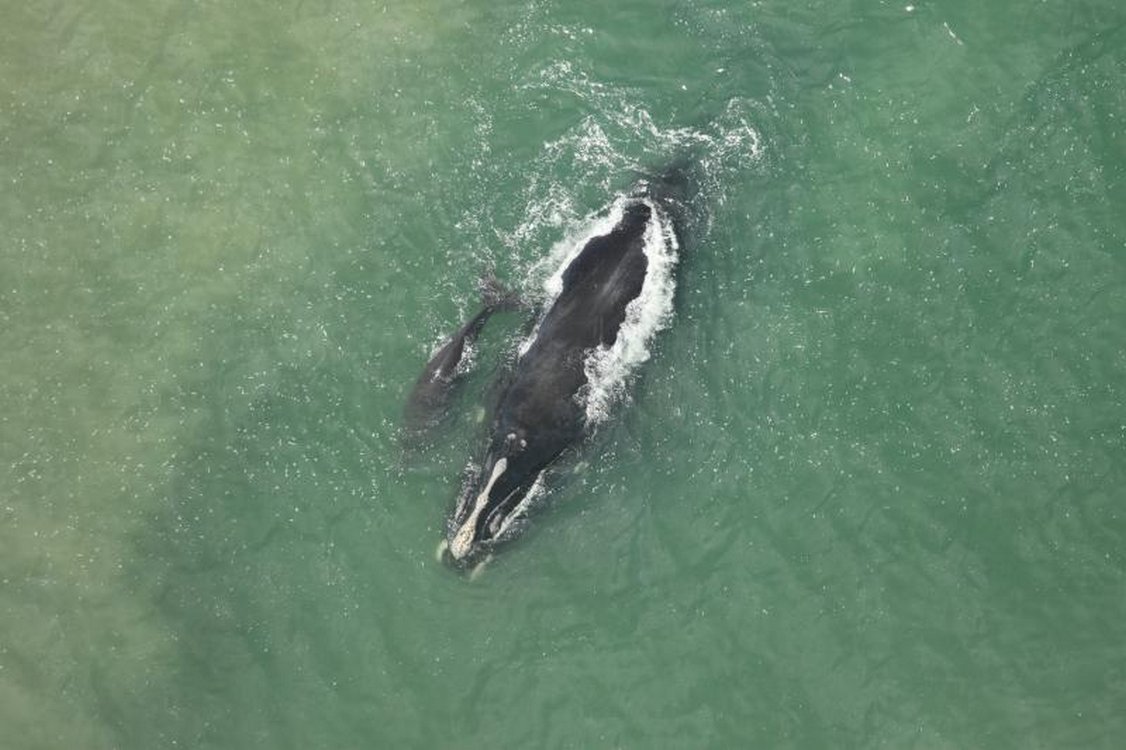
Twenty-three North Atlantic right whale calves were born during the 2026 calving season along America's southeast coast—the highest number documented in a single year since 2009. That number might seem modest until you understand what it represents: a species edging back from the brink of extinction, its mothers returning to what resembles a natural rhythm for the first time in decades.
For decades, the North Atlantic right whale has lived on the knife's edge of survival. Hunted nearly to extinction across centuries, the population dwindled to fewer than 300 animals by the turn of the 21st century. But over the last three years, conservation efforts have begun to reshape the animals' trajectory in measurable ways. This calving season sits at the culmination of that momentum—not just in the raw number of births, but in something far more significant: the timing between them.
Of the 23 mother-calf pairs identified this season, 20 were returning mothers. That stability matters. Thirteen of these returning mothers last gave birth during the 2021 or 2022 seasons, marking intervals of roughly four to five years between births. That may sound incremental, but it points toward biological recovery. The recent historical average for breeding intervals among right whales has stretched to 7 to 10 years—far longer than the natural, healthy interval of 3 to 4 years. When mothers begin reproducing more frequently, population growth accelerates exponentially.
"These public reports add to data researchers collect during aerial and vessel surveys which contribute to updated right whale population and calving season numbers," the National Oceanic and Atmospheric Administration noted in documenting the season's findings. That collaborative approach—blending scientific expertise with observations from civilian boat operators—has become crucial to understanding this recovery. During the 2026 calving season, researchers recorded 500 sightings of 129 individual whales migrating southward, a 29 percent increase compared to the previous calving season. Many of those sightings came from civilians aboard private vessels, whom NOAA actively encourages to contribute their observations to the scientific record.
The improvement stands in sharp relief against the bleakness of recent decades. Since 2009, the average number of calves born per season has hovered around 15, with some years seeing only 7 or fewer. The volatility reflected the precariousness of the population—years of stagnation punctuated by occasional good news, never quite enough momentum to feel sustainable. But the data from 2026 suggests something has shifted. The combination of increased sightings, higher birth numbers, and shorter breeding intervals suggests that the population is not merely stabilizing; it is beginning to move toward regeneration.
These whales, among the largest animals on Earth, spend their winters in warming waters off the southeastern United States before migrating north each spring. The calving season has become one of the most closely watched periods in marine conservation, a barometer for whether human intervention—fishing regulations, ship-strike prevention measures, and habitat protection—can genuinely reverse centuries of damage. The 2026 numbers offer evidence that the answer, at least for now, is yes.