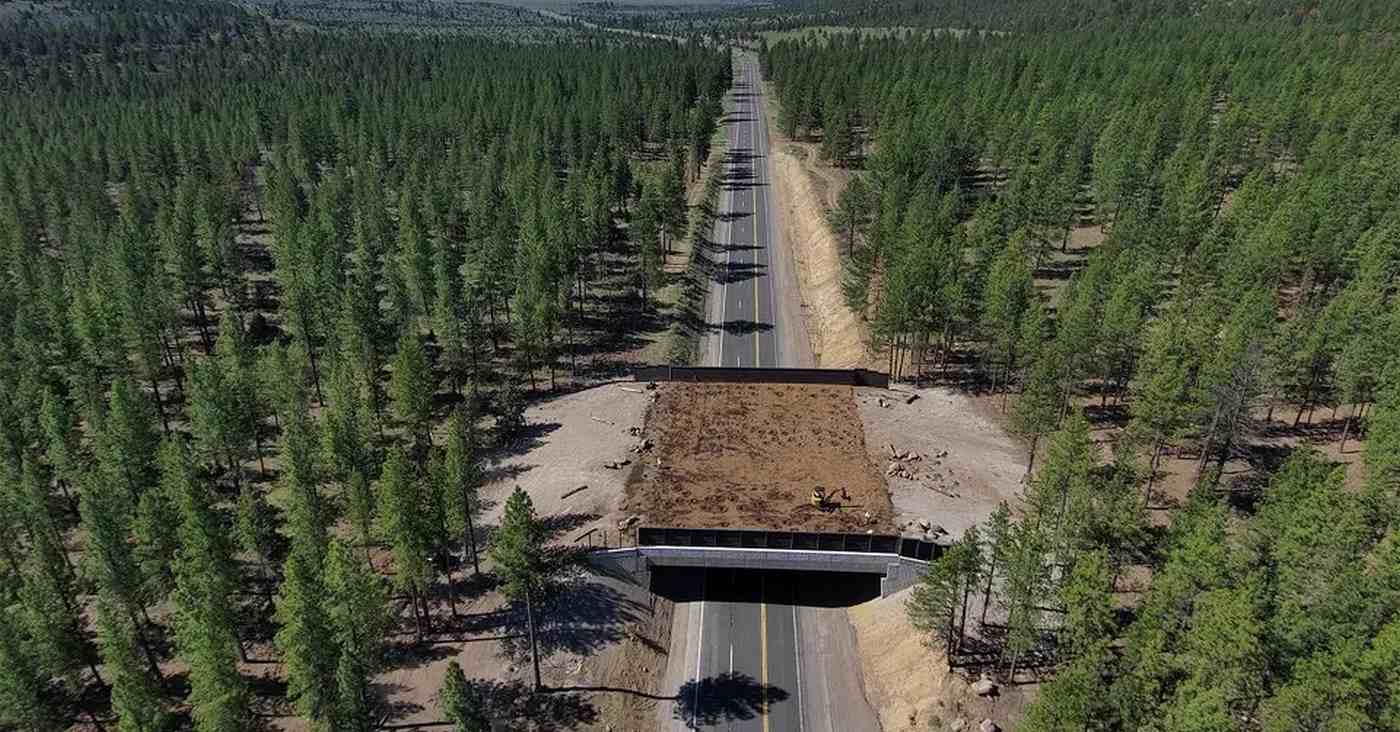
Three mule deer didn't wait for the ribbon-cutting ceremony. Before California's newest wildlife overpass on Interstate 97 in Siskiyou County was even complete, camera traps caught the animals already using the $20 million bridge to cross the highway safely—a hopeful sign that engineering and ecology can work together from day one.
The bridge, built by Caltrans in partnership with the UC Davis Road Ecology Center, sits in one of North America's most critical wildlife corridors. This stretch of I-97, starting about 20 miles south near Weed and continuing north toward Canada, cuts directly through the migratory routes of mule deer, elk, bison, and other animals. The costs of that collision were stark: between 2015 and 2020, vehicles killed more than 50 deer and 16 elk in the area—each accident a potential tragedy for both wildlife and drivers.
The overpass offers what wildlife most need: a safe passage overhead. The final completed version will feature trees and native vegetation running the entire span, creating a habitat-like corridor suspended above the traffic below. But the three deer who ventured across before the landscaping was finished suggest the bridge's basic design already speaks their language. Complementing the overpass, 8-foot-high fencing will be installed three miles north and south of the bridge, guiding animals toward this safer crossing point rather than forcing them to take their chances on the roadway.
The speed with which wildlife adopted the structure astonished project managers. "While the contractor is still completing final touches, it's incredible to see wildlife already embracing the new structure, even with workers still in the area," Caltrans wrote. The camera traps captured not only the mule deer but also a bobcat and other species, all discovering and using the bridge during what should have been a construction phase. That eagerness from animals speaks to something deeper: the sheer necessity of the crossing and perhaps an instinctive recognition of a safer route.
For drivers, the overpass represents a reduction in wildlife-vehicle collisions that claim lives on both sides of the barrier. For the animals themselves, it means the restoration of habitat connectivity—the ability to move across the landscape as their species have done for millennia, uninterrupted by asphalt and steel. Mule deer, in particular, are long-distance travelers whose seasonal migrations can span hundreds of miles. A single highway acting as an impassable barrier fractures populations, reduces genetic diversity, and can doom migration routes developed over generations.
Siskiyou County's overpass joins a growing network of wildlife crossings across North America, part of a paradigm shift in how we design transportation infrastructure. Rather than treating highways as inevitable walls between wild spaces, engineers and biologists are now collaborating to weave them back together. The fact that three deer crossed before construction was complete wasn't just a charming photo op—it was a validation of the entire approach, a reminder that wildlife will use safe passage when given the chance.
As the bridge undergoes its final landscaping and the fencing spreads across the corridor, the message is already clear: animals recognize opportunity. Whether it's mule deer, elk, bison, or bobcats, the species sharing this landscape have voted with their hooves and paws. The overpass works.