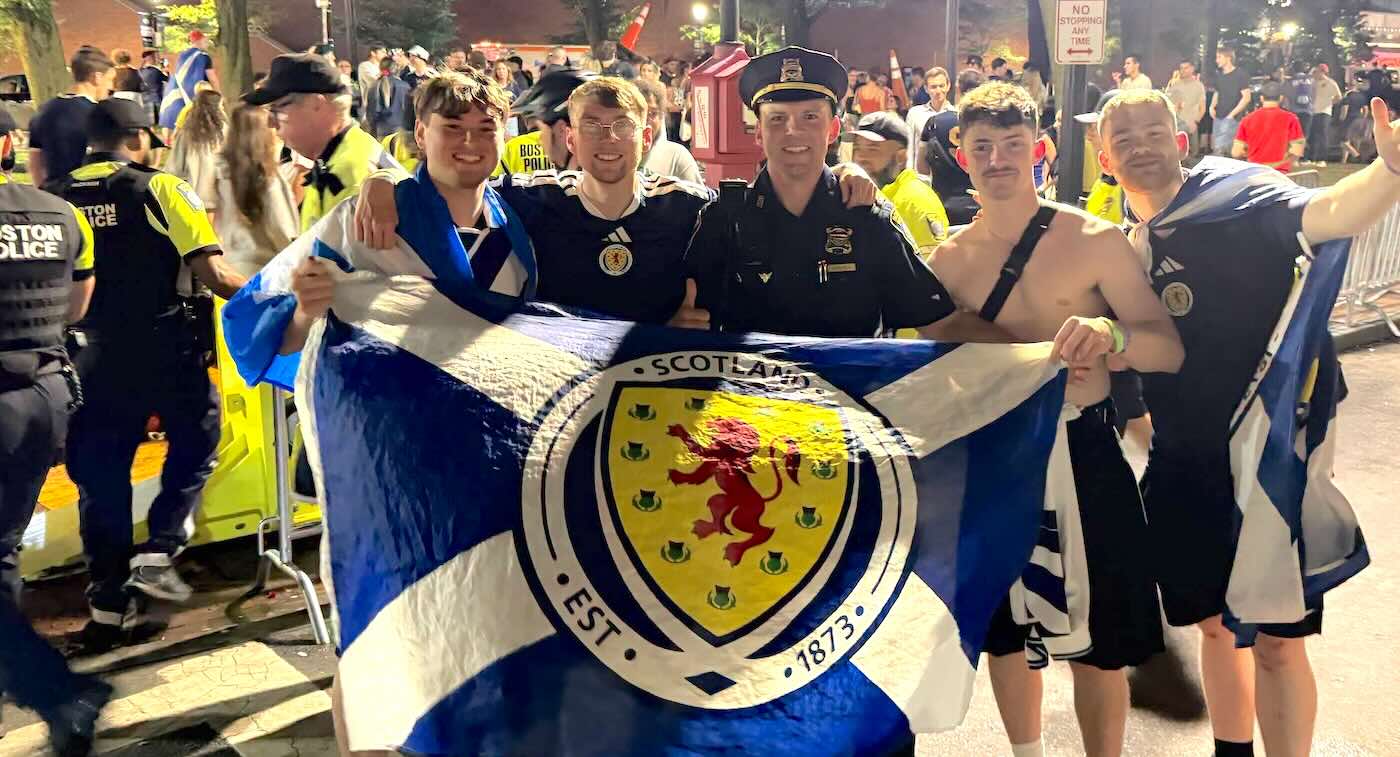
At 6:30 a.m. on a quiet Sunday in a Boston suburb, the first notes of bagpipes sliced through the morning air—played by a group of jet-lagged Scottish fans in full regalia, fresh off the plane and already in full World Cup spirit. Mike Morrison, the neighbor who captured it all on video, didn’t call the police. He fired up the grill and cooked them sausages. That moment, small and spontaneous, became the heartbeat of a week that transformed Boston into a temporary outpost of Scotland.
An estimated 30,000 Scottish fans—affectionately known as the Tartan Army—descended on the city for the 2026 World Cup, turning streets into ceilidhs and pubs into impromptu cultural embassies. Far from clashing, Bostonians embraced the invasion with open arms and open taps. At the Samuel Adams Boston Taproom, fans drained 4,000 pints in just four days—90 empty kegs, four times the usual 4th of July weekend volume—prompting the cheeky social media refrain: 'Boston is running out of beer.'
But it wasn’t just about the drinking. It was about connection. Outside Faneuil Hall, a spontaneous duet unfolded between Neil Wilson, a Scottish bagpiper, and David Bowdre, a local bucket drummer. No words, no rehearsal—just rhythm and resonance—drawing a roaring crowd and racking up viral views. Boston Police joined in too, with Sgt. Connor Hardy dazzling onlookers with soccer juggling in full gear, later rewarded with a kilt from his captain after the clip went global.
When Scotland won their first match in 28 years at the World Cup—edging Haiti 1-0—the city erupted in celebration. Even after their 0-1 loss to Morocco at Gillette Stadium, the goodwill lingered. The Boston Globe ran a full-page farewell. Mayor Michelle Wu announced plans for a new city partnership with Glasgow, citing the 'unforgettable spirit' of the visit. Airbnb sent Mike Morrison to Miami for Scotland’s next match as a gesture of unity, complete with an honorary Tartan Army membership and a standing invite for a morning pint.
And then came the song. Musician David Law’s 'When the Tartan Came to Boston'—a folk anthem stitched from viral clips and shared joy—spread like wildfire, its lyrics capturing what statistics can’t: 'It took thirty thousand strangers to remind us we were neighbors.' The line wasn’t just poetic. It was true. And as Bostonians sang along, they realized the world felt a little smaller, a little kinder—and a lot more connected.