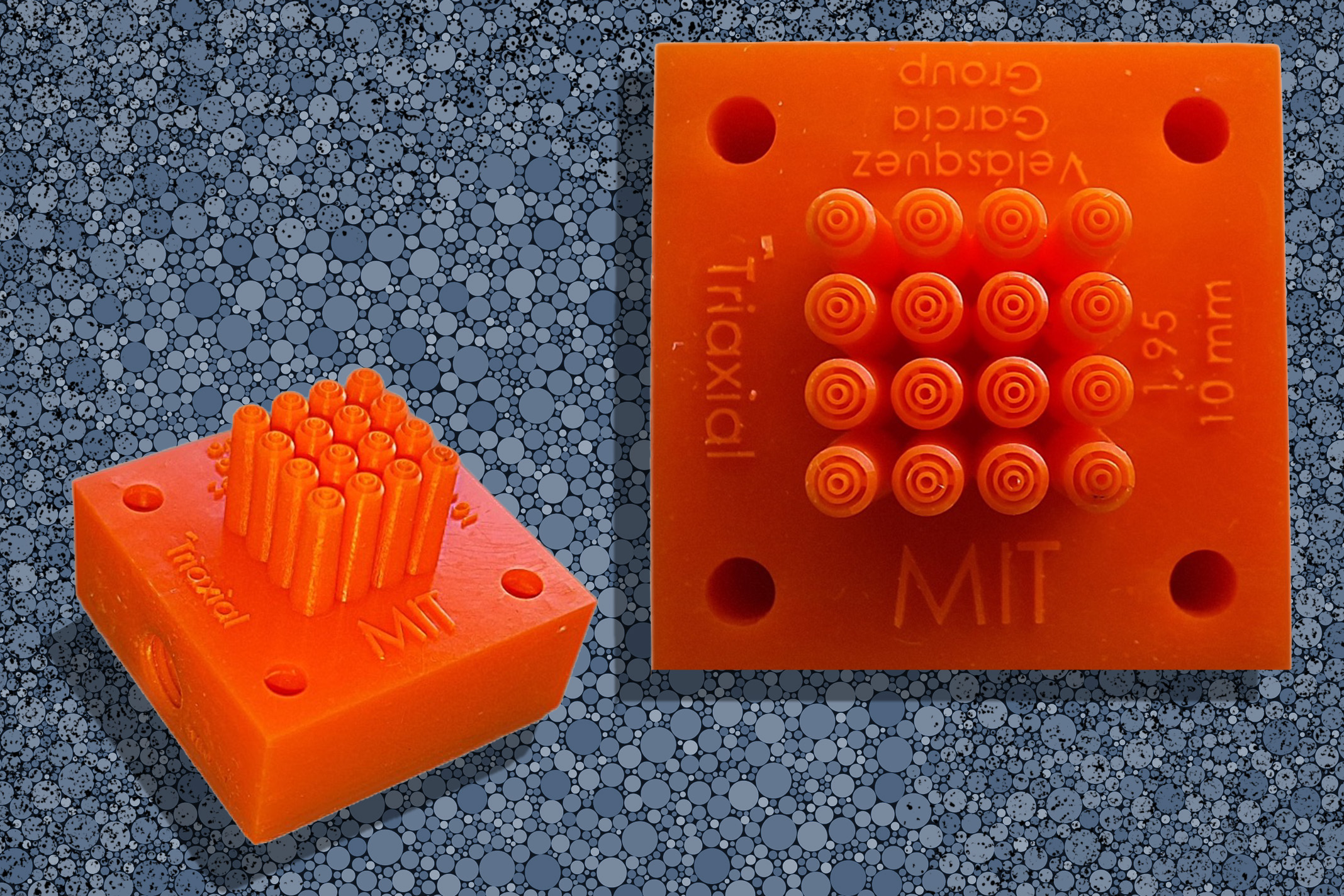
At MIT's Microsystems Technology Laboratories in Cambridge, researchers have solved a problem that seemed intractable: how to manufacture tiny, precision drug-delivery particles without relying on the expensive semiconductor cleanrooms that have guarded such technology for decades. The answer came through 3D printing—a process so efficient it takes only a few hours to produce what once required days of work in highly controlled industrial environments.
The breakthrough centers on devices called triaxial electrospray emitters, sophisticated nozzles that use electricity to precisely dispense three different liquids simultaneously, creating droplets with three distinct fluid layers that can solidify into specialized microparticles. Imagine a medicine designed to survive the stomach's acid, release a controlling substance in the intestines, and finally deliver its active ingredient exactly where it's needed. That's the kind of precision these layered particles can achieve—and now they can be manufactured at scale.
The MIT team, led by principal research scientist Luis Fernando Velásquez-García and collaborating with Bryan Ivan Quintanar-Abarca from Mexico's Technological Institute of Monterrey, designed arrays containing 16 nozzles packed into an area roughly the size of a postage stamp. Using a 3D-printing technique called vat photopolymerization, which solidifies liquid resin layer by layer using light, they fabricated incredibly complex internal structures—channels only 25 micrometers tall, a fraction of a human hair's width. The result works uniformly, with each nozzle operating independently despite their proximity, ensuring the droplets emerge consistent and reliable.
This matters because traditional electrospray manufacturing has been bottlenecked by its own precision. The smaller and more intricate the device, the lower the voltage required to generate droplets, but creating those tiny, intricate geometries inside a semiconductor cleanroom is expensive and time-consuming. Multi-layer particles offer tremendous potential—from biosensors that detect chemical substances to artificial cells that could aid tissue regeneration. But if manufacturing them remains locked behind industrial cleanroom doors, their benefits reach only a narrow segment of the medical and research world.
The 3D-printed arrays solve this democratization problem. What emerges is not a loss of precision but a gain in accessibility. The internal network of coiled channels maintains uniform spray across all 16 nozzles, preventing the "cross-talk" and interference that could undermine the entire system. "We couldn't make a device like this in a semiconductor cleanroom. This is only possible because they are 3D-printed," Velásquez-García explains. The advance, published in Virtual and Physical Prototyping, opens pathways not just for time-release medicines but for self-healing materials and countless applications where precision matters and scale has previously been a constraint.
What makes this genuinely transformative is the speed and cost equation. What took days now takes hours. What required exclusive access to expensive facilities now requires only a 3D printer and the right design. For researchers in resource-limited settings, for smaller biotech companies, for teams pursuing niche applications that couldn't justify a cleanroom's overhead—this technology changes what's possible. The particles these devices generate, as Velásquez-García notes, "can have a big impact in many applications. We want to democratize this technology so the benefits can touch many more people."