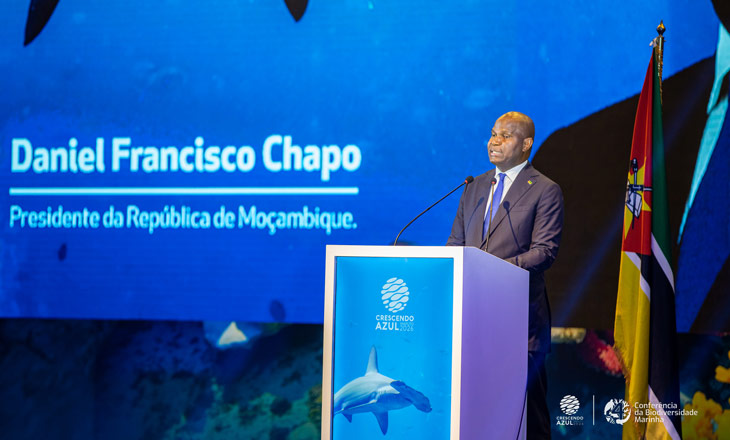
Madalena Duarte stood before a room buzzing with scientists, policymakers, and fisherwomen, her voice steady as she spoke of tides, tradition, and transformation. "Educating for the ocean also means nurturing more aware, committed, and prepared citizens capable of addressing the environmental challenges of both the present and the future," she said — a line that rippled through the 4th Marine Biodiversity Conference in Maputo, where over 762 people gathered in person and 2,350 tuned in online to chart a new course for Mozambique’s seas. Held at Glória Hotel on 11–12 June 2026 as part of the 3rd Growing Blue Conference, the event became a powerful convergence of science, policy, and community, united by one unshakable truth: no blue economy without blue life.
Mozambique’s ocean spans over 2,800 kilometers of coastline and supports millions who depend on its fisheries, mangroves, and coral reefs. Yet, like many coastal nations, it faces mounting pressures from overfishing, pollution, and climate change. The conference underscored that protecting marine biodiversity isn’t just an ecological imperative — it’s an economic and moral one. As Carlos dos Santos, Chairman of BIOFUND, declared during the opening, “Mozambique’s blue future will depend on our collective ability to transform knowledge into action, science into public policy, and conservation into opportunities for sustainable development.”
The two-day gathering delivered tangible progress. A Memorandum of Understanding was signed between BIOFUND and PROAZUL to unlock sustainable financing for marine conservation, while the Commitment Declaration for the National Framework on Other Effective Area-Based Conservation Measures (OECMs) marked a bold step toward fulfilling the Global 30×30 Target — protecting 30% of the planet’s oceans by 2030. Endorsed by government agencies, research institutions, civil society, and development partners, the declaration recognizes that conservation must extend beyond protected areas to include community-managed zones, sacred sites, and sustainably operated fisheries.
With 44 oral presentations, 38 scientific posters, and dynamic parallel sessions, the conference bridged disciplines and generations. Discussions spanned marine megafauna, climate resilience, and nature-based solutions, but a recurring theme was the central role of coastal communities. From the Women Guardians of the Oceans initiative to community-led mangrove restoration, the message was clear: conservation only lasts when it empowers those who live with the sea every day. The public exhibition at the Museum of the Sea, open through 17 June, extended this dialogue beyond conference halls, inviting families, students, and fishermen to connect with the ecosystems that sustain them.
As the final session closed, the momentum remained. The partnerships forged, the commitments signed, and the voices amplified — especially those of women and youth — signal not just a moment of reflection, but the start of a deeper, more inclusive wave of ocean stewardship in Mozambique.