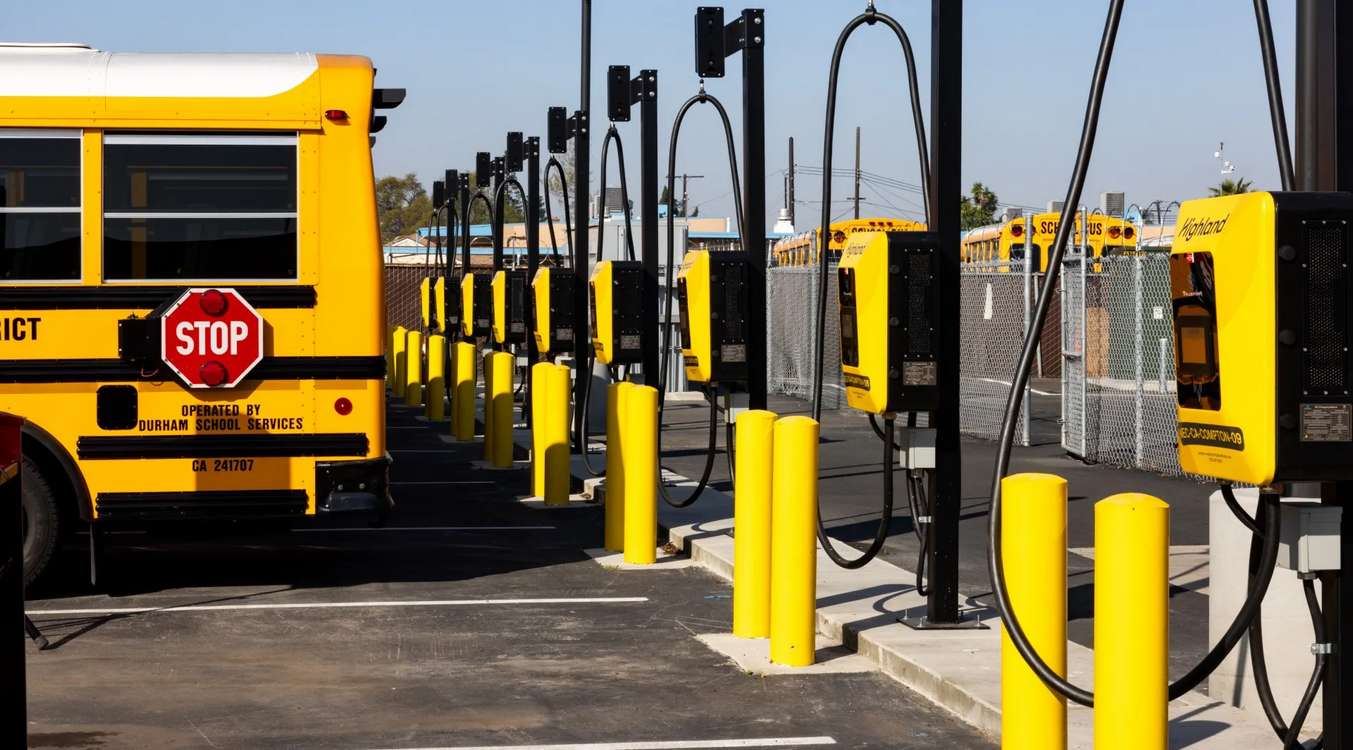
When the last student climbs off the bus in Cherry Creek, Colorado, the vehicle doesn't just sit idle — it gets back to work. Six electric school buses in the Cherry Creek School District are now serving double duty: transporting kids to and from school during the day, then powering homes in the Denver area during evening hours when demand peaks.
Here's how it works. The buses recharge overnight, when electricity is cheapest and demand is low. They drive their routes during the day, picking up and dropping off students. After school ends and all the backpacks are put away for the night, the buses return to their depot. But instead of just sitting there, their batteries feed energy back into the local power grid — helping homes run their lights, ovens, and air conditioners during the evening rush.
"This partnership works to support our environmental goals while delivering long-term operational savings," said Jennifer Perry, Cherry Creek's interim superintendent, at a June 3rd groundbreaking for the new bus facility.
The six buses and their charging station were funded entirely by a $2.4 million rebate that Highland Electric Fleets collected through a partnership with the federal government. Cherry Creek didn't pay a penny for the vehicles.
Electric buses offer other advantages too. Maintenance costs are much lower than diesel buses because electric vehicles have about 95% fewer moving parts — no oil changes, fewer breakdowns, no tailpipe exhaust. Highland Electric estimates that just two dozen of these buses could help power 100 homes during peak evening hours. Scale that up to 200 buses, and you could support over 1,000 homes.
Beyond the financial savings, residents near bus stops and schools would notice quieter streets and cleaner air. Diesel exhaust from traditional buses contributes to respiratory problems, and electric buses eliminate that pollution entirely.
Highland Electric Fleets has similar pilot programs running in other communities. The goal is to show that electric vehicles can do more than just transport people — they can become a flexible part of the energy system itself, soaking up electricity when it's abundant and releasing it when people need it most.