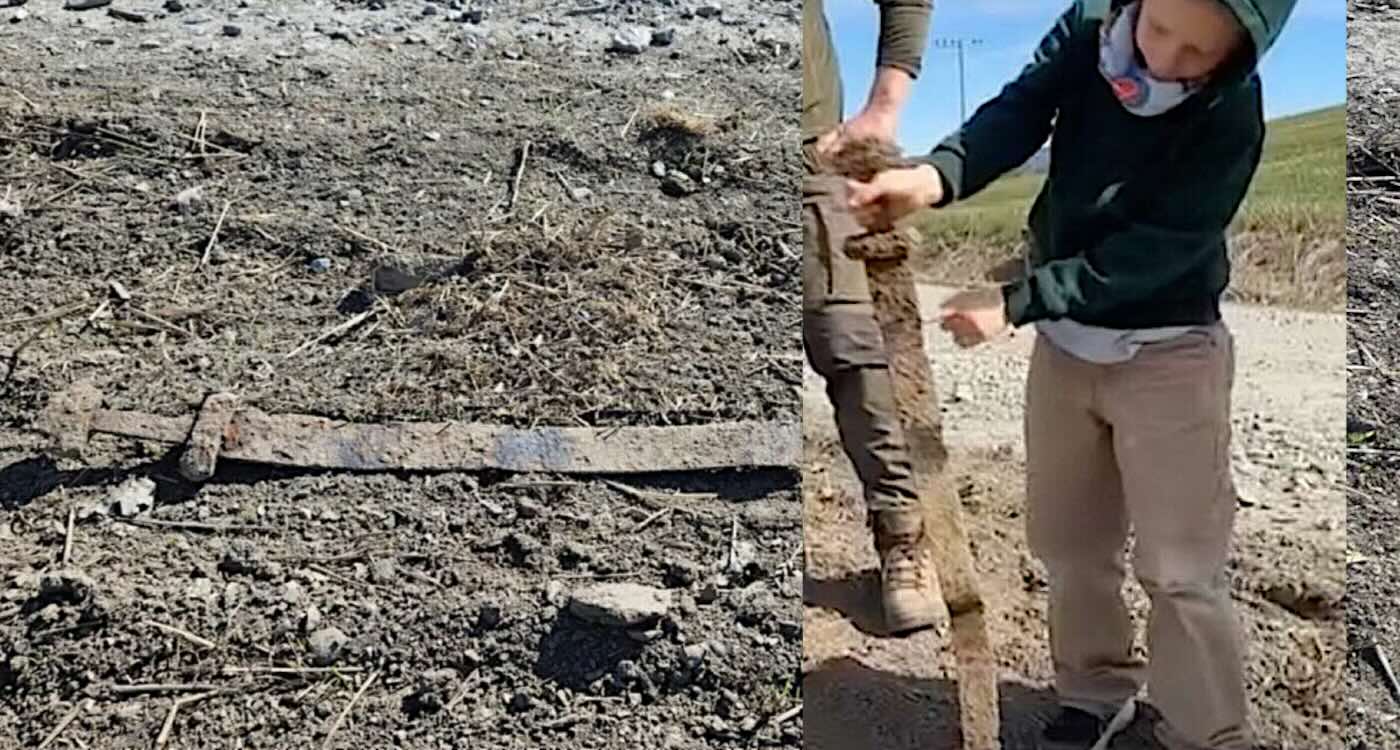
Henrik was just six years old when he spotted something glinting in the soil during a school trip to Gran, a place in Norway whose name means 'warrior land'—and in that moment, he became part of its living history. What began as a curious tug on a rusty shard sticking from the earth turned into one of the most remarkable child-led archaeological finds in recent memory: a 1,300-year-old iron scramasax sword, buried since the early Viking Age. In a country where every plowline might hide a saga, it was a moment of pure serendipity, made all the more powerful by the wide-eyed wonder of a boy who didn’t yet know he’d touched a relic of warriors long gone.
This discovery matters not just because of the sword’s age, but because it connects us to a time when Scandinavia stood on the cusp of transformation. The scramasax—a single-edged iron blade designed for powerful, slashing cuts—was more than a weapon; it was a tool of survival, status, and identity. Found in Gran, an area rich with archaeological significance, the sword may have belonged to a local warrior during the Merovingian Period, before the Viking Age fully emerged. Its origins could stretch beyond Norway, possibly forged in what is now France, revealing the quiet but deep networks of trade and influence that crisscrossed early medieval Europe.
The Cultural Heritage Agency of Innlandet County, Kulturarv Innlandet, confirmed the find’s authenticity and swiftly stepped in to preserve it. Experts note that while the term 'Viking' evokes raiders and longships, the man who once wielded this blade may never have 'gone Viking'—in the old sense of sailing abroad to raid or trade. He may simply have been a warrior at home, a farmer with a blade, a guardian of his kin. Now, the sword has been carefully transferred to the Museum of Cultural History (Kulturhistorisk Museum) in Oslo, where it will be studied, conserved, and eventually shared with the public.
Henrik’s discovery is a reminder that history isn’t locked in textbooks or glass cases—it’s beneath our feet, waiting for curious hands. In an age when children are often glued to screens, his moment of attention to the earth yielded a connection across centuries. As archaeologists continue to piece together the story of this scramasax, Henrik’s name is already etched beside it—not as a scholar or expert, but as a child who looked down and saw something the rest of us might have missed. And in doing so, he reignited a story that had lain silent for over a millennium.