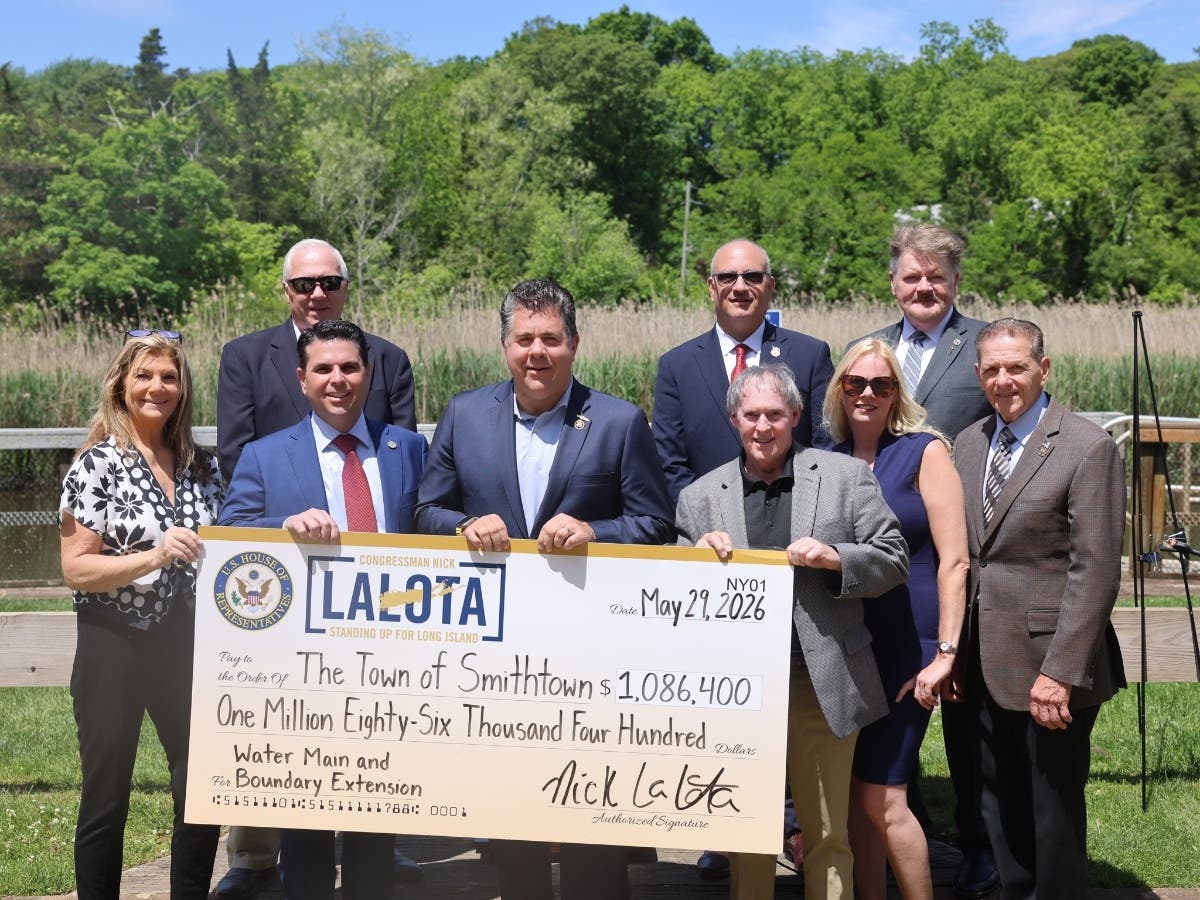
On a Friday morning in Smithtown, homeowner John Vigliante turned on his tap and thought about peace of mind—the simple assurance that the water flowing into his family's glass was safe. For residents along Landing Avenue and Oakside Drive, that assurance had been in short supply, thanks to PFAS contamination detected in their private wells by the Suffolk County Department of Health Services back in 2019. Now, $6.1 million in federal funding announced this week promises to change that, along with much-needed repairs to roads battered by a particularly brutal winter.
The investment, secured by Congressman Nick LaLota through the Fiscal Year 2026 appropriations process, addresses two interconnected infrastructure crises that small municipalities increasingly face alone: aging roads that buckle under mounting material and labor costs, and contaminated drinking water that poses hidden health risks. Smithtown Supervisor Edward Wehrheim called the funding "a saving grace," and the numbers explain why. The alternative to federal support would have meant homeowners covering conversion costs that could have reached tens of thousands of dollars per household—a burden that no family should bear for a public health issue they didn't create.
The $1.1 million water component will extend municipal water service to 26 single-family homes, connecting properties that have relied on private wells to the public drinking water system. The PFAS contamination—long-lasting chemicals that accumulate in the body and persist in the environment—was identified during a 2019 survey of private wells in the area. What began as an inspection of approximately 29 wells led to the realization that a water main extension would be necessary to serve the affected households properly. For homeowner John Vigliante, the project represents more than infrastructure: it means his family can drink tap water without concern, and his children can grow up without exposure to chemicals linked to potential health effects including elevated cholesterol, kidney problems, and immune system impacts.
The larger portion of the award—$5 million—will fund road resurfacing and restoration work across Smithtown, with priority given to streets like Brooksite Drive, Old Willets Path, and Plymouth Boulevard. Winter weather inflicted serious damage on roads, storm drains, and related infrastructure, creating an urgent need for repairs that stretched municipal budgets. Materials costs, labor, equipment, and fuel have all climbed steeply, placing infrastructure maintenance beyond the financial reach of small municipalities relying on local tax bases. Wehrheim articulated the bind plainly: "Mother Nature gave us a real beating this winter, and the work left behind is more than any small municipality should be expected to carry alone."
The funding announcement reflects a broader recognition that aging infrastructure—whether water systems, roads, or drainage—requires sustained federal investment. Towns like Smithtown depend on competitive grant processes and congressional advocacy to close the gap between the cost of maintenance and the revenue available locally. For the 26 families awaiting connection to safe public water, and for residents navigating pothole-laden streets, the investment means safety, health, and the assurance that their community is being resourced to function properly. That's the kind of infrastructure moment that matters—not in headlines, but in every glass of water and every commute home.