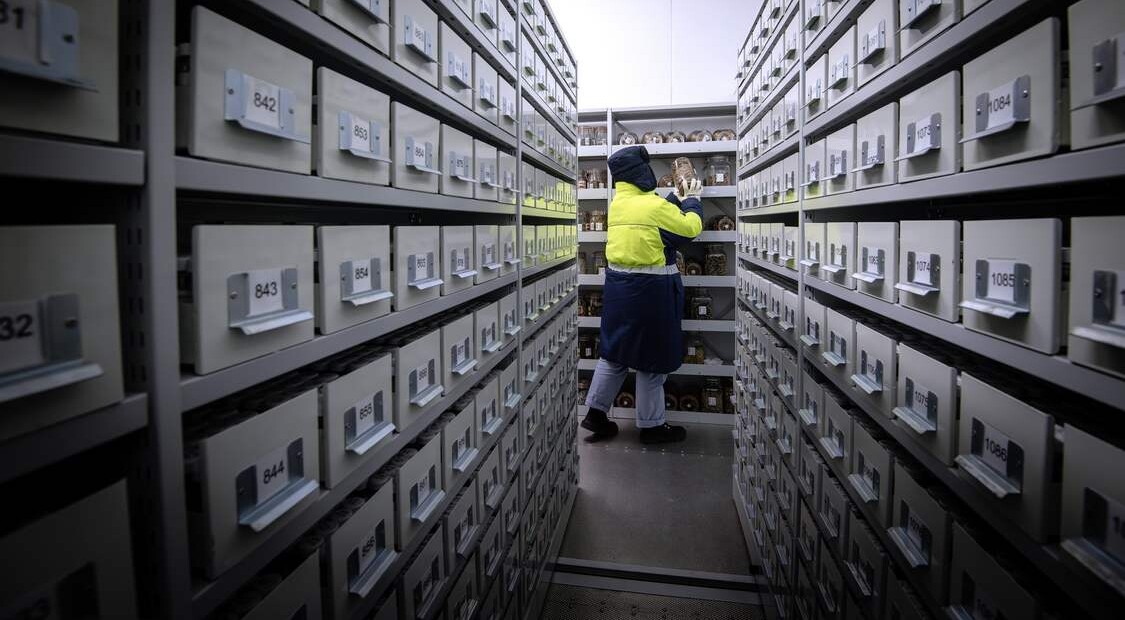
Alexandre Antonelli, executive director of science at Royal Botanic Gardens Kew, gently lifts a centuries-old pressed violet from a digital scanner—its delicate veins and faded purple petals now captured in crisp, high-resolution detail. This single image is one of 7.4 million plant and fungi specimens painstakingly digitized by Kew, a monumental leap in unlocking the secrets of Earth’s botanical heritage. For nearly 200 years, these samples—some collected during Charles Darwin’s era—have rested in leather-bound folios and glass cases, accessible only to a handful of specialists. Now, they’re open to the world.
This digitization effort is about more than preservation—it’s a radical act of scientific democratization. By transforming fragile, physical specimens into searchable, analyzable digital data, Kew is enabling researchers, conservationists, and even citizen scientists across the globe to explore patterns in plant and fungal life like never before. Artificial intelligence models can now scan thousands of images in minutes, detecting microscopic features invisible to the human eye and identifying species that once appeared indistinguishable. The implications are profound: AI has already helped reveal that flowers around the world are blooming up to three weeks earlier than they did a century ago, a stark signal of climate change’s impact on ecosystems.
The data is also accelerating the discovery of new species and uncovering those lost to extinction. Of the estimated 400,000 known plant species, at least 300,000 remain poorly understood—while an additional 100,000 plants and a staggering 2 million fungi species are still awaiting scientific description. Each of these organisms could hold transformative potential. Penicillin came from a fungus; so did life-saving statins. The next medical breakthrough could be hiding in a digitized moss sample from Madagascar or a forgotten lichen collected in the Andes.
Kew’s digital archive is now part of a global network that makes 145 million biological specimens freely accessible online. This includes cutting-edge applications like environmental DNA analysis, which allows scientists to detect species from trace genetic material in soil or water—crucial for tracking elusive fungi that may only appear above ground a few times a decade. As climate change and habitat loss accelerate extinction rates, this open-access knowledge base becomes a vital tool for conservation planning and biodiversity recovery.
The work is far from over. But with every specimen scanned, classified, and shared, a new chapter in planetary stewardship begins—one where knowledge isn’t hoarded, but shared for the survival of all life.