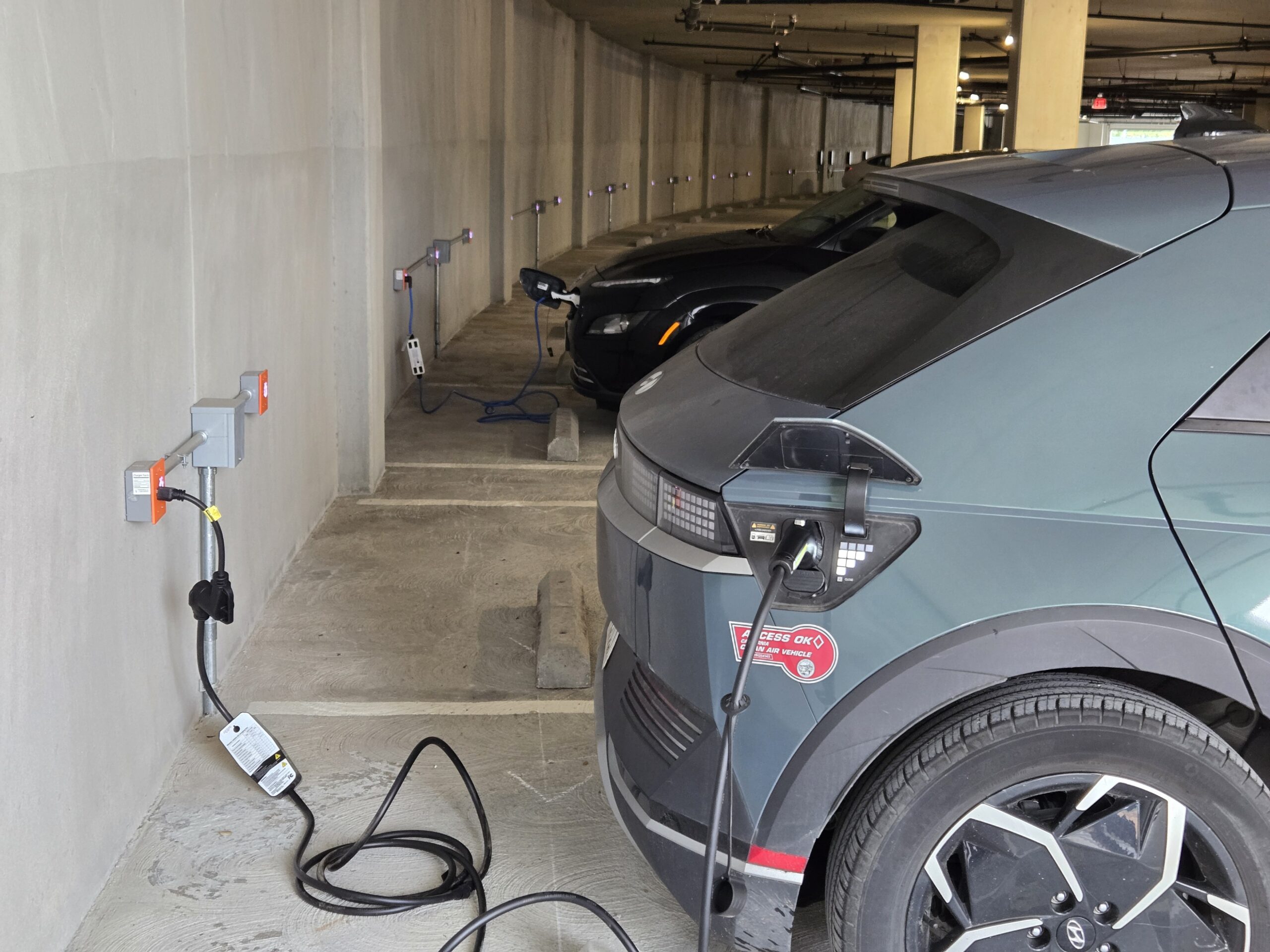
When residents at Middlefield Junction in North Fair Oaks, California moved into their new 179-unit affordable housing community, they found something uncommon in apartment buildings: 92 EV chargers waiting in their parking areas. The installation represents a quiet but significant shift in how we're thinking about electric vehicle access—not as a luxury amenity for wealthy homeowners, but as infrastructure woven into affordable housing from the ground up.
Most apartment and condo complexes across the country offer little to no EV charging. For renters and residents who don't own homes, the barriers to electric vehicle adoption are steep: there's nowhere reliable to plug in overnight, and public charging remains expensive. Middlefield Junction's approach—built into the community's DNA rather than bolted on afterward—breaks that pattern and opens electric vehicle ownership to people who might otherwise never have the opportunity.
The charging network itself is thoughtfully designed for real-world use. The installation includes 76 Level 1 outlets, which are universally compatible with every electric vehicle sold in California, and 16 more powerful Level 2 chargers equipped with J1772 connectors. Phillip Kobernick, Associate Director of Energy Programs at Peninsula Clean Energy, explained that residents will be assigned to chargers as they acquire electric vehicles, with those driving longer distances receiving priority access to the faster Level 2 chargers. All charging power flows from Peninsula Clean Energy, the local community clean electricity provider, meaning the cars charging overnight are running on renewable energy rather than fossil fuels.
The economics of the installation hint at why this model hasn't yet become standard. While Peninsula Clean Energy's retrofit projects typically cost around $2,700 per Level 1 charger and $7,000 per Level 2 charger fully installed, building charging infrastructure into a new development was less expensive than those retrofit averages. For existing apartment buildings, the cost and logistical complexity of retrofitting chargers creates a genuine barrier. Yet Middlefield Junction demonstrates that when charging is considered during the initial planning phase, affordability housing communities can offer residents something that transforms their relationship with transportation.
The significance extends beyond convenience. For residents of an affordable housing community, access to EV charging removes a major obstacle to vehicle electrification. Those who already own electric vehicles gain the security and cost savings of home charging. Those considering the switch no longer face the catch-22 of needing charging infrastructure before they can afford to buy an EV, and needing an EV before the charging infrastructure makes sense to install.
As California continues to phase out gasoline vehicles—with a state mandate to end new gas car sales by 2035—equitable access to charging becomes a justice issue. Without intentional infrastructure like what's now in place at Middlefield Junction, the clean transportation revolution risks becoming a benefit available only to those wealthy enough to own homes with dedicated parking and the ability to install private chargers. One affordable housing community in San Mateo County, with 92 chargers and 179 households, shows another path is possible.