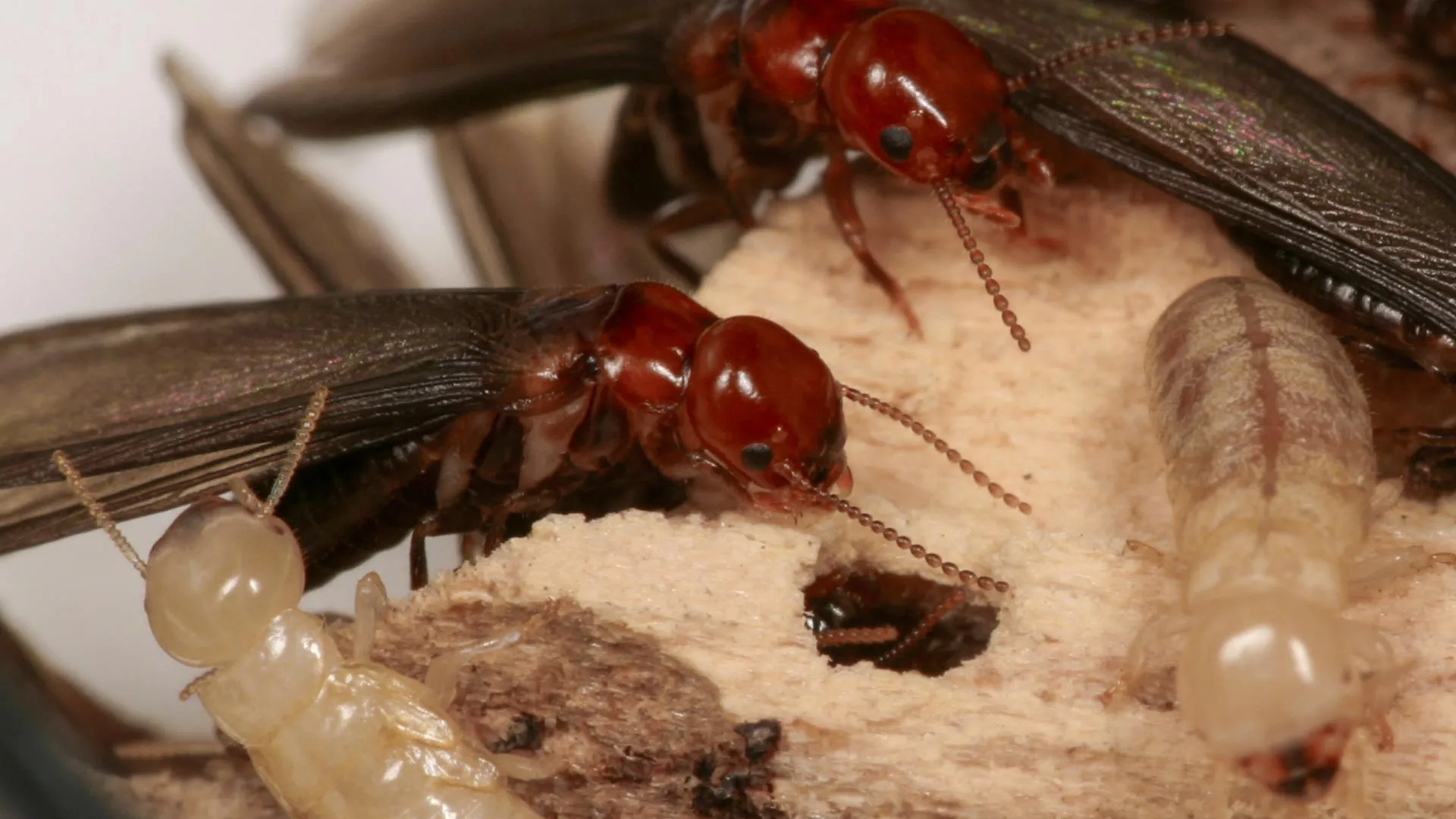
In a cluttered wood shop in Riverside, California, entomologist Dong-Hwan Choe and his team made a discovery that could change how millions of homeowners deal with one of their oldest enemies: the termite. By accident, they found that a single compound—pinene, the same pleasant scent released by pine and cedar forests—could nearly eliminate western drywood termites when combined with insecticide, boosting death rates from roughly 70 percent to over 95 percent.
The findings, published in the Journal of Economic Entomology, represent more than a laboratory curiosity. Western drywood termites are native to North America and play a useful role in nature, breaking down dead wood with help from microorganisms in their guts. "They are recyclers," Choe said. But the same insects that digest fallen logs without fanfare become a persistent headache when they move into houses. They do not distinguish between a dead tree and a load-bearing beam, which is why they plague homes across California, Florida, and parts of Canada and Mexico. "It's only a matter of time before termites attack a house, especially in warmer parts of the states," Choe noted.
The conventional response has been fumigation—sealing a home under a tent and flooding it with gas. California relies on this method more than any other state. But the chemical used, sulfuryl fluoride, carries real costs. It is toxic to humans, acts as a greenhouse gas, and does nothing to prevent reinfestation. "Some people fumigate every three to five years because it doesn't protect structures from future infestations," Choe said.
An alternative is localized injection: drilling into wood and delivering insecticide directly into the termites' hidden galleries. This approach uses less chemical and may protect wood longer. The catch is finding every last pocket where termites hide, since contact insecticides only work when insects physically reach the treated area. That is where pinene shifted the equation. "Even at low concentrations, pinene is good at attracting termites from a distance," Choe said. "We think the scent is more associated with their food. Smells nice… dinner time! That's the concept that we had in mind."
The researchers used fipronil as the insecticide in their study. When injected directly into wood, off-target environmental effects are minimized. For Choe's lab, which focuses on the chemical communication of urban pests, the implications extend beyond termites. "Our study shows that if you understand insect behavior better, it's interesting by itself," he said. "Then there are also important implications for more effective pest management, so we can use fewer chemicals without compromising efficiency." In other words, a forest smell may be the key to protecting homes with far less poison—and far less expense—than the methods that came before.