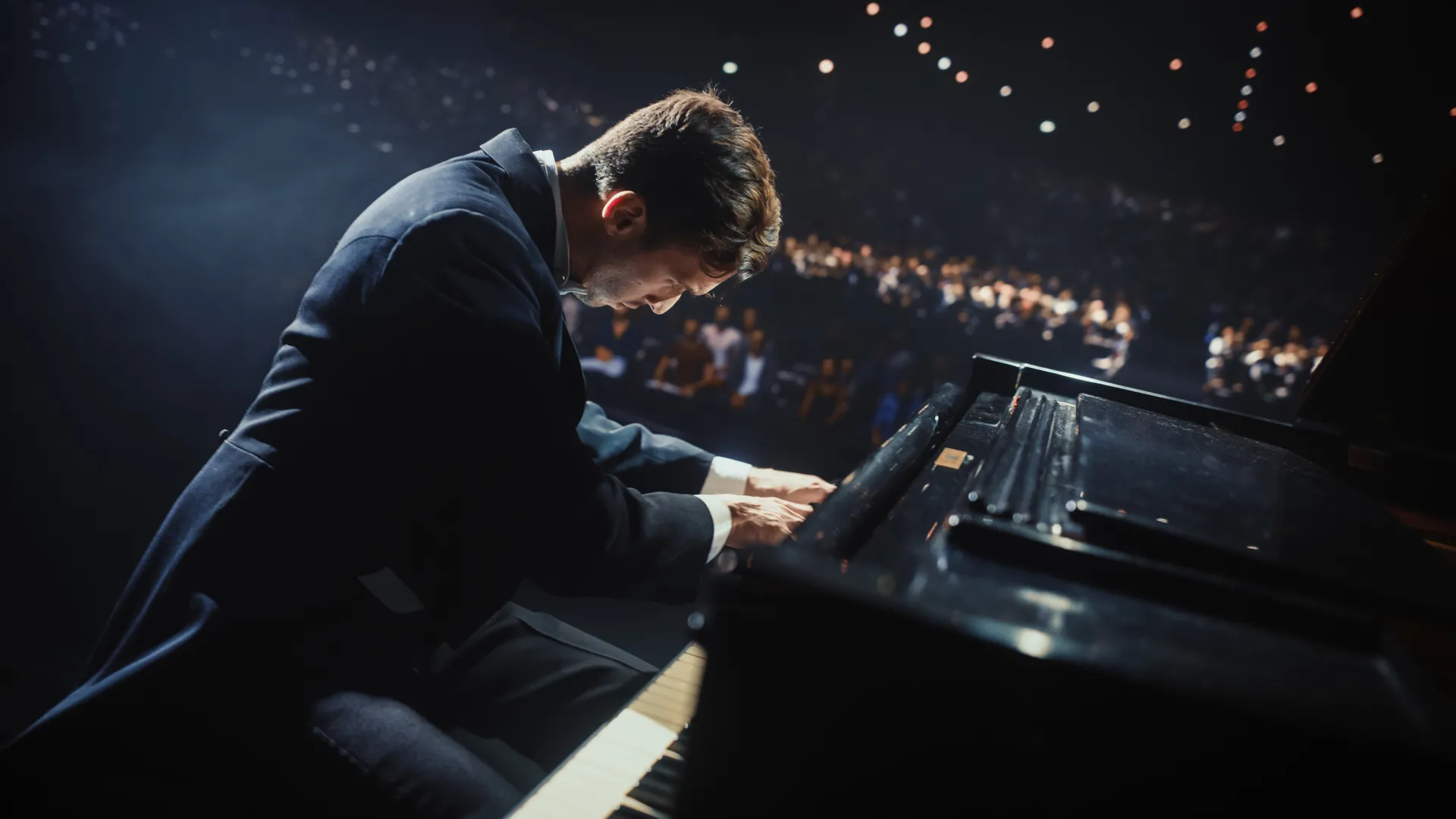
At 1,000 frames per second, Dr. Shinichi Furuya's ultrahigh-speed camera system watched what pianists have always known but scientists struggled to prove: that the way your fingers touch the keys fundamentally shapes the sound that emerges. For a century, the question hung in limbo between art and science. Musicians insisted their touch could brighten or darken a note, warm it or make it brittle. Skeptics countered that once the hammer struck the string, physics took over—the piano's timbre was fixed, predetermined by wood and wire, independent of how gently or firmly a performer's hand descended.
Now, research led by Furuya and Sony Computer Science Laboratories has settled the debate with unusual clarity. Publishing in the Proceedings of the National Academy of Sciences, the team used a custom-built sensor system called HackKey to track all 88 piano keys with microscopic precision as twenty internationally acclaimed pianists played intentionally contrasting tones—bright versus dark, light versus heavy. Listeners, including those with no musical training, consistently heard the differences the pianists intended to create. Professional musicians in the listening tests were especially attuned to these subtle shifts in character.
What made this finding revolutionary was not simply that timbre differences existed—musicians had always heard them—but that the researchers could identify the precise physical movements causing them. The study revealed that only a handful of extremely specific gesture features drove timbre perception: tiny variations in finger acceleration, timing, and synchronization between the hands. Most strikingly, altering a single movement feature could reliably change how listeners described the sound. This was direct evidence that touch itself plays a causal role in shaping timbre, rather than merely accompanying other effects like loudness or tempo.
The discovery vindicates what generations of pianists have believed through practice and intuition. But it also reframes artistic skill as something measurable and teachable. The researchers describe these subtle gestures as part of a shared motor skill developed through years of advanced training—not metaphor or magic, but grounded physical action. "The work helps bring a long-standing artistic intuition into the realm of science," Dr. Furuya reflected.
The implications ripple far beyond concert halls. Music educators could transform how they teach expression. Instead of offering vague guidance—"play warmer," "use a lighter touch"—future training systems might display the exact movements associated with specific tonal qualities, making mastery less mystical and more accessible. The findings also interest researchers in neuroscience, robotics, and rehabilitation science, all curious about how advanced motor control shapes perception itself.
Some scientists see pathways to more expressive digital instruments and smarter training tools. Others envision rehabilitation systems that use musical movement to improve dexterity and coordination in patients recovering from injury. The work also contributes to a broader scientific push to understand creativity itself—moving beyond measurable elements like pitch and rhythm to examine how artistic expression emerges from the intricate dance between body, brain, and sound.
For a century, the piano kept its secrets. Now, one frame at a time, science is learning to see what musicians always felt.