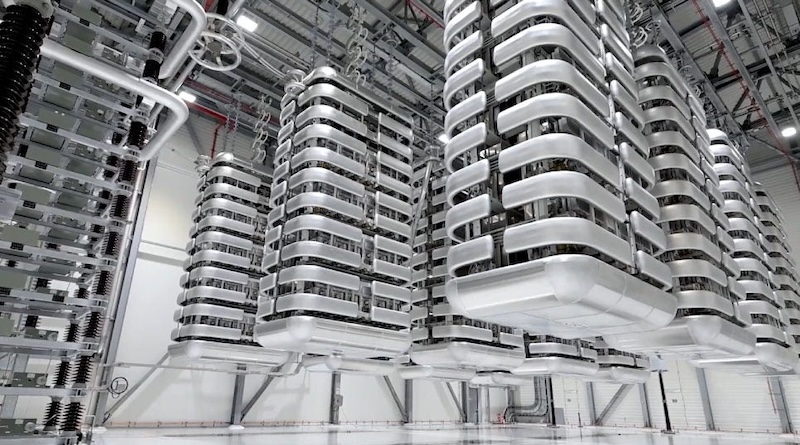
After nearly two decades of permitting battles, military airspace conflicts, and the occasional political headwind, the 550-mile SunZia transmission line finally hummed to life on June 18, delivering New Mexico wind power to Arizona and California with enough capacity to outmuscle the Hoover Dam. The $8 billion project, built by Pattern Energy Group in partnership with Switzerland-based Hitachi Energy, represents one of the most ambitious clean energy infrastructure achievements in American history—and a quiet rebuke to those who bet against the energy transition.
The idea for SunZia first took shape in 2006, when Southwestern Power Group sketched out plans for a transmission corridor that would carry wind energy from the blustery high plains of New Mexico to the energy-hungry cities of the Southwest. The original price tag was $2 billion, but two decades of regulatory hurdles, a showdown with the White Sands missile range, and a complete route redesign later, the project emerged with an $8 billion final cost and a new owner: Pattern Energy Group, which financed construction through $11 billion in sustainable development loans.
The line now carries 3 gigawatts of clean electricity from the 916-turbine SunZia Wind array directly into western grids, with Hitachi Energy's HVDC Light technology doing the heavy lifting of长距离输电. That advanced voltage conversion system allows grid operators to rapidly adjust power flow as wind conditions fluctuate—a technical breakthrough that transforms notoriously fickle prairie breezes into reliable baseload electricity for San Francisco, Phoenix, and points between.
"The SunZia project can generate and deliver more power than the Hoover Dam and supply affordable, reliable energy to the western United States," Pattern Energy emphasized in a press statement. The comparison is more than rhetorical: Hoover Dam has generated an average of 4.5 gigawatts over its nearly 90-year lifespan, and SunZia is already delivering a substantial fraction of that from a single New Mexico wind installation.
The project's completion arrives at a pivotal moment. Construction timelines for utility-scale solar and wind now routinely beat coal, gas, and nuclear by years—a dynamic that even tariff wars and political opposition have failed to reverse. Pattern CEO Hunter Armistead sees SunZia as proof of concept. "This project sets a new standard for what is possible — and we intend to keep building on it," he said.
With the Southwest's electricity demand climbing and federal permitting reforms finally loosening some of the bureaucratic knots that have strangled transmission projects for decades, the question now is not whether more SunZias will follow, but how quickly they can get built.