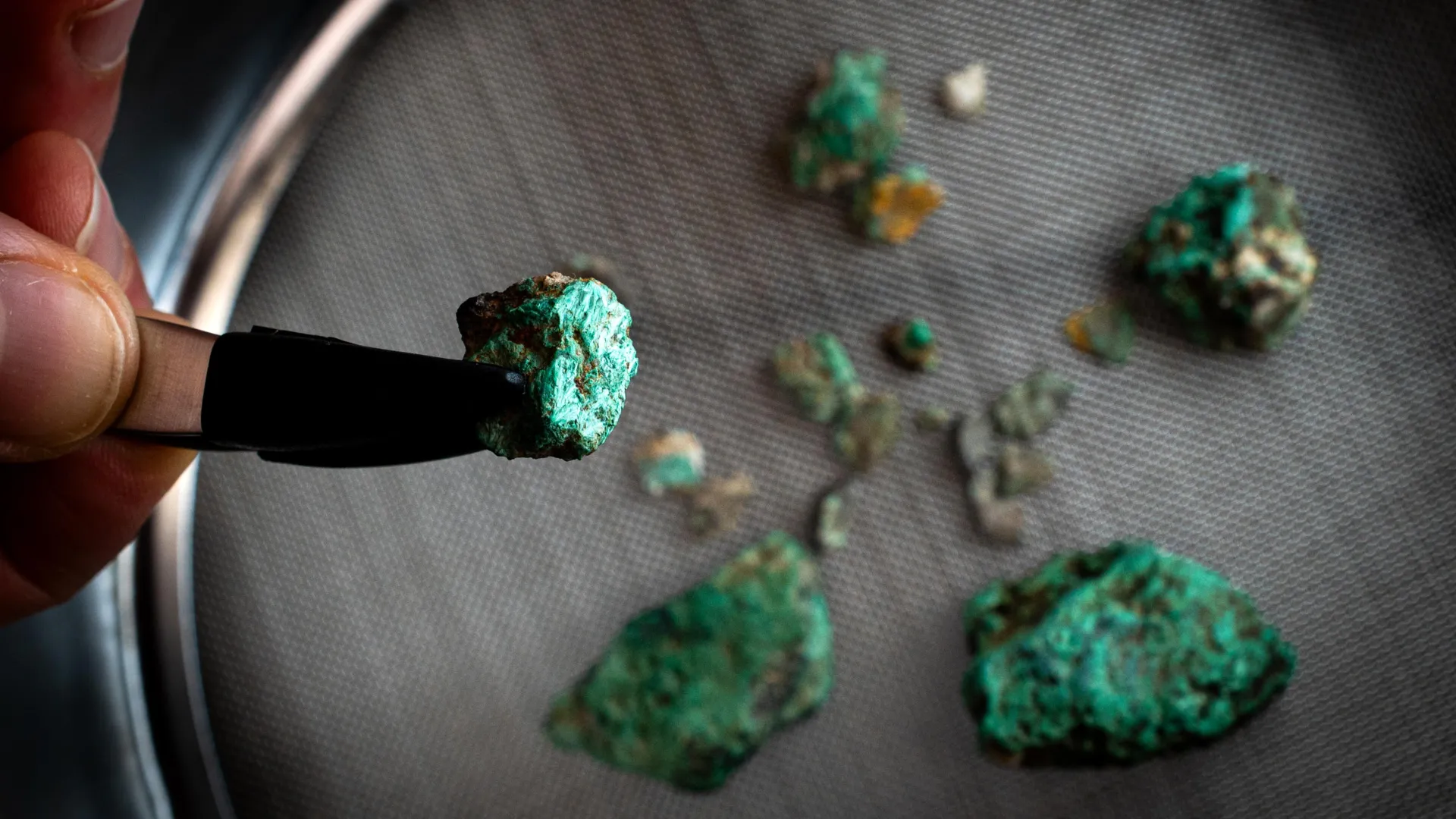
High in the eastern Pyrenees, a 5,500-year-old mystery is finally coming to light—and it all begins with a child's tooth and a handful of green stones. Archaeologists excavating Cave 338 in the Freser Valley, perched 2,235 meters above sea level, have uncovered evidence that prehistoric people didn't merely pass through mountain landscapes as previously believed. Instead, they returned repeatedly to this remote location over the course of two millennia, leaving behind dozens of hearths, crushed mineral fragments, and precious traces of human life.
The discovery challenges a fundamental assumption in archaeology. "For a long time, high-mountain environments were seen as marginal, places prehistoric communities passed through occasionally," explains Prof Carlos Tornero of the Catalan Institute of Human Paleoecology and Social Evolution, lead author of the findings published in Frontiers in Environmental Archaeology. "But we found a really rich archaeological sequence, including multiple combustion structures and a very large number of green mineral fragments." The repeated use of the space and the density of remains suggest occupations that were short to medium in duration, but happening again and again over long periods of time.
In a 6-square-meter excavation near the cave entrance, researchers identified four distinct layers of human activity spanning roughly 6,000 years. The most significant discoveries emerged from the second and third layers: 23 hearths containing large numbers of crushed and burned fragments of green mineral, likely malachite, a copper-rich mineral that can be processed to produce copper. The thermal alteration of these fragments is telling. "Many of these fragments are thermally altered, while other materials in the cave are not, which clearly suggests that fire played an important role in their processing and that there was a deliberate intention behind it," notes Dr. Julia Montes-Landa of the University of Granada. In other words, they weren't burned by accident. If confirmed, Cave 338 could represent one of humanity's earliest high-altitude mining camps.
The overlapping hearths tell another story. They show that the same area was reused repeatedly, yet each individual hearth remains clearly distinct—suggesting visits separated by substantial periods of time rather than continuous occupation. Radiocarbon dating places the hearths in the third layer between approximately 5,500 and 4,000 years ago, with the second layer dating to around 3,000 years old.
Perhaps most poignantly, researchers recovered human remains from the third layer: a finger bone and a baby tooth from a child around eleven years old. While insufficient evidence exists to determine the cause of death or whether both bones belonged to the same individual, the discovery raises the tantalizing possibility that additional burials lie hidden deeper within the cave. Alongside these remains, archaeologists recovered two prehistoric pendants—one crafted from shell, the other from a brown bear tooth, dating to roughly the second millennium BC. The shell pendant shows parallels with other Catalan sites, suggesting shared traditions between communities. The bear tooth pendant, much rarer, may point to something more symbolic, possibly linked to the local environment.
Although Cave 338 was never a permanent settlement, its repeated returns across millennia reveal that the location held significant value for prehistoric groups. Ongoing research by the University of Granada and the Autonomous University of Barcelona will provide final confirmation of the mineral's identity and continue mapping the cave's full archaeological sequence, promising to deepen our understanding of how ancient peoples engaged with the world's heights.