A Least Bittern—the world's smallest heron—plunges its impossibly long neck into the dark water of Georgia's Okefenokee Swamp and emerges with a fish, its body barely larger than a human hand. It's the kind of moment that makes the journey worthwhile, as Joshua Howard knows from years of visiting this vast wilderness that straddles the Florida border in southeast Georgia, where he paddles at least once a week when he can.
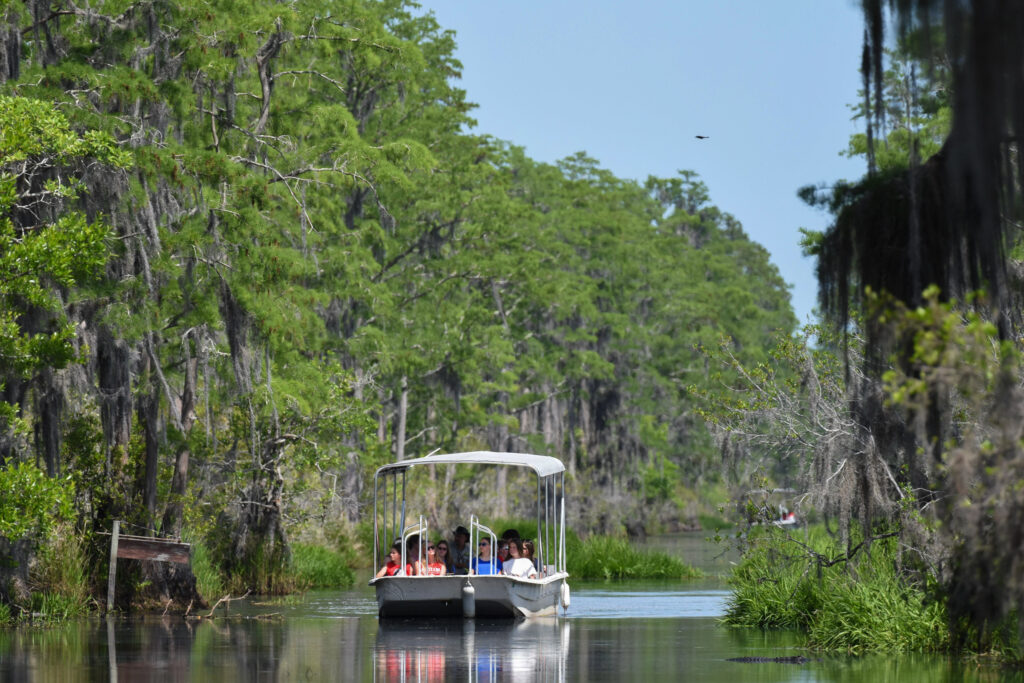
By July, the Okefenokee National Wildlife Refuge could receive something far rarer than a glimpse of a secretive bird: international recognition as a UNESCO World Heritage Site. The designation matters because it signals to the world that this landscape—and the life it sustains—is irreplaceable. The swamp itself is North America's largest blackwater wetland, a slow-moving wilderness roughly five times the size of Atlanta that began forming hundreds of thousands of years ago. Its dark, tea-colored waters, stained by tannins from decaying vegetation and cypress trees, create a landscape that seems to exist outside of time, lined with Spanish moss-adorned trees and drifting lily pads like dark glass.
The Okefenokee's story is inseparable from American conservation history. President Franklin D. Roosevelt established the refuge in 1937, following visits from Cornell biologist Francis Harper, who fell in love with both the swamp's ecology and its people. Harper's wife, who had once tutored Roosevelt's children, helped push the president toward protecting the land—a reminder that conservation often hinges on human connections as much as scientific merit.
Today, the refuge stands as a biological stronghold of staggering richness. An estimated 15,000 alligators inhabit the blackwater alongside almost 250 bird species and 64 reptile species. Black bears and bobcats move through the uplands, and there are rumors of Florida panthers wandering the refuge. It is also a stronghold for endangered species—red-cockaded woodpeckers, wood storks, and eastern indigo snakes—creatures that have nowhere else to go.
A single afternoon paddle through the swamp can yield nearly 200 wildlife sightings: owl fledglings, hawks, herons, alligators. Visitors who venture deeper into the backcountry by canoe or kayak pass open prairies filled with lilies, wildflowers, and carnivorous plants like the Okefenokee giant pitcher plant, which can grow more than four feet tall and traps insects inside its tubular leaves. Some spend nights on raised wooden platforms scattered throughout the swamp, experiencing the wilderness in its fullness.
The UNESCO nomination arrives amid shifting political currents. President Trump has moved to withdraw the United States from UNESCO again, though the withdrawal would not take effect until December—months after the decision on the Okefenokee is expected. The designation has received support from prominent Republicans, including Secretary of State Marco Rubio and former Georgia Governor Sonny Perdue, suggesting that protecting the Okefenokee transcends political divides. Regardless of what happens in Washington, the landscape itself—the peat forests, the blackwater channels, the wildlife that depends on every acre—remains what it has always been: a wilderness worth preserving, one small heron at a time.