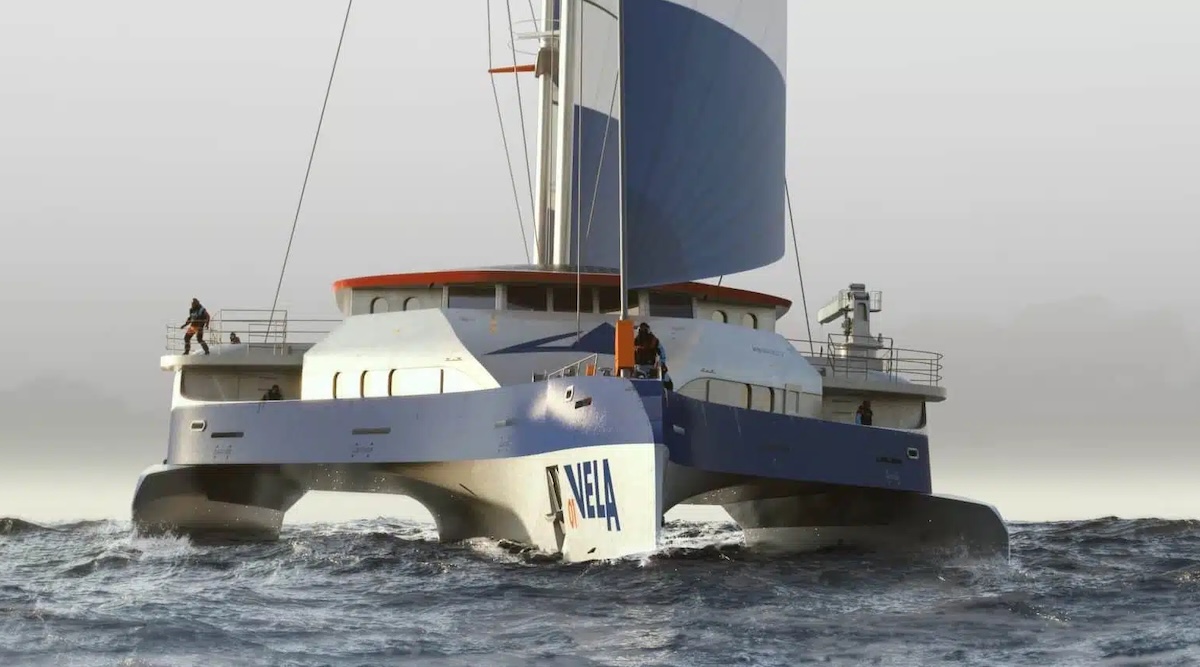
On June 22, a sleek trimaran named Vela One—still under construction at Austal’s Australian shipyard—secured its first major cargo commitment: 600 EU pallets worth of space reserved by DHL Global Forwarding France, marking a quiet but significant pivot in the world’s shipping lanes. This isn’t just another green initiative tucked into a corporate sustainability report; it’s a tangible bet on wind, the oldest marine propulsion known to humanity, as a viable force in modern freight. With global shipping responsible for nearly 3% of all greenhouse gas emissions, the industry is under pressure to innovate—and VELA Transportation, a French startup, is proving that smaller, smarter vessels can cut through both waves and carbon ledgers.
VELA’s model turns conventional cargo logic on its head. Instead of massive container ships idling in congested ports, their 35-meter trimarans will sail directly between secondary hubs—Caen-Ouistreham in France and New Haven in Connecticut—carrying lightweight, high-value goods like pharmaceuticals, luxury items, and fine wines. The journey takes under 15 days, competitive with traditional freight that averages 8 to 14 days, but with one crucial difference: emissions are slashed by up to 90% compared to diesel-powered vessels. Solar panels and a hydrogenerator handle onboard energy needs, minimizing reliance on diesel, while the sails do the real work of crossing the Atlantic.
The numbers behind the launch are modest but meaningful. Backed by a $43 million funding round in 2024, VELA plans to deploy a fleet of five trimarans, aiming for weekly transatlantic departures by 2027. Each voyage will carry the equivalent of 600 EU pallets—enough to transport 30,000 bottles of wine or 12 million doses of medicine. DHL’s reserved capacity on the first vessel is a strategic foothold, not a fleet overhaul, but it signals growing corporate appetite for lower-emission logistics. Even more telling is Takeda Pharmaceuticals’ move in September 2025 to become the first biopharmaceutical company to ship transatlantic via wind power, aligning with its 2040 net zero goal.
The impact extends beyond tonnage and timetables. By bypassing major ports and reducing transshipments, VELA offers shippers tighter control, faster clearance, and a cleaner footprint—all without the premium of air freight. For industries like pharmaceuticals, where timing and sustainability increasingly go hand in hand, this blend of reliability and responsibility is transformative.
As climate pressures mount and supply chains seek resilience, wind-powered shipping may no longer be a niche experiment. It’s a signal flare—quiet now, but growing brighter—that the future of freight could look a lot like its past, reimagined for a new era.