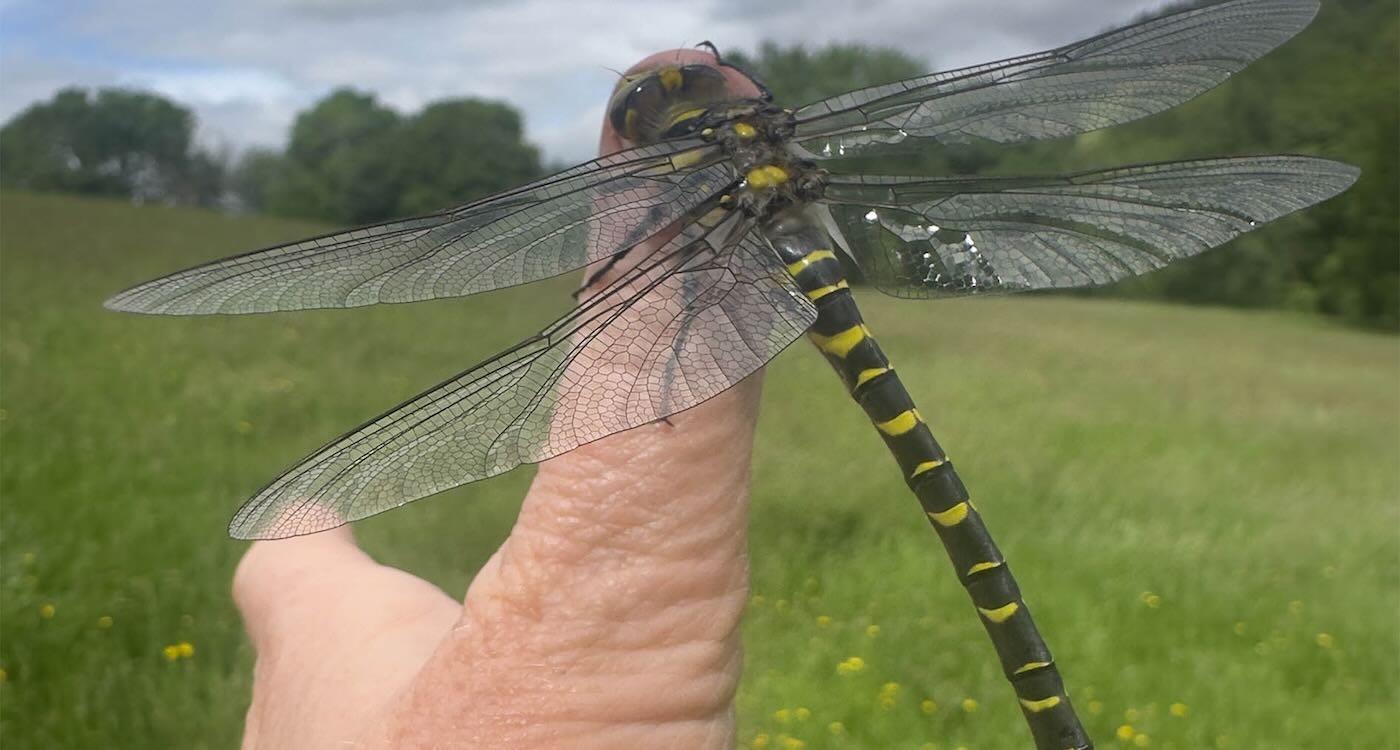
Sarah Hawkes was walking her dog near the tumbling waters of the Ceiriog River in Wales when a flash of black and gold caught her eye—a Golden-Ringed Dragonfly, Britain’s longest at 4 inches, clinging to a grass stem in the morning chill. As she leaned in, the creature lifted off and landed gently on her thumb, staying long enough for a rare, intimate portrait of wild trust. "She was still a bit lethargic—like me when I wake up," Hawkes, a conservation officer with Buglife Wales, recalled with a smile. The moment, both delicate and profound, underscores the quiet wonders thriving in one of Britain’s most biodiverse river systems.
The Ceiriog River, part of the Dee River Catchment, flows from the Berwyn Hills through a landscape of acidic streams and peat-rich soils—precisely the habitat the Golden-Ringed Dragonfly needs to survive. These striking insects, with wingspans matching their 9cm bodies, are largely confined to Wales, Scotland, and parts of North West England, where clean, fast-flowing streams provide a nursery for their long-lived larvae. North Wales Wildlife Trust notes they’re on the wing from May to September, hunting with the precision of aerial predators, feasting on wasps, beetles, bumblebees, and even other dragonflies.
But it’s what happens beneath the surface that reveals their true resilience. The larvae of the Golden-Ringed Dragonfly can spend up to five years buried in stream beds, lying in wait for passing prey, before finally emerging to transform into their dazzling adult form. This extended aquatic phase makes them especially vulnerable to pollution and habitat degradation, turning their presence into a living indicator of water quality. Their sighting near the Ceiriog is more than a lucky encounter—it’s a sign of ecological health in an area recognized as one of Britain’s ‘Important Insect Areas’.
Hawkes’ moment of connection—thumb to dragonfly—offers a reminder that conservation often begins with curiosity. In a world where insect populations are declining at alarming rates, the Golden-Ringed Dragonfly stands as a symbol of what can thrive when habitats are protected. As climate and land use changes press ever harder on fragile ecosystems, these shimmering predators offer both a warning and a hope: where streams run clean and wild, life finds a way to rise, hover, and even hitch a ride.