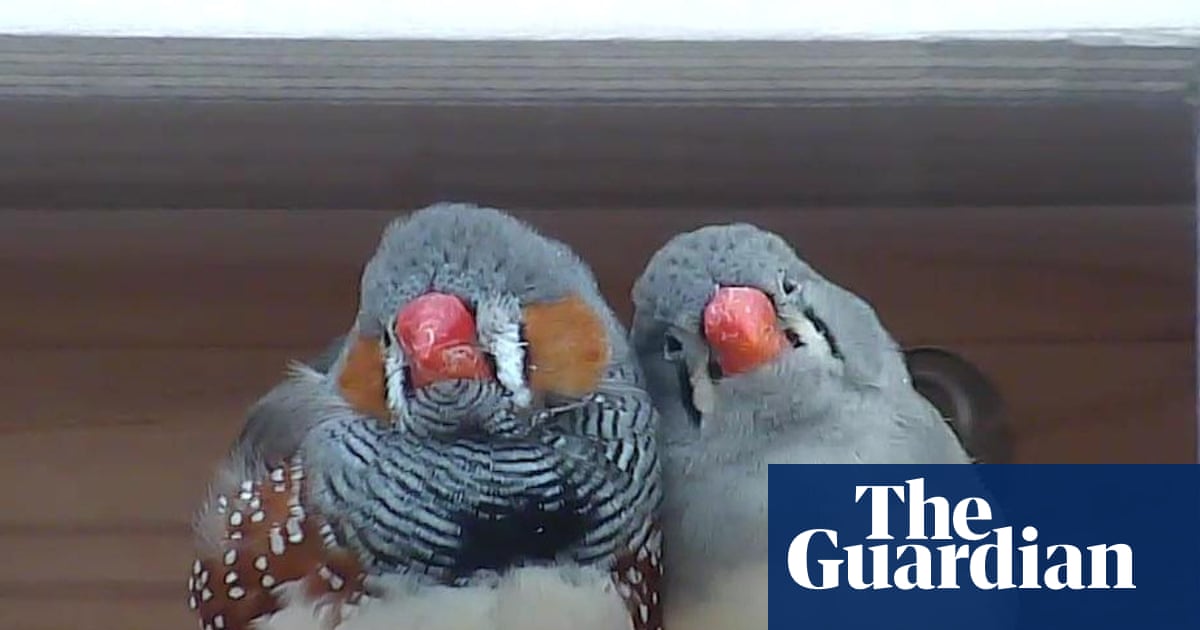
When Dr. Julie Elie first started listening to zebra finches at the University of California, Berkeley, she asked herself a question that humans have dreamed of answering for centuries: what are they actually saying? More than a decade later, she has built something close to a dictionary of their language — and won a $100,000 prize for proving it works.
Elie was awarded the 2026 Coller-Dolittle Prize for her groundbreaking work decoding the communication of zebra finches, a small, chestnut-and-grey songbird native to Australia. Through meticulous observation, recording, and machine-learning analysis, she identified 11 core calls in the birds' vocabulary and mapped each one to its meaning. The findings go beyond simple labeling: Elie designed clever experiments that put her translations to the test, essentially asking the finches themselves whether she had gotten it right. In one test, birds were played recordings of various calls and could tap a button to skip calls they found unrewarding — much like scrolling past a dull video — and their choices confirmed her classifications were accurate.
Perhaps most remarkably, the birds occasionally made mistakes when distinguishing between calls, but those errors followed a striking pattern: they confused calls that shared similar meanings more often than calls that merely sounded alike. To Elie, this reveals something profound about what is happening in the birds' minds. "Their responses indicated they have a mental imagery of the meaning of their vocalisations," she said. "In other words, that they understand the meaning of their call types."
The prize was established in 2024 by the Jeremy Coller Foundation, which champions animal welfare and sentience, in partnership with Tel Aviv University. The foundation has also set aside a $10 million grand prize for whoever ultimately achieves two-way communication between humans and animals — a goal that once seemed purely fantastical. The panel of judges, chaired by zoologist Professor Yossi Yovel of Tel Aviv University, called Elie's work a "key moment in the field." Philosopher Professor Jonathan Birch of the London School of Economics, also on the panel, praised her for not only building a dictionary of 11 core finch "words" but for rigorously verifying her translations through clever experiments with the birds themselves — calling it "a stunning example of how to move rigorously from recording thousands of calls to understanding their meanings."
For her part, Elie said she hoped the work was a step forward in what she called the "great endeavour" of communicating with animals. And she chose zebra finches precisely because they are so vocal — chatty, she called them — which meant plenty of data to work with. Other teams nominated alongside her studied African striped mice identifying themselves through ultrasonic squeaks, bonobos combining calls in sentence-like sequences, and chimpanzees whose hoos and yelps carry distinct meanings.
The Jeremy Coller Foundation's Jeremy Coller, a British financier, put a number on his optimism: "I have absolute conviction we will crack the code by 2030, a breakthrough that will benefit humans and our fellow animals the world over." With researchers like Elie building the first pages of that dictionary, the blank stare may not be the final answer after all.