Most people stuck in traffic just fume. M.C. Davis walked into a seminar on saving black bears that was happening near the jam, and walked out with a new life's mission. Two women on stage were talking about protecting Florida's black bears. By the next day, the timber and oil-and-gas trader had handed them enough money to keep going for two years. Then he asked for a hundred-book environmental reading list desu.he spent a year reading Thoreau, John Muir, and E.O. Wilson, and started buying up land to see what he could do.
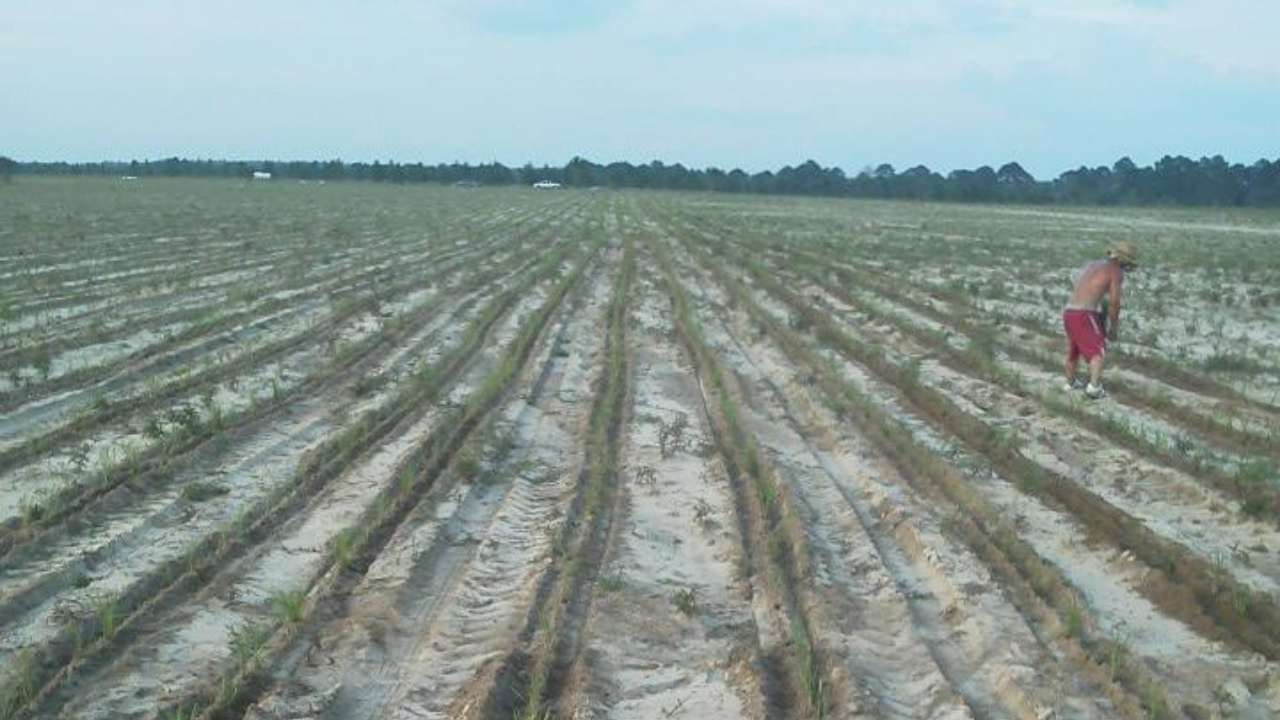
Here is what he did. Davis bought 51,000 acres of degraded farms and forests in northwest Florida, land barely dotted with 1,500 acres of leftover longleaf pine. He named it Nokuse Plantation, pronounced "No-GO-see," which means "bear" in the Muskogee language. Today it is the biggest private preserve and the biggest restoration project east of the Mississippi.
That matters because the longleaf pine forest was once the signature ecosystem of the American Southeast. It covered 90 million acres — about 60 percent of the land — in a nearly continuous 1,200-mile stretch across nine states, from Virginia to East Texas. Then came the "Big Cut" after the Civil War, which left what people called "a sea of stumps." Today only about 3 million acres remain, a loss of 97 percent. Much of the land was replanted with fast-growing pines raised for pulpwood instead of the longleaf that once ruled.
To save a black bear, you have to save its home. An adult male black bear roams across perhaps a hundred square miles. North Florida had good chunks of protected longleaf — national forests, state forests, and Eglin Air Force Base — but they were separated by 70 and 95 miles of open land. Davis set out to re-longleaf the "in-between" spaces, buying up cheap abandoned peanut farms and unproductive pulpwood forests.
For a decade he has spent half a million dollars a year planting longleaf pines and another half million on the rest of the forest. He has thinned 22,000 acres to let the ecosystem breathe again. The coastal Southeast is a "hyperdiverse" hotspot with up to 60 species in a single square yard, and he wanted to bring it all back.
Davis credits Ed Wilson, the famous Harvard biologist, as his inspiration — so he built a $12 million E.O. Wilson Biophilia Center on the property, where thousands of fourth through seventh graders get free classes, hold real baby gopher tortoises, and pose on a giant ant sculpture.
His message: a biological "holocaust" may be coming, but one man's stubborn rewilding shows there is still plenty worth saving.