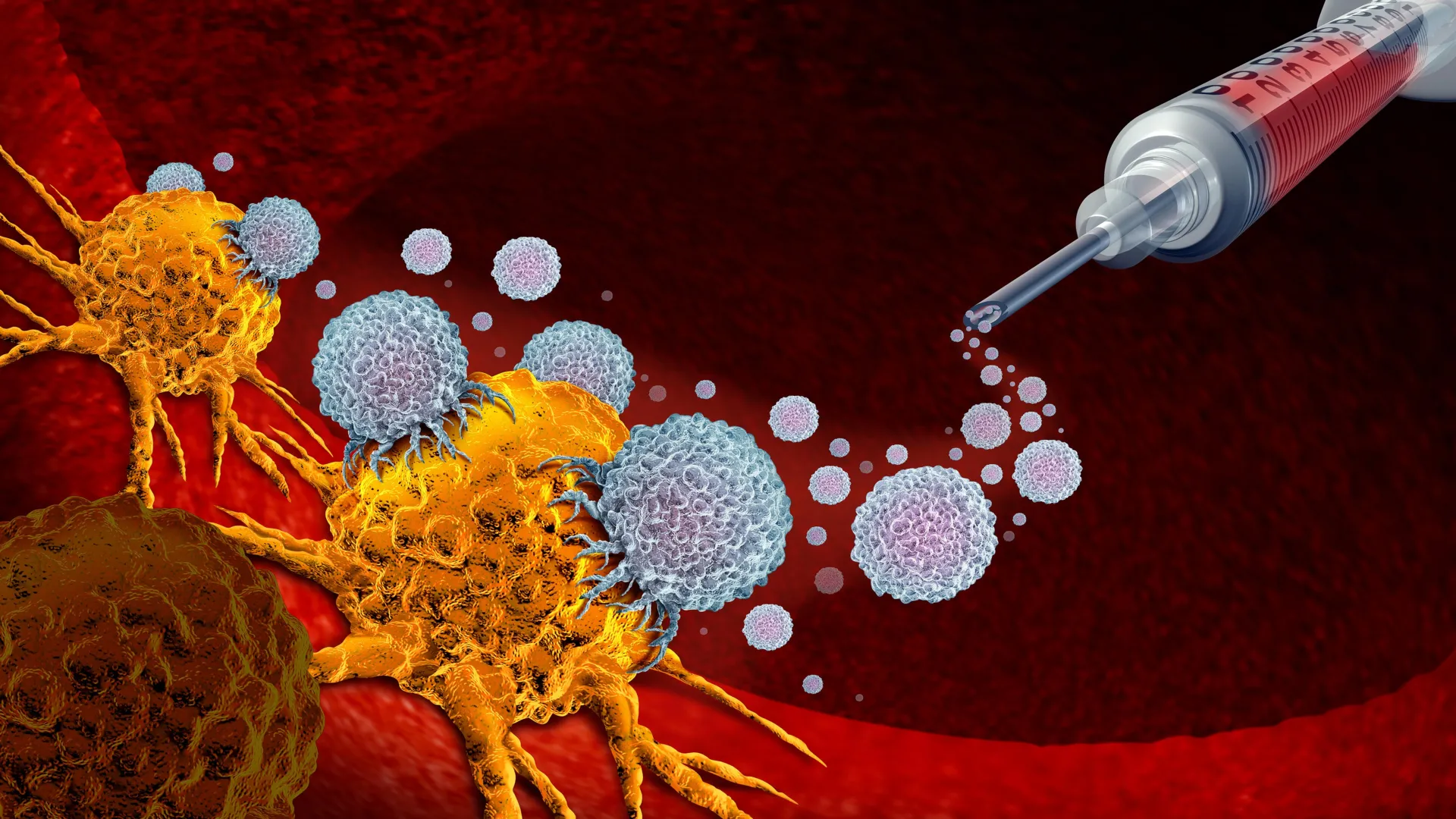
Elias Sayour still remembers the exact moment his team realized the tumors were vanishing — not shrinking, but disappearing — in mice that had been given an experimental mRNA vaccine alongside a common immunotherapy drug. At the University of Florida’s Preston A. Wells Jr. Center for Brain Tumor Therapy in Gainesville, this wasn’t just progress; it felt like a pivot point in the long battle against cancer. The study, published in Nature Biomedical Engineering, revealed that a non-specific mRNA vaccine — one not designed to target any particular cancer mutation — could, when paired with PD-1 inhibitor drugs, trigger the immune system to eliminate aggressive, treatment-resistant tumors in mouse models of melanoma, bone, and brain cancers. What makes this breakthrough so unexpected is that the vaccine doesn’t hunt cancer like a sniper; instead, it acts like a fire alarm, rousing the immune system into action as if a virus had invaded, thereby making tumors visible and vulnerable.
For decades, cancer vaccine development has followed two paths: either targeting a shared protein across many patients’ tumors or creating personalized vaccines from a patient’s own cancer cells. Sayour’s approach charts a third way — one that could lead to an off-the-shelf treatment applicable to many cancer types. By stimulating the expression of PD-L1 within tumors, the vaccine makes them more responsive to immunotherapy, essentially turning cold, invisible tumors into hotspots of immune activity. This method builds on Sayour’s earlier human trial, where a personalized mRNA vaccine spurred a rapid immune response in glioblastoma patients, one of the deadliest forms of brain cancer. Now, with this generalized version, the potential broadens dramatically.
In mouse models, the combination therapy didn’t just slow tumor growth — in several cases, it eradicated tumors entirely. Even more striking, a different formulation of the mRNA vaccine showed strong effects when used alone, particularly in models of skin and brain cancers. The immune system’s T cells, once dormant, began multiplying and attacking cancer cells with renewed precision. This suggests the vaccine isn’t just boosting immunity generally, but training it to recognize tumors as threats. Supported by the National Institutes of Health and other federal agencies, the research underscores a transformative possibility: that we might not need to engineer a unique vaccine for every cancer type.
“This finding is a proof of concept that these vaccines potentially could be commercialized as universal cancer vaccines to sensitize the immune system against a patient’s individual tumor,” said Sayour, who is also a McKnight Brain Institute investigator. As clinical translation looms, the team is preparing for larger trials, hoping to bring this strategy to patients who’ve run out of options. If it works in humans as it has in mice, we may be standing at the edge of a new era — where the immune system, once asleep, is finally awakened to do what it was meant to do: protect us from cancer.