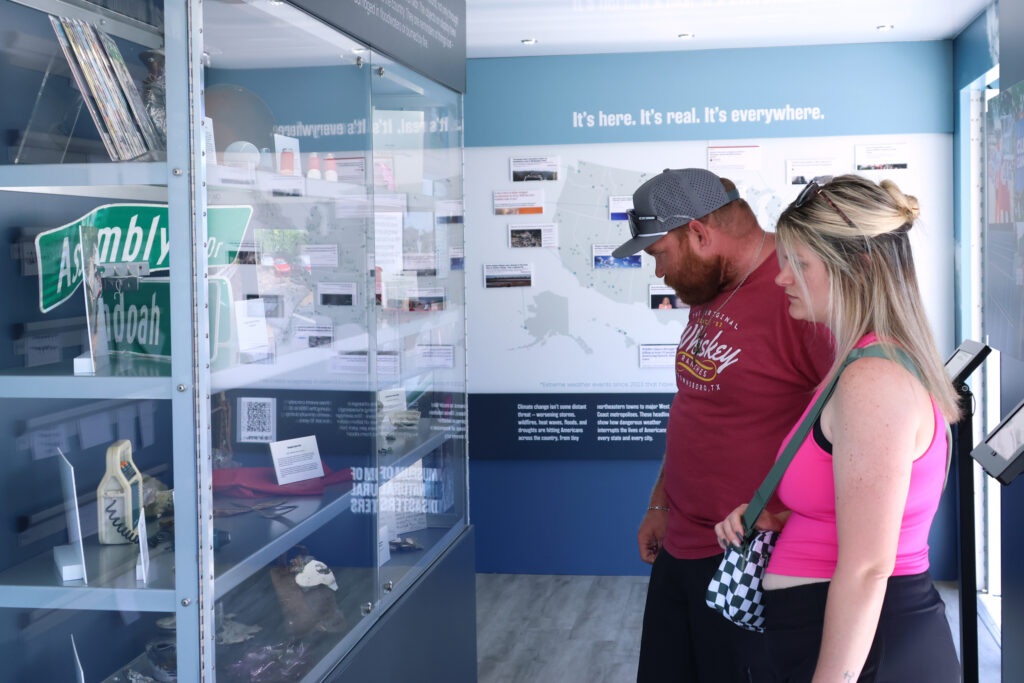
Inside a shipping container-sized space at Constitution Gardens on the National Mall, a kitchen utensil bent by flame sits beside an asthma inhaler — ordinary objects that tell extraordinary stories of survival. The "Museum of Unnatural Disasters," a pop-up exhibit led by the Climate Action Campaign and curated by Hurricane Helene survivor Sam Hartman, has brought the lived reality of extreme weather to the political heart of Washington, D.C., transforming personal loss into a call for congressional action.
The exhibit arrives at a critical moment. As communities across the country face increasingly devastating storms, fires, and heat waves, lawmakers remain divided on how to respond. The museum's approach is deceptively simple: it shows what people lose, and asks visitors to imagine what they would save. A wall displays a U.S. map of extreme weather events from the last two years that caused over $1 million in damages each, their headlines forming a sobering mosaic of disaster. Kitchen utensils from homes burned during California's 2018 Woolsey Fire sit behind glass alongside other artifacts from survivors across the country.
"You can look at anyone's face and you'll never know what storm they have weathered, but you can look at an artifact from their house and you'll immediately see what happened to it," Hartman said. The museum's power lies in that tangibility — these are not statistics, but burned pans and broken belongings that belong to someone's neighbor.
Kimberly Wills, director of strategic partnerships for the Climate Action Campaign, explained the exhibit's purpose plainly: "We are doing a lot of work to call on our leaders in Congress to do more, to tackle the climate crisis. We know so many people understand that climate change is real and it's happening through the frame of extreme weather, because they can see it." The exhibit included roundtable discussions with climate experts, members of Congress, and disaster survivors to discuss both the economic toll of extreme weather and pathways toward protection.
One particularly stark conversation centered on extreme heat, a disaster that Congresswoman Dina Titus of Nevada said does not garner the same attention as more visually dramatic events. "Heat is still the stepchild of natural disasters," she noted. "Any time you try to argue that with my colleagues, in the language of legislation or regulation, you have to put extreme heat and extreme cold to get their support. You can't just talk about heat because they just don't get it."
Deidre Radford, a Nevada resident who participated in the heat discussion, personalized that neglect. "What that translates to is a lot more asthma and allergies, and that creates infection," she said. "I've been battling infection after infection after infection that stem from high heat and worsened air quality. This affects elderly people, it affects children, and it's a constant battle for me."
Congresswoman Adelita Grijalva of Arizona described weather extremes her state has never before endured. "People say, 'Well, you know heat,' I like, 'I do, but I don't know heat 117 degrees in the second week of June. We shouldn't be right in triple digits in May. It impacted things that we historically had outside, like high school graduations.'"
As wildfire experts warn of a dangerous fire season ahead due to widespread drought and light snowpack in the West, and as congressional gridlock persists over climate funding, the museum's message cuts through the noise: extreme weather is not coming — it is here, reshaping lives now. The exhibit invites decision-makers to see it not as abstraction, but as someone else's burned kitchen, someone else's constant battle with heat and infection, someone else's home.